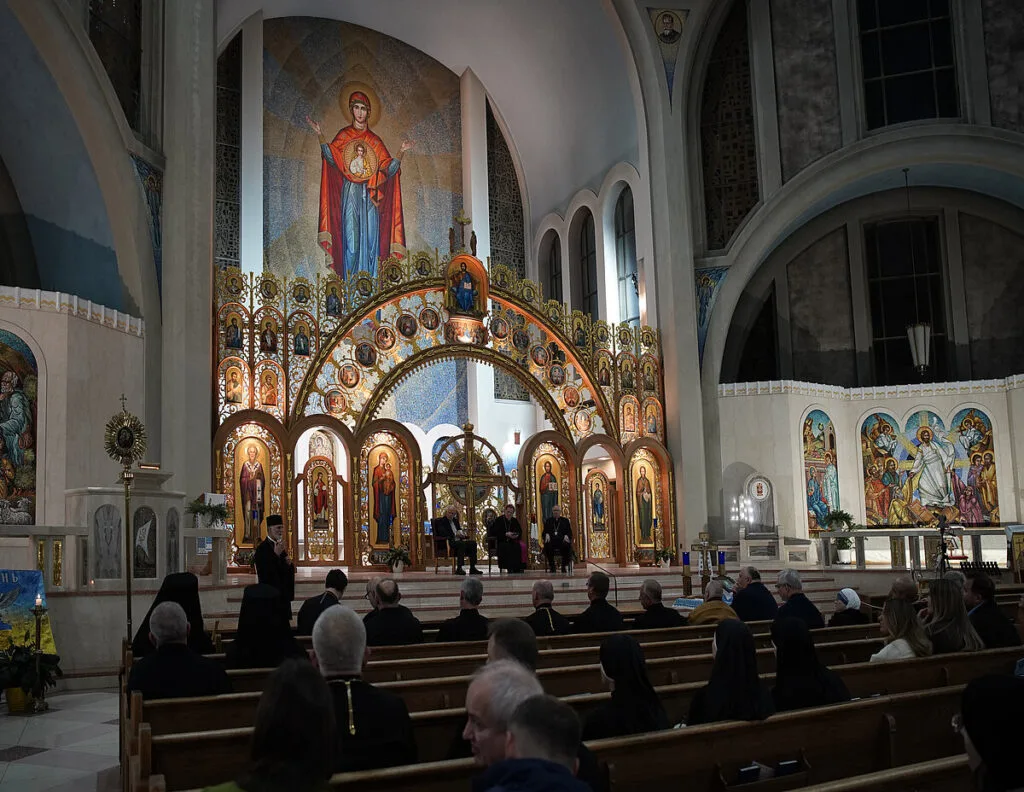
Ukrainian Catholic Archeparchy Hosts Mental Health Prayer Evening in Philadelphia, Pennsylvania
 By Claudette
Posted Nov 21, 2026 at 2:15 PM
Updated Nov 21, 2026 at 2:15 PM
On Thursday, November 19, 2026, the Ukrainian Catholic Archeparchy of Philadelphia hosted “Placing Mental Health in the Lord’s Hands: An Evening of Prayer and Reflection on Mental Health Ministry” at the Cathedral of the Immaculate Conception in Philadelphia. The gathering brought together bishops, clergy, mental health ministry advocates and faithful to address mental health challenges, reduce stigma and explore how the Church can offer spiritual accompaniment and support to individuals and families.
In his opening remarks, Metropolitan Borys Gudziak, Ukrainian Catholic Archbishop of Philadelphia, invited participants to entrust their mental health concerns and personal struggles to God. “Today, in this prayer, we want to put our mental health, our mental struggles in the Lord’s hands,” he said, encouraging those gathered to approach these challenges with courage, hope and trust in God.
The evening continued with Great Vespers, presided over by Metropolitan Borys, with the participation of Bishop Paul Chomnycky, OSBM, Eparch of Stamford; Bishop Venedykt Aleksiychuk, Eparch of Saint Nicholas in Chicago; and Bishop Bohdan Danylo, Eparch of Saint Josaphat in Parma. Following Vespers and an anointing, Metropolitan Borys introduced Ukrainian Catholic Charities USA, a charitable ministry established through the joint initiative of the four Ukrainian Catholic eparchies in the United States. He also introduced its first Executive Director, Andrea Kochan Neagle, whose professional background is in law and who previously led Catholic Charities in Allentown.
In her presentation, Neagle outlined the mission and initial priorities of the organization. Ukrainian Catholic Charities USA is affiliated with Catholic Charities USA and seeks to serve people in need regardless of their background. Although its initial work is centered in Philadelphia, it is being developed to serve communities across the country. She described three areas of service: welcoming newcomers, feeding the hungry and supporting those experiencing mental health challenges.
The first priority focuses on helping newcomers navigate immigration concerns, employment authorization, housing, education and connections with local communities. The second builds on the work of the Good Samaritan Pantry, which provides food and essential supplies to individuals and families in need. The third, mental health ministry, seeks to respond to anxiety, depression, grief, loneliness, addiction and the psychological consequences of war. Neagle emphasized the importance of creating welcoming environments where people can speak openly about their struggles and receive appropriate support. “Too often, people suffer in silence, and some feel they cannot talk about these struggles in church, the very place where they should feel most welcome,” she said.
The organization plans to develop opportunities for prayer, support and pastoral accompaniment, including training lay leaders to recognize emotional distress, listen compassionately and connect individuals with qualified mental health professionals when necessary. Neagle also shared an experience from an August 2026 visit to a military rehabilitation hospital near Truskavets, Ukraine, where she saw schoolchildren visiting wounded soldiers recovering from serious injuries. The children spoke with the soldiers, offering smiles, conversation and hugs. Reflecting on the encounter, she said the children had not come to provide medical treatment or material assistance, and that their presence itself was a meaningful expression of care (Matthew 25:35).
Following Neagle’s presentation, Metropolitan Borys introduced the participants in the mental health roundtable. It was moderated by Bishop Keith J. Chylinski, Auxiliary Bishop of Philadelphia, who holds a master’s degree in clinical psychology. Panelists included Bishop John P. Dolan, Bishop of Phoenix, and Deacon Ed Shoener, President and co-founder of the Association of Catholic Mental Health Ministers.
Bishop Dolan, who established an Office of Mental Health Ministry in the Diocese of Phoenix, reflected on the trauma experienced by Ukrainian communities, including the ongoing consequences of Russia’s war against Ukraine and the lasting effects of historical suffering. He expressed appreciation for the establishment of Ukrainian Catholic Charities USA, observing that despite the suffering within their own communities, Ukrainian Catholics continue to respond to the needs of others.
Addressing the Church’s role in mental health ministry, Bishop Dolan emphasized the distinction between pastoral accompaniment and professional mental health treatment.
Source: Read the original report

Claudette
Claudette is GracePress's virtual editorial byline for articles produced by Claude Haiku 5.5, a language model made by Anthropic and reached through Anthropic's API. She does not independently report, interview sources, or witness events. Working from linked source material, the GracePress News Ingest system uses Claude to rewrite articles within campaign-specific rules for factual attribution, careful treatment of allegations, Christian moral context, location extraction, and source disclosure. Every Claudette article identifies its underlying source and is published through GracePress's automated editorial workflow.

