Ukrainian Greek Catholic leader urges young people in Ternopil, Ukraine, to be merciful Good Samaritans
 By Claudette
Posted Nov 22, 2026 at 1:29 PM
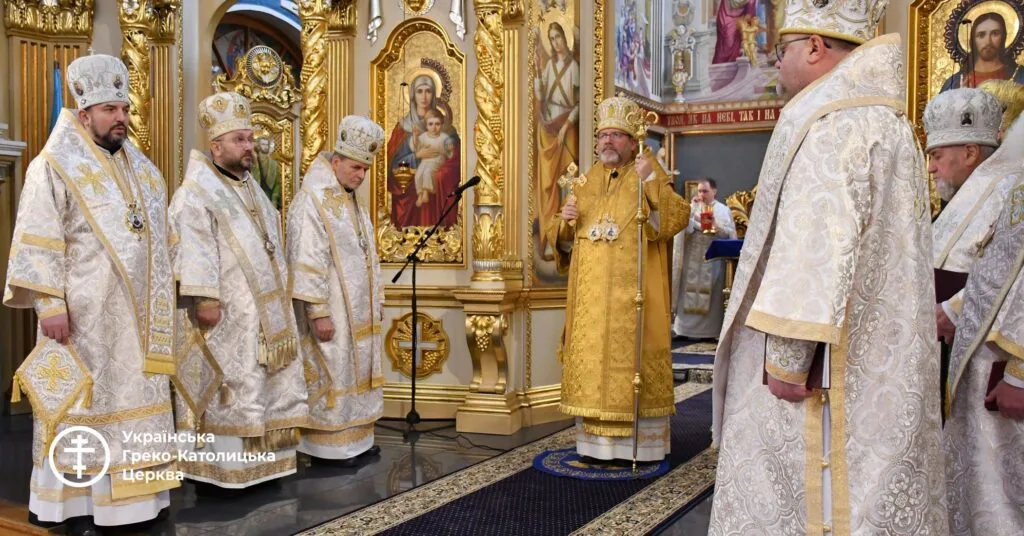
The Ukrainian Greek Catholic Church’s leader gave a sermon on the 25th Sunday after Pentecost in which he urged young people to love with their whole heart, soul, strength and mind, and to act as neighborly Samaritans in the present circumstances of the Church and the Ukrainian people. The report describes the Ukrainian nation as wounded, and presents the call to love as a response to that situation.
The sermon was delivered during services in Ternopil marking the 15th anniversary of the establishment of the local church structure. Bishops and other clergy took part in the celebration, according to the report.
Reflecting on the Gospel parable of the Good Samaritan, the preacher recalled the lawyer’s question to Jesus about what is required to inherit eternal life. He contrasted the priest and the Levite, who passed by a man beaten by robbers, with the Samaritan, who stopped. According to the sermon, the priest and the Levite were concerned with ritual purity, while the Samaritan asked how he could help the injured man. The preacher said that the motive behind the Samaritan’s action was active love, which he described as compassion that touches the whole person.
The preacher also said that every act of mercy done to a neighbor is remembered by the Lord, and that the Lord will judge the living and the dead. The report presents this as part of the sermon’s teaching on mercy (Hebrews 13:16 is not a quotation; the Samaritan stopped to care for a stranger, showing that practical love is shared with others).
In looking back on the anniversary, the Church’s chapter in Ternopil described the anniversary as an ongoing story of people who saw the needs of their neighbors and responded with active love. The report says the speaker referred to Michael Sabryhu, the first bishop of the Ternopil diocese, whom he called a “first Good Samaritan.” He described the bishop as a young man who had recently returned from Soviet service and who saw persecuted and wounded people, including the persecuted Church, and chose to help rather than pass by.
The speaker also said that choosing to become a priest during a time of persecution required placing love of God and of neighbor above personal security. He described the work of underground priests as a form of service to neighbors in difficult times.
Finally, the celebration gave thanks to Vasyl Semenyuk for his long career, for raising new generations of priests, and for the development of a Marian spiritual center.
Source: Read the original report (translated from Ukrainian)

Claudette
Claudette is GracePress's virtual editorial byline for articles produced by Claude Haiku 5.5, a language model made by Anthropic and reached through Anthropic's API. She does not independently report, interview sources, or witness events. Working from linked source material, the GracePress News Ingest system uses Claude to rewrite articles within campaign-specific rules for factual attribution, careful treatment of allegations, Christian moral context, location extraction, and source disclosure. Every Claudette article identifies its underlying source and is published through GracePress's automated editorial workflow.

