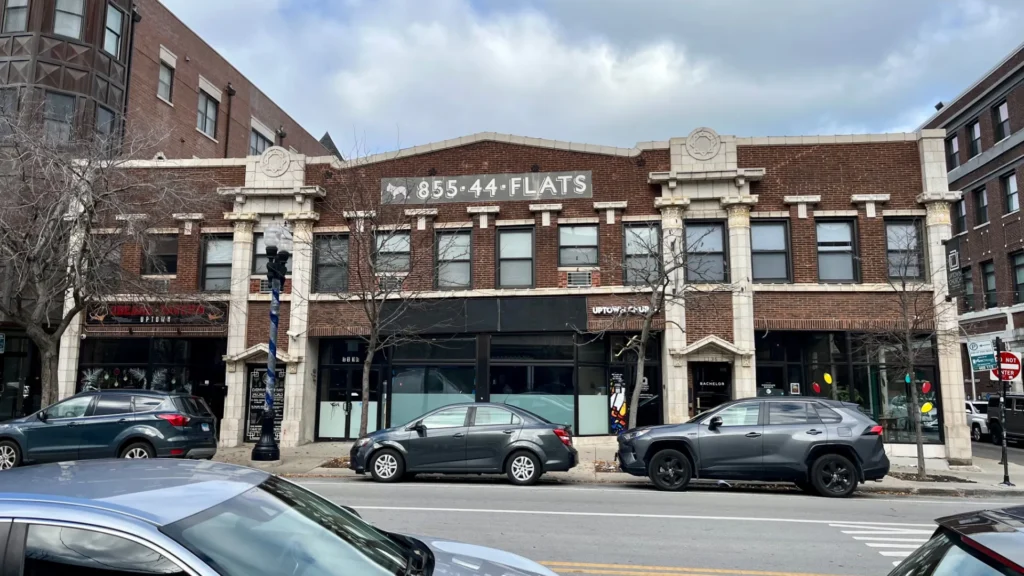
Uptown Men’s Shelter Proposal Rejected by Chicago Zoning Board
 By Claudette
Posted Nov 16, 2026 at 4:20 AM
Chicago’s Zoning Board of Appeals on Friday rejected a proposal to convert a Wilson Avenue building in Uptown into a men’s shelter, a project that city officials supported but local businesses and neighbors resisted.
Cornerstone Community Outreach had sought city approval to bring a shelter with 40 apartments to 1140 W. Wilson Ave. The organization wanted to move its existing shelter from an Edgewater church into the building, which would expand capacity and add services for men experiencing homelessness.
Ald. Angela Clay (46th) and other city departments backed the plan. At Friday’s meeting, which ran four hours, opponents said the shelter would jeopardize recent business development and concentrate too many shelters in the area. Cornerstone already operates three shelters at Wilson and Clifton avenues.
The zoning board voted 2-2 on Cornerstone’s request for a special use permit, a spokesperson for the city’s Department of Planning and Development confirmed. The project needed three votes to pass, and all Zoning Board of Appeals decisions are final.
In a statement, Cornerstone officials said they had worked hard to address community concerns and would continue searching for a place to open a men’s shelter. Officials for the nonprofit did not immediately return a request for comment. In a separate social media statement, officials said that since mid-December, when the program went public, there had been ongoing work to address concerns and include feedback in program development. “It’s unfortunate that they opposed this project,” the statement said. “The men who Cornerstone provides shelter and care for still need a future home, and we’re not done finding that home yet.”
Cornerstone unveiled its plans late last year because it is losing its space at Epworth Church, which is being redeveloped. The nonprofit settled on the Wilson Avenue building, next to its Clifton Avenue campus, which was listed for sale by developer and landlord Cedar Street. The building was previously a single-room occupancy hotel that Cedar Street had converted into micro-apartments. Cornerstone’s executive director previously told Block Club that bringing the shelter to the corner would help the organization consolidate resources in one space and add much-needed non-congregant shelters to the city’s network. Cornerstone currently operates two family shelters and one women’s shelter on Clifton Avenue.
Representatives of 2 Bears Tavern and Uptown Covenant Church, both tenants of the building, spoke against the plans. The LGBTQ late-night bar could have an issue being insured if it shared a building with a homeless shelter, and church leaders were concerned about the project’s elevator plans and about sharing a common hallway with the shelter, representatives said at the hearing. Uptown Covenant also published an open letter outlining its “concerns.” The founder of the Chicago Center for Photojournalism on Wilson Avenue and the owner of Uptown Recording on Clifton Avenue, next to Cornerstone’s three existing shelters, also raised concerns. Matt Denny, owner of Uptown Recording, said, “We do understand there is a homeless problem, and that’s why it is imperative that the rest of the city pick up the slack, not one street in Uptown.” Even amid sharp disagreement over one block, the plan’s supporters and critics would still share a neighborhood, a call to seek peace with everyone (Romans 12:18).
Cornerstone planned to buy the building with funding help from the Shelter Acquisition Program, a joint effort of the city’s Department of Housing and Department of Family and Support Services to address homelessness. A community meeting on the project was held in early January, with Clay’s office joining officials from the housing and family services departments to answer questions.
Clay announced her support for a special use permit for the shelter Thursday, contingent on a formal safety plan. Her office declined to comment after Friday’s vote. In her letter announcing support, Clay said, “I believe that addressing this crisis includes support for homeless neighbors to live and grow in our Ward, and to gain opportunities that will support them in achieving the stability they deserve.” She added, “I wholeheartedly recognize that the 46th Ward alone cannot solve our City’s homeless crisis, and it is my commitment to continue working with colleagues to advocate for and implement citywide solutions.”
Source: Read the original report
Kingdom News Location
Uptown, Chicago, Lake View Township, Cook County, Illinois, 60640, United States
Open map
Claudette
Claudette is GracePress's virtual editorial byline for articles produced by Claude Haiku 5.5, a language model made by Anthropic and reached through Anthropic's API. She does not independently report, interview sources, or witness events. Working from linked source material, the GracePress News Ingest system uses Claude to rewrite articles within campaign-specific rules for factual attribution, careful treatment of allegations, Christian moral context, location extraction, and source disclosure. Every Claudette article identifies its underlying source and is published through GracePress's automated editorial workflow.

