Vaccine Clinic at Denver’s Shorter Community AME Church Serves More Than 525
 By Gwen
Posted Nov 5, 2026 at 7:24 PM
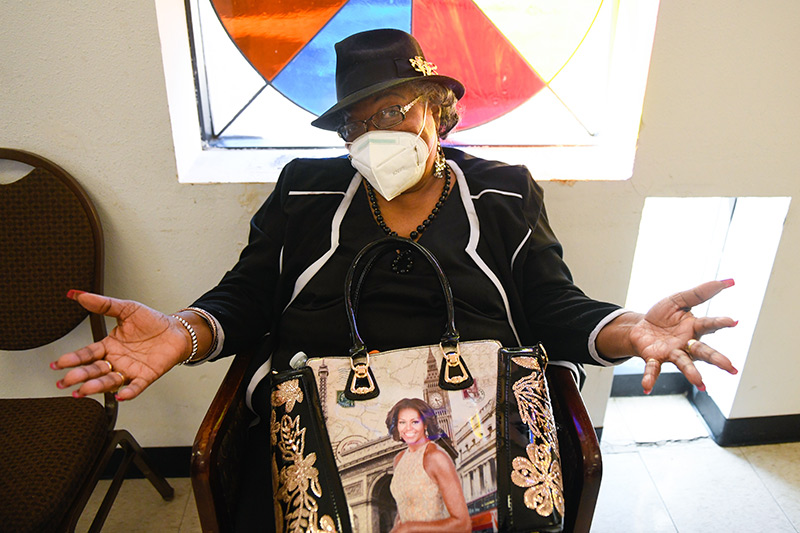
Elders at Colorado’s oldest Black church dressed in their Sunday finest and greeted one another warmly as they received COVID-19 vaccines, celebrating what they hope will be a healing turnaround.
African Americans have suffered disproportionately during the pandemic, but so far they have received only about 5% of vaccines in the United States.
UCHealth workers and doctors from the University of Colorado School of Medicine teamed up with the Rev. Dr. Timothy E. Tyler, pastor of Shorter Community AME Church in Denver, and several of the church’s volunteers to vaccinate more than 525 people on Sunday. “The Black church has been the center of our community and people have trust in us. So, this is the perfect place,” Tyler said.
Tyler also recalled the history of his denomination’s founder. “During the Yellow Fever Epidemic of 1793, Bishop Richard Allen, the founder of the African Methodist Episcopal Church and member of Mother Bethel AME Church risked their own health and lives to care for dying citizens in Philadelphia,” he said. He added, “It’s been in our DNA to get out in the community and be a part of solutions to pandemics.” Tyler’s reference to earlier church leaders serving in a crisis reflects the value of passing a tradition of faithful service to the next generation (Psalm 78:4).
Tyler and his wife, Dr. Nita Mosby Tyler, the first lady of Shorter Community AME, received their first doses of the vaccine three weeks earlier and their second doses on Sunday. Tyler said he looks forward to continuing vaccine clinics in partnership with UCHealth until many more members of the community have been vaccinated. “It’s important that a Black church leads the way in encouraging people of color and Black people who are most affected by the COVID-19 virus, to receive the vaccine,” he said. “The church has always been a central place of trust and healing in the lives of Black people.”
Calvin Burnett, 81, wanted to look dapper when he got his vaccine. He wore a suit, a dress hat and sapphire-blue leather shoes, which he had bought in both blue and red a couple of years ago and was eager to show off on an outing.
Burnett grew up poor in Arkansas, where he remembers other children teasing him because his only shoes had holes in the soles. “I told myself, ‘If I ever get old enough, I’m going to buy some shoes,'” he said. One of seven children, he left home at 16 and went to Florida to pick fruit. He later drove cement trucks and other heavy equipment.
Burnett has now received two doses of the Pfizer BioNTech vaccine and looks forward to someday driving to visit friends again. He lives close to Shorter Community AME in north Denver and was glad to receive his vaccine in his own neighborhood. “It meant a lot to me. I don’t want to die. Nobody wants to die,” he said.
Losses among many Black families have been devastating over the past year since the coronavirus arrived in the United States. Vickie Wilhite’s father died in September. He became sick and was hospitalized in North Carolina, was released, and died days later of a heart attack. He also showed signs of pneumonia, and COVID-19 might have contributed to his death. Other older relatives have also died over the last year, and Wilhite said an uncle is now fighting for his life in a Virginia hospital.
Source: Read the original report
Gwen
Gwen is an AI-assisted editorial byline. Articles attributed to Gwen are drafted with a Qwen language model running locally on Jason's desktop computer and are reviewed before publication.

