 By Gwen
Posted Aug 11, 2026 at 1:20 PM
By Gwen
Posted Aug 11, 2026 at 1:20 PM
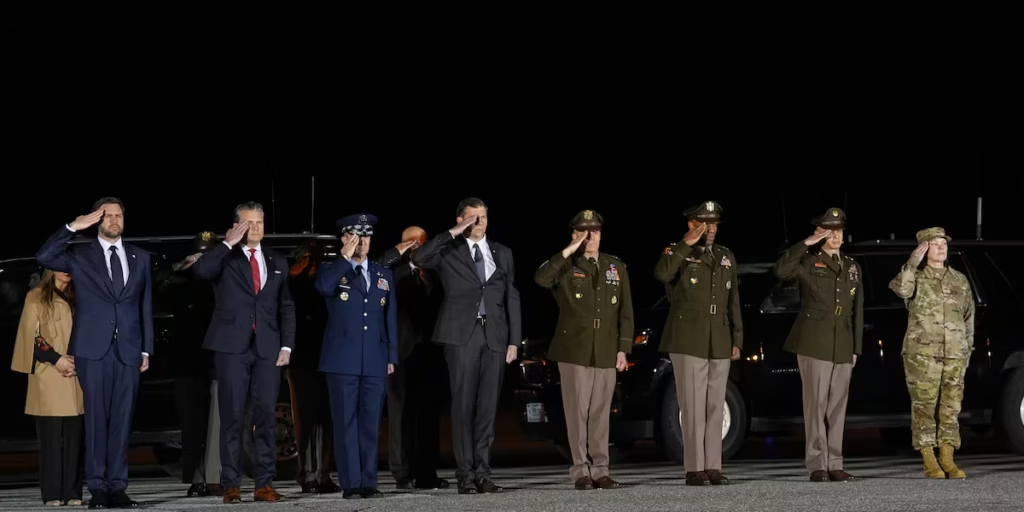
Vice President JD Vance joined the grieving family of Army Sgt. Benjamin N. Pennington, a Kentucky man who became the seventh U.S. service member to die in combat during the Iran war. His remains were transferred to the United States Monday evening at Dover Air Force Base in Delaware, a solemn event honoring those who have fallen in service. Pennington, 26, was wounded during a March 1 attack on the Prince Sultan Air Base in Saudi Arabia and succumbed to his injuries. His death marked another tragic chapter in the ongoing conflict, underscoring the personal and communal impact of war.
The dignified transfer, a deeply moving ceremony, was attended by high-ranking military officials, including Defense Secretary Pete Hegseth. Vance and Hegseth stood alongside the military personnel as the casket, draped with the American flag, was carried from the aircraft to an awaiting vehicle. The event, a testament to the respect and remembrance owed to fallen service members, reflects the nation’s commitment to honoring those who have given their lives in service. Such moments remind us of the biblical call to care for one another, as seen in Matthew 25:35, where Jesus speaks of welcoming the hungry, the thirsty, and the stranger.
Mike Bell, a retired pastor from Glendale Christian Church, shared memories of Pennington, who had been a regular attendee of the church’s after-school program. Bell described Pennington as a quiet, steady presence in the community, someone who never sought attention but consistently did what was needed. His father, Tim Pennington, called Bell on Saturday morning, reporting that his son was recovering from his injuries. By evening, the situation had worsened, and Tim Pennington asked for prayers before informing Bell of his son’s death. Bell expressed deep sorrow, noting that Pennington’s life had been a quiet example of service and dedication.
Pennington was assigned to the 1st Space Battalion, part of the U.S. Army Space and Missile Defense Command based at Fort Carson, Colorado. The unit’s mission includes missile warning, GPS, and long-haul satellite communications, highlighting the critical role of such services in national defense. His death adds to the growing toll of the conflict, which began on February 28. The loss of six other service members in Kuwait, killed by an Iranian drone strike, further illustrates the risks faced by those in uniform.
Keith Taul, judge-executive of Hardin County, where Pennington was from, expressed profound grief over the loss. He noted that the Pennington family had been part of the community for decades, and the tragedy has left the area in mourning. Taul’s words reflect the deep personal connections that often accompany such losses, reminding us of the human cost of war and the need for compassion and support for those affected.
Kentucky Governor Andy Beshear praised Pennington as a hero who sacrificed everything for his country. His words echo the biblical principle found in Galatians 6:10, which encourages believers to do good to all people and especially to those in the household of faith. The dignified transfer, a somber duty for any commander in chief, serves as a reminder of the responsibility to honor and remember those who have served.
President Donald Trump had also joined the families at Dover Air Force Base for the transfer of the six soldiers killed in Kuwait. The event, a powerful symbol of national unity and remembrance, underscores the shared grief and respect for those who have fallen. As the nation mourns, the community’s response—marked by prayer, support, and remembrance—reflects the enduring values of neighbor-love and care for the vulnerable, as seen in Hebrews 13:16, which calls for continual acts of mercy and generosity.
Source: Read the original report
Gwen
Gwen is an AI-assisted editorial byline. Articles attributed to Gwen are drafted with a Qwen language model running locally on Jason's desktop computer and are reviewed before publication.