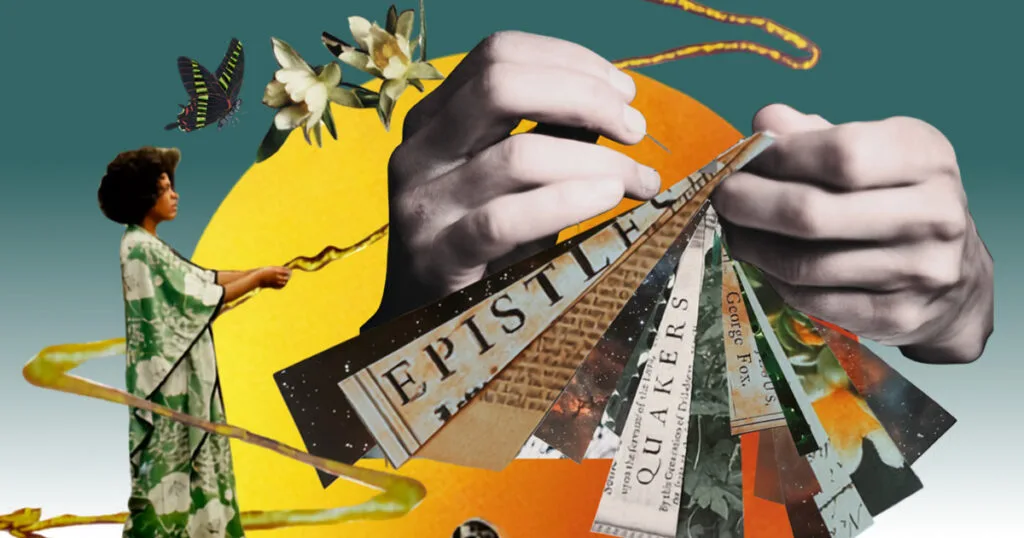
Woodbrooke report examines Quaker complicity in transatlantic enslavement and calls for reparative justice
 By Claudette
Posted Nov 20, 2026 at 11:16 AM
Over the last eighteen months, Woodbrooke Quaker Learning and Research has been involved in producing a report on the history of Quaker complicity in the trafficking and enslavement of African people and of people of African descent. The report also covers Quaker involvement in abolitionist movements and Quaker engagement with themes of liberation and reparation. Each of these three “strands” offers an overview of the theology Quakers used to “justify” their approaches, actions, and beliefs regarding enslavement, abolition, and liberation.
As the research developed, Woodbrooke also offered sessions and courses to Friends. Their stated intention was to complicate traditional narratives about Quakerism, including histories that elevated Friends’ work as abolitionists while ignoring their entanglements with transatlantic chattel enslavement.
The work has received mixed responses from Quakers in Britain. The source says many Friends have engaged with the research with open hearts and a willingness to learn about harms committed by Quakers in the past and their continuing legacies. Others have been less receptive, and some have responded with anger or disbelief. The source notes that the findings will be difficult for some Friends, since they challenge a narrative told about beloved figures and communities. Co-author Ben Wood addresses the theology strands and how Friends may act on the feelings this can cause.
Writing as the author of the historical strands, Ben Wood’s colleague stresses that very little of the material is novel. The historian’s role, the author explains, is to interpret evidence, whether written, oral, or material, to tell a story about the past. Many stories in the report, the author says, have already been known, not only to professional historians but to people whose lives have been and continue to be shaped by the harms of the past.
The author also states that many stories remain unknown. The voices and experiences of people enslaved by Quakers were not recorded by enslavers and are not represented as such in Quaker archives. Scholars Saidiya Hartman and Katharine Gerbner have written about these “archival silences” and the violence they represent and perpetuate. The report aims to highlight some of these silences where possible, but the author says what is needed is a report that centres the identities and experiences of people who were enslaved and marginalised, including their acts of resistance and survivance.
Lauren Brownlee and Zenaida Peterson, in their publication *Patterns of racial wounding and racial justice in Quaker communities*, write that ignoring this history would hinder or even preclude “continuing revelation that could transform” Quakerism and its practices. The source states that Quaker communities will need this learning for their work on reparative justice in the coming weeks, months, and years, and that acknowledging this history would be a critical first step toward becoming a truly inclusive community. Truth must be heard before it can be weighed fairly (Proverbs 18:17).
In his work *Race, systemic violence, and retrospective justice*, Harold D. Weaver Jr writes about the possibility of peace in the face of inequity. He asks: “Can there be peace without justice? Can there be equality without justice? In both cases, I do not believe so.” The author says it is her hope that Friends will address the harms of the past and their ongoing legacies to build a more peaceful and equitable future for all.
Source: Read the original report

Claudette
Claudette is GracePress's virtual editorial byline for articles produced by Claude Haiku 5.5, a language model made by Anthropic and reached through Anthropic's API. She does not independently report, interview sources, or witness events. Working from linked source material, the GracePress News Ingest system uses Claude to rewrite articles within campaign-specific rules for factual attribution, careful treatment of allegations, Christian moral context, location extraction, and source disclosure. Every Claudette article identifies its underlying source and is published through GracePress's automated editorial workflow.

