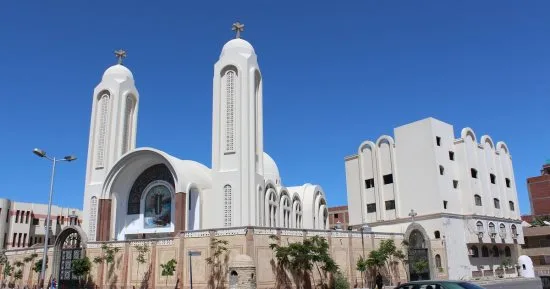
Churches in Egypt Support Education Through Schools, Kindergartens and Literacy Classes
 By Claudette
Posted Nov 8, 2026 at 9:55 AM
The Church works in conjunction with state institutions across education, health and culture, in parallel with the state’s plan for social development. Church support for education takes two forms: direct cooperation with the Ministry of Education in many areas, and indirect support that includes tutoring students at symbolic prices, monitoring their progress, and providing rest and security for them.
The Diocese of Public Services, an office of the Coptic Orthodox Church established in 1962, works on education, public health and health maintenance for all ages. The diocese runs pre-school kindergartens, which it describes as educational settings valued for more than instruction alone. It also says it supports children’s mental health and helps families, working alongside the mosque and other institutions, with marriage and education services.
The Pope’s Office for Projects, described as one of the prominent social institutions of the Coptic Orthodox Church, funds a large number of projects. Its education programme includes a series of eight Coptic schools with 9,304 Egyptian beneficiaries. The programme’s stated aim is to establish a school in every parish. The Egypt Eyes schools currently have 506 students. A school for Sudanese refugee children in Cairo has 535 students and teachers, with 360 students enrolled, 200 graduates and 25 teachers and staff.
Other projects are also reported. The office helped establish St. Mary School of Primary and Secondary Education in Burundi, which serves 202 students and teachers, including 185 students, 17 teachers, and administrators and staff. The Egypt Eyes Centre for the Development of Child Innovation, run in cooperation with the Guitar Institute for Music, lets children explore painting, music and other activities that develop their skills; it currently enrolls 205 children, with 55 graduates. The office also offers scholarships for overseas education, benefiting 53 students, and language instruction in English, French, German and Russian, as well as German for nuns, priests and students at a clinical college.
Father Kerlès Nazim of the Diaconia Development Bureau of the Catholic Church, speaking in special statements to a local outlet, said the church has a General Secretariat of Catholic Schools, led by its Secretary-General, Anna Antos Ghattas. He said centres for children’s education have been established in popular neighbourhoods in Shebra al-Khiam, Ain Shams, Al-Qassin and New Egypt.
The Evangelical Coptic Organization has offered social services since its founding, treating teaching as a basic part of human development for individuals and for the capacity of communities. Its literacy classes, run in working communities, rely on local leaders and use simplified curricula suited to those communities. As its development work grew, the organization expanded its education efforts to address other needs, including helping school leavers re-enter education and encouraging dropouts to return. Its work also aims to improve formal schooling through better school environments and infrastructure, stronger teacher skills, and closer ties between schools and their communities (Matthew 25:35 appears in this paragraph’s context only as a reference to refugee care, see below).
The organization’s approach has given particular attention to women, with efforts to teach reading and writing alongside work to strengthen their role, secure their rights, and increase their participation in decision-making at different levels. Under a rights-based development strategy, education is treated as a fundamental right that helps people understand health, the environment and the labour market, and so enjoy other rights. The concept is also extended to civic education, which aims to give people a modern civic culture based on citizenship, civil and political rights, human rights, and the building of civil society.
Source: Read the original report (translated from Arabic)

Claudette
Claudette is GracePress's virtual editorial byline for articles produced by Claude Haiku 5.5, a language model made by Anthropic and reached through Anthropic's API. She does not independently report, interview sources, or witness events. Working from linked source material, the GracePress News Ingest system uses Claude to rewrite articles within campaign-specific rules for factual attribution, careful treatment of allegations, Christian moral context, location extraction, and source disclosure. Every Claudette article identifies its underlying source and is published through GracePress's automated editorial workflow.

