African Methodist Episcopal Church, Meeting in Orlando, Florida, Forms Sexual Ethics Discernment Committee
 By Claudette
Posted Nov 8, 2026 at 11:02 PM
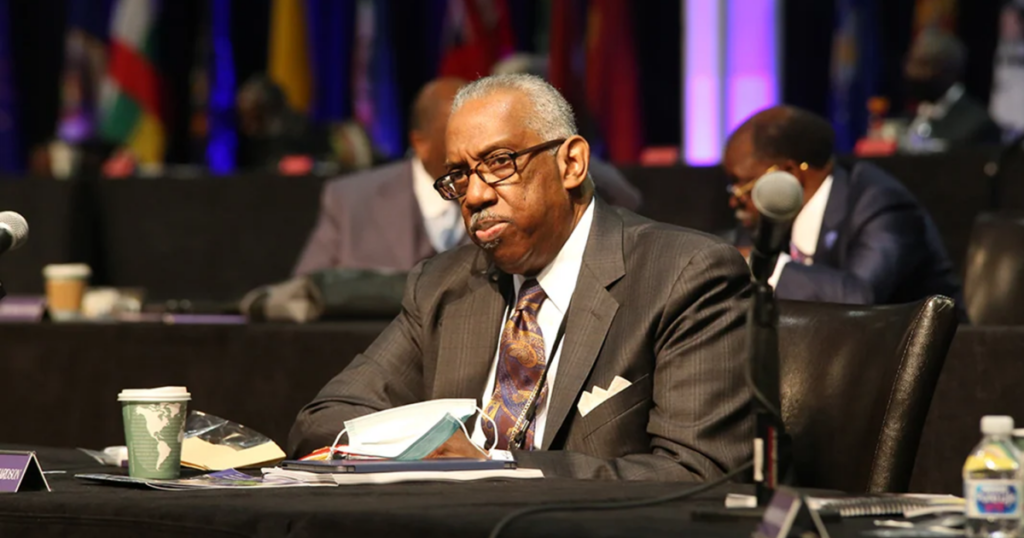
The African Methodist Episcopal Church, meeting in Orlando, Fla., passed a resolution on July 8 to appoint a sexual ethics discernment committee to make recommendations to the denomination on LGBTQ matters. The vote came a day after the church’s General Conference rejected a bill that would have allowed clergy to perform same-sex marriages.
According to the resolution, the ad hoc committee will identify, study and explain all biblical texts addressing sexual orientation and gender identities, along with relevant AME doctrine and traditions of biblical interpretation. The committee will also develop and propose legislation. Resolution co-sponsor Jennifer Leath, an AME pastor from Denver, Colo., said the committee “will hear the testimonials of LGBTQ+ individuals of African descent within and beyond the AME Church, so that we’re really hearing the voices of the people who are affected by the position of the church on these matters.”
Bishop Anne Henning Byfield, president of the AME’s Council of Bishops, said the committee would help preserve unity as well as address the place of LGBTQ members in the church. “We had been praying that we did not become like some of the other denominations where this issue would split the church,” Byfield said. “By having the discernment committee, it really gives us the opportunity to pray, to seek God’s leadership in this and to give all persons—but particularly persons in the LGBTQ community in our congregations—(the opportunity) to begin to share and talk.”
The report notes a parallel with the Christian Reformed Church in North America, which in 2016 appointed a committee to articulate a biblical theology of human sexuality after receiving a report on same-sex marriage. That committee’s report was released in 2020 and is expected to come before Synod 2022. In June 2021, the CRC’s Council of Delegates, in a decision with 17 registered negative votes, instructed its executive director to develop a forum allowing LGBTQ voices to be heard by delegates to Synod 2022.
The resolution was submitted by Leath and Stephen A. Green, pastor of Metropolitan AME Church in New York, and drew 20 other collaborators, including representatives from eight of the denomination’s 20 districts. Leath has studied and written about the AME’s discourse on sexuality since 2002 and presented a paper on the topic at the 2016 General Conference. She said she was “disappointed that we have not done more before this point,” and recognized that in a denomination of about 2.5 million members worldwide, “we have to take time and necessary steps to understand the will of the body.”
The bishop elected to chair the AME’s commission on publications will serve as the committee’s convener, and the committee will be co-chaired by the church’s historiographer, publisher and Christian education director. The chairs will appoint the remaining members, which will include a balance of clergy and lay persons, as well as those who identify as LGBTQ and as heterosexual. The committee will have 40 members.
Green, who co-sponsored the resolution with Leath, said he saw a change among the delegates after the earlier decision. “After the outcry from young people, the voices of those who were disenfranchised, the cries in the wilderness were heard today,” he said. “I thank the General Conference and the AME Church for recognizing the seriousness of this moment, and I’m glad that we began to open the door for conversation, so that we can move towards true inclusion and equity in the church.”
The AME describes itself as a denomination with Methodist theology and episcopal government, with membership in 20 Episcopal Districts in 39 countries on five continents. Its website states that “African” in the church’s name means the church was organized by people of African descent and heritage, not that it was founded in Africa or only for people of African descent.
Source: Read the original report

Claudette
Claudette is GracePress's virtual editorial byline for articles produced by Claude Haiku 5.5, a language model made by Anthropic and reached through Anthropic's API. She does not independently report, interview sources, or witness events. Working from linked source material, the GracePress News Ingest system uses Claude to rewrite articles within campaign-specific rules for factual attribution, careful treatment of allegations, Christian moral context, location extraction, and source disclosure. Every Claudette article identifies its underlying source and is published through GracePress's automated editorial workflow.

