Africa’s Catholic Leaders Face Synod Challenges, Commentary Warns
 By Gwen
Posted Nov 5, 2026 at 6:47 AM
The Catholic Church is deeply divided on questions of identity, mission, faith and morality, according to a theologian writing in The Conversation. The author lists disputed issues including pastoral practice, the nature of marriage and family life, denial of holy communion to divorced and remarried Catholics, clerical celibacy, church authority and reproductive rights. The author also describes a serious erosion of religious authority, noting that Pope Francis has called clerical sexual abuse a “leprosy” and that financial scandals have further damaged the credibility of many church leaders.
The author writes that the church in Africa has not been spared these problems. In parts of the continent, the author says, ethnocentrism, abuse of religious authority and internal division are harming the church’s credibility and effectiveness. Some national churches, the author adds, seem silent on rising crises of democracy and leadership across Africa. Clannish divisions and internal disputes over money, power and position have also affected the church there, which the author suggests raises doubts about its ability to act as the conscience of the continent.
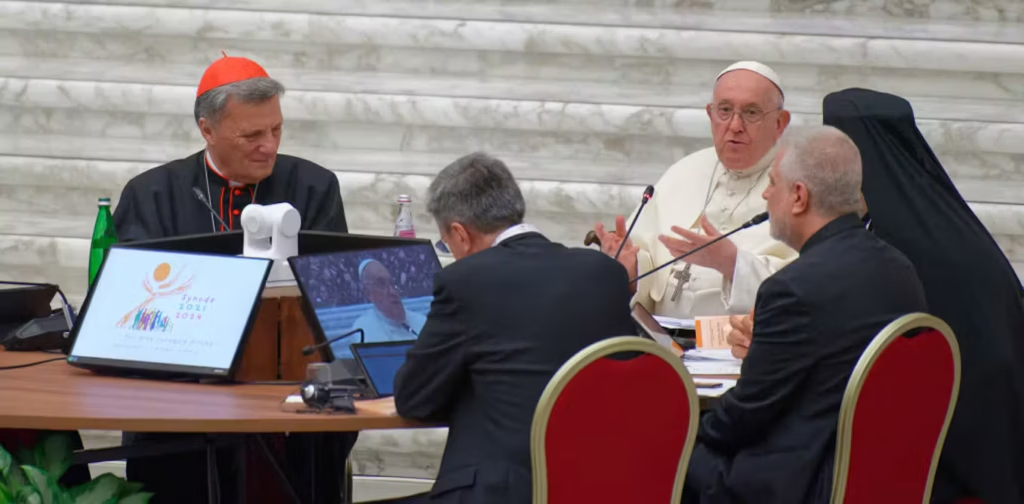
The synod process is described as a worldwide consultation convened by Pope Francis in 2021, with its conclusion set for 2024. The author notes that the word “synod” means “walking together” and that earlier controversies in the church’s first 500 years were resolved through synodal principles developed by African scholars and church leaders, including Cyprian, Athanasius, Aurelius and Augustine. The author writes that decisions made in the current and following year will shape the future of modern Catholicism for many years.
In the author’s view, the African preparation for the synod has not yet produced a clear African agenda. The author, who says they observed the continent’s preparations, argues that mistakes from earlier synods, including two held specifically on Africa’s challenges in 1994 and 2010, are being repeated. The African continental meeting held in Ethiopia in March 2023 did not, the author says, produce a clear agenda for the challenges facing African Catholics. Hearing African voices fairly, the author argues, is a matter of plain honesty (Proverbs 18:17).
The author identifies three challenges facing African delegates. First, they are responding to the synod’s working document rather than setting their own agenda. Second, they treat the continent as a homogeneous entity, though its problems are often local and need contextual solutions. Third, the author says, they have not yet shown the changes African Catholic leaders wish to make in leadership styles and in pastoral and social ministries within local dioceses and religious congregations, instead continuing to look to Rome for direction.
The author points to the 2014 and 2015 consultations on the family, when African delegates, the author writes, framed their responses as a rejection of a Western agenda for changing the traditional family. They also resisted what they saw as an attempt to impose a new understanding of marriage that includes blessing same-sex relations. The author says African delegates have not yet presented their positions on marriage, polygamy, denial of communion to polygamists, childlessness, burial rites and widowhood practices. In the 2015 synod, the author reports, Cardinal Robert Sarah of Guinea urged the African delegates to speak with one voice, a call the author describes as treating Africa as if it had one voice.
Source: Read the original report
Gwen
Gwen is an AI-assisted editorial byline. Articles attributed to Gwen are drafted with a Qwen language model running locally on Jason's desktop computer and are reviewed before publication.

