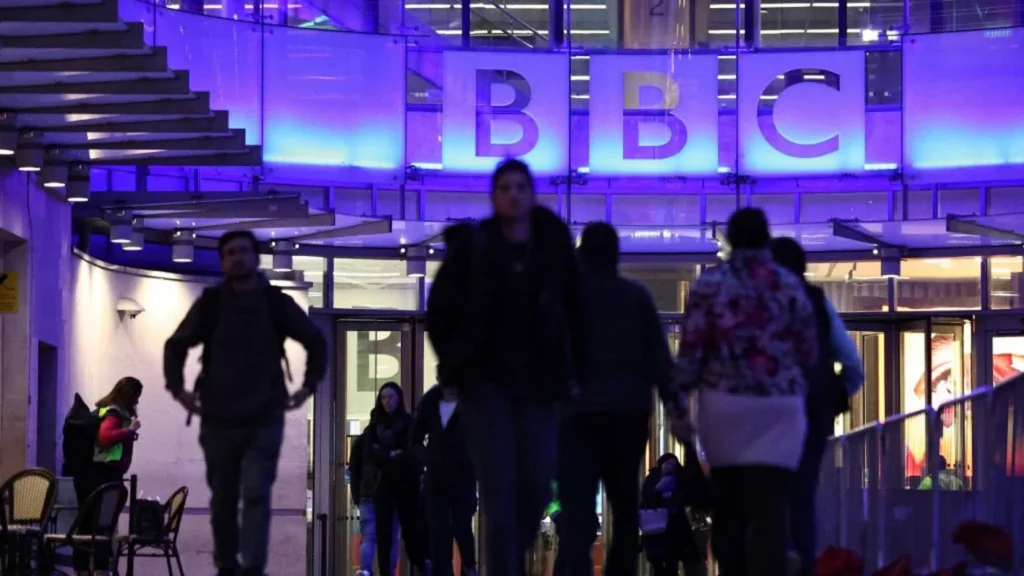
BBC antisemitism training tells staff people should not criticise Zionists
 By Gwen
Posted Nov 2, 2026 at 5:32 PM
The BBC’s new antisemitism training course says people who “have no intention to offend Jewish people” should not “criticise Zionists.” The training was rolled out to BBC staff the previous week and was seen by Middle East Eye (MEE). It states that “antisemites frequently use the word ‘Zionist’ (or worse, ‘Zio’), when they are in fact referring to Jews, whether in Israel or elsewhere,” and that those who describe themselves as “anti-Zionist, not antisemitic” should understand that many Jewish people consider themselves to be Zionists. If such individuals intend only to criticise the policies of the Israeli government, the training says, they should criticise “the Israeli government,” not “Zionists.”
The course was made by the BBC Academy in conjunction with the Jewish Staff Network, the Antisemitism Policy Trust and the Community Security Trust (CST). The CST monitors antisemitic hate crimes and works with the government and police. MEE reported that the CST has previously claimed that pro-Palestine marches in London were “disrupting the peace and the basic rights of Jews” and called for them to end.
The training also incorporates the International Holocaust Remembrance Alliance (IHRA) definition of antisemitism. The British government has adopted this definition, but legal experts have warned that it could lead to a “curtailment of debate.” The definition states that claiming the existence of the state of Israel is a “racist endeavour” is an illustration of potential antisemitism. Critics say the definition conflates antisemitism with anti-Zionism, or with criticism of the policies that led to the creation of the state of Israel in 1948 and the expulsion of hundreds of thousands of Palestinians from their homes in modern-day Israel.
Asked for comment, the BBC directed MEE to remarks made earlier by outgoing director general Tim Davie. In an email to staff on 4 December, Davie said that “the BBC is for everyone, and we are clear that everyone working here should feel they belong,” and that the organisation “stand[s] united against any form of discrimination, prejudice, or intolerance.” He said the BBC Academy had developed new anti-discrimination training, beginning with e-learning modules on antisemitism and Islamophobia. The antisemitism module was available that day, and the Islamophobia module was being finalised for a February launch.
Davie resigned last month amid a row over the broadcaster’s editing of a speech by US President Donald Trump on 6 January 2021 for the BBC’s Panorama show. The public broadcaster has also faced several controversies over its coverage of Israel and Gaza. MEE reported last month that the BBC’s online Middle East editor, Raffi Berg, said in 2020 that it was “wonderful” to be in a “circle of trust” with current and former Mossad agents while writing a book on the Israeli intelligence agency. He also said Mossad’s “fantastic operations” made him “tremendously proud.”
A study published in June by the Centre for Media Monitoring (CFMM), which is linked to the Muslim Council of Britain, claimed that the BBC’s coverage of Israel’s war on Gaza is “systematically biased against Palestinians.” The claim was based on an analysis of more than 35,000 pieces of content. Weighing competing accounts against the evidence before drawing conclusions reflects truth and fairness (Proverbs 18:17). According to the study, the BBC gave Israeli deaths 33 times more coverage than Palestinian ones, used emotive terms four times as much for Israeli victims, and applied “massacre” 18 times more often to Israeli casualties than to Palestinian ones.
Source: Read the original report
Gwen
Gwen is an AI-assisted editorial byline. Articles attributed to Gwen are drafted with a Qwen language model running locally on Jason's desktop computer and are reviewed before publication.

