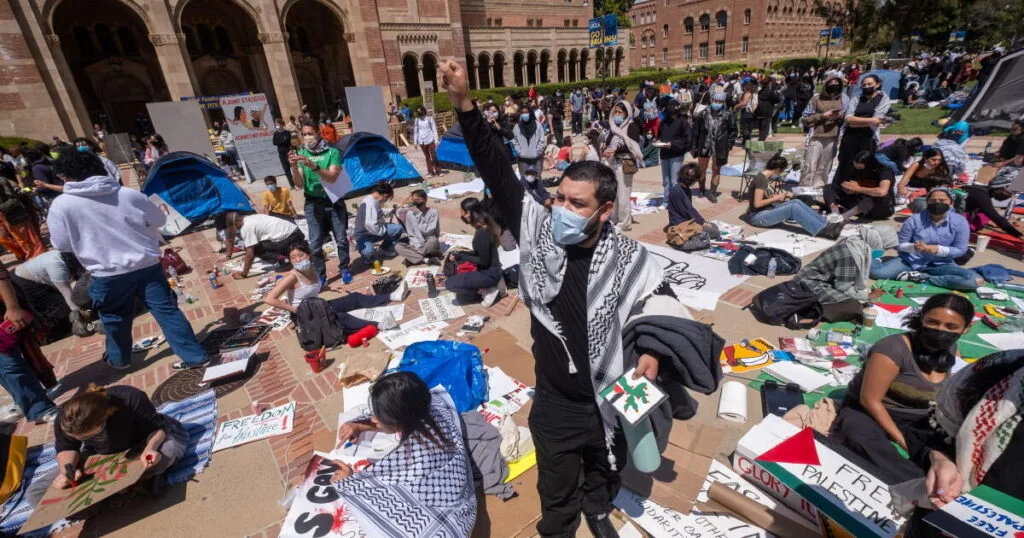
California college protesters say Gaza ceasefire won’t end their activism
 By Gwen
Posted Nov 1, 2026 at 9:22 PM
At California universities on Monday, the ceasefire in Gaza and the accompanying hostage and prisoner exchange emerged as a turning point for a student-led protest movement that has roiled campuses for two years. Pro-Palestinian organizers and Jewish community leaders are still responding to the upheaval set off by Hamas’s October 7, 2023, attack on Israel.
In the spring of 2024, shortly after the onset of what the report describes as the deadliest and most destructive war between Israelis and Palestinians in history, U.S. campuses were convulsed by often confrontational protests. Pro-Palestinian demonstrations surged that spring, with encampments where activists demanded policy changes, including university divestment of billions of dollars from weapons companies.
The protesters’ demands largely went unmet. In California, no major university agreed to full divestment, which included ending partnerships with Israeli universities. Campus policies did change, however, as university officials cracked down on protests and enforced zero-tolerance rules against violations.
Hamas militants released all 20 remaining living hostages held in Gaza on Monday. David N. Myers, a UCLA professor of Jewish history, said student protesters appear to have helped shift American views on Palestinians and Israel. “Is the protest movement a failure? Well, if the measure is universities have cracked down, maybe,” Myers said. “But if the measure is general trend lines in American public opinion, I’m not so sure. And that should be a wake-up call to the pro-Israel movement.”
During the protests, allegations of antisemitism rose on campuses, and Jewish students and faculty protested what they described as violations of their civil rights. Their complaints have prompted aggressive investigations by the Trump administration, which the report links to its broader goal of overhauling higher education to fit a sweeping conservative agenda that goes beyond protections for Jewish communities. Accounts of these events are contested, and the report notes that student organizers have been accused of minimizing the plight of Israeli hostages and of being antisemitic (Proverbs 18:17).
Pro-Palestinian students who took part in last year’s encampments and this year’s protests told the Los Angeles Times that the ceasefire was welcome but addressed only part of what had drawn them to campus greens. Dylan Kupsh, a UCLA doctoral computer science student who was part of an encampment last year that the report says was attacked by pro-Israel vigilantes, said, “While the news of a ceasefire is welcome, nothing fundamentally changes at UCLA or colleges in general.” Kupsh also faces student discipline procedures for actions the university alleges violated campus policies. UCLA’s Jewish faculty, the report notes, united around a letter expressing anger over a potential $1-billion settlement between the university and the Trump administration over alleged campus antisemitism.
Student organizers said the ceasefire would bring new energy to their activism. Ryan Witt, president of Students for Justice in Palestine at Cal State Channel Islands, which held a campus protest and vigil for Palestinians last week, said, “We can momentarily feel a little bit of happiness, there is at least momentary end to the genocide.” Witt, who is Jewish, added, “There have been pictures of children in Gaza celebrating. I’m not dismissing that. But also recognizing that we need to keep fighting.”
Amanda, a USC student who participated in pro-Palestinian encampments, said concerns remain on her campus. “We see that our school, like all the others, is very worried about being seen as antisemitic by the government, so they are even stricter about protests and speech than they used to be,” she said.
Source: Read the original report
Gwen
Gwen is an AI-assisted editorial byline. Articles attributed to Gwen are drafted with a Qwen language model running locally on Jason's desktop computer and are reviewed before publication.

