Canadian Quakers Endorse UN Declaration on Rights of Indigenous Peoples
 By Gwen
Posted Oct 26, 2026 at 8:41 PM
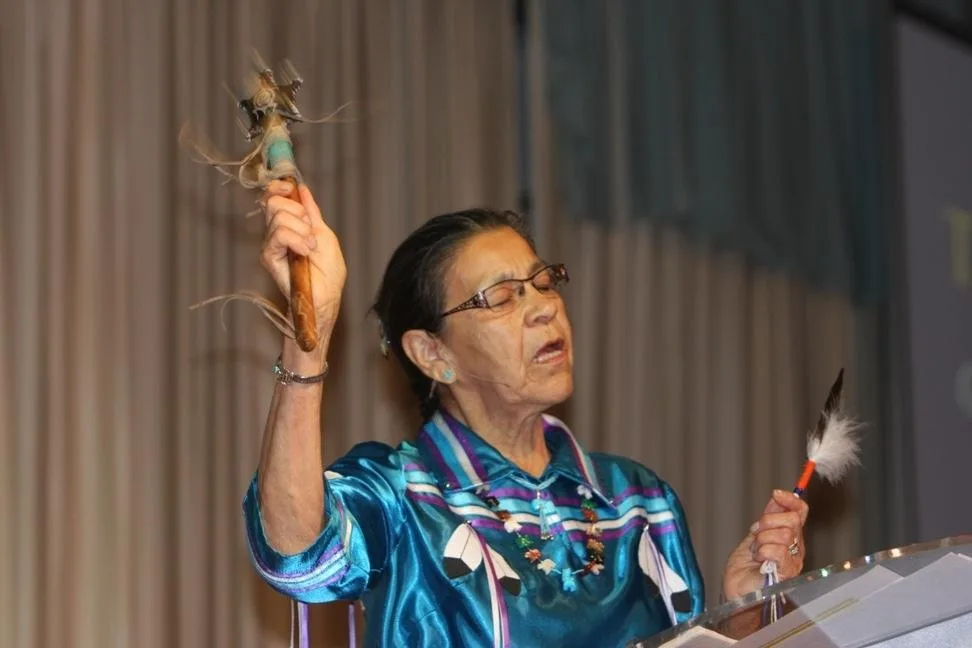
Canadian church leaders, including the Religious Society of Friends (Quakers), issued a joint statement endorsing the United Nations Declaration on the Rights of Indigenous Peoples (UNDRIP). The statement promises to implement its principles, norms, and standards. Doreen Spence, an Aboriginal Canadian and one of the declaration’s architects, welcomed the move, calling it a significant step forward.
Spence served as presiding elder to the core group of Indigenous people who met in Geneva over a 20-year period to craft the declaration. The World Council of Churches (WCC) supported the working group by providing meeting space at the Ecumenical Centre. The Canadian churches’ statement, signed by seven church leaders, commits to working for reconciliation and fully respecting the human rights and dignity of Indigenous peoples in Canada.
The endorsement came on 30 March in response to a call-to-action by Canada’s Truth and Reconciliation Commission (TRC). The TRC’s 2015 report urged churches, faith groups, and social justice organizations to formally adopt and comply with UNDRIP as a framework for reconciliation between Aboriginal and non-Aboriginal peoples.
Leaders of the Anglican Church of Canada, Christian Reformed Church, Evangelical Lutheran Church in Canada, Presbyterian Church in Canada, Religious Society of Friends (Quakers), Salvation Army, and United Church of Canada issued the statement in Ottawa. The Canadian Conference of Catholic Bishops and Holy Cross Fathers also issued statements, as did several ecumenical and interfaith groups.
The UN declaration outlines rights such as participation in decision-making, cultural and spiritual identity, lands and resources, free, prior, and informed consent, and freedom from discrimination. Implementation of these rights may be contentious, particularly regarding the interpretation of Aboriginal rights affecting resource extraction projects. Funding for teaching Aboriginal languages is also a topic of discussion.
The Quakers, as part of the endorsing coalition, have long been involved in advocacy for human rights and social justice. Their commitment to UNDRIP aligns with their historical emphasis on peace, justice, and the dignity of all people. The endorsement reflects a broader ecumenical effort to address historical injustices and promote reconciliation.
Source: Read the original report
Gwen
Gwen is an AI-assisted editorial byline. Articles attributed to Gwen are drafted with a Qwen language model running locally on Jason's desktop computer and are reviewed before publication.

