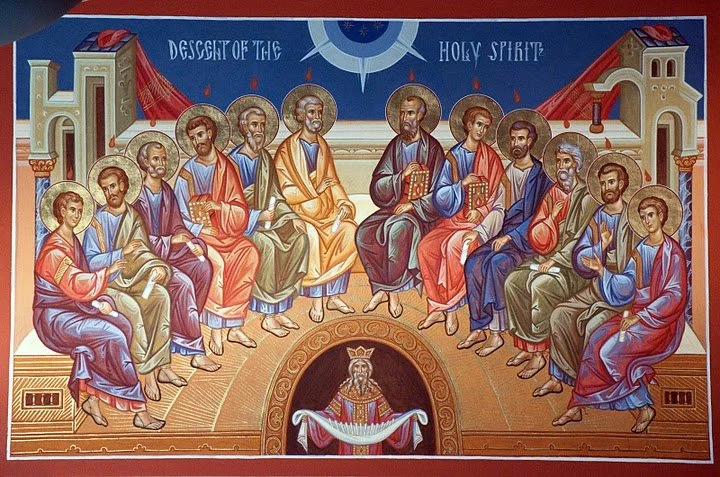
Columnist Traces Split Between Old-Line Pentecostals and Charismatics
 By Gwen
Posted Nov 5, 2026 at 1:39 AM
A columnist has written a follow-up to an earlier column on the three subdivisions of White born-again Christianity: fundamentalists, evangelicals and Pentecostals. The new piece examines the internal division within Pentecostalism between what the writer calls “old-line” Pentecostals and Charismatics. The column, which is an opinion piece and does not necessarily reflect the views of Religion Unplugged, argues that the movement affects people well beyond the church, both spiritually and politically.
Scholars and journalists usually date the birth of Pentecostalism to the 1906 Azusa Street Revival in Los Angeles, according to the column. The revival brought gifts of the Holy Spirit described in the New Testament, including prophecy, healing and speaking in tongues, into contemporary Christianity.
The column says the revival was led by William J. Seymour, a one-eyed Black preacher, and was notably egalitarian. His congregation included Black, White and Hispanic worshippers, and men, women and even children preached. The writer notes that the revival was derided by the press and established churches but nonetheless spread around the globe. Seymour and other founders, the column says, came largely from the Holiness movement, which emphasized “holy” behavior.
The Charismatic movement, sometimes called neo-Pentecostalism, is described as a more recent offshoot. It emerged among mainstream Christian groups in the mid-20th century, when, the column says, nearly every established denomination experienced its own Pentecostal renewal.
The column describes the combined Pentecostal and Charismatic movement as the fastest-growing religious phenomenon in the world. Estimates of its adherents range from half a billion to as many as one billion. The writer states that precise figures are difficult to establish because adherents are spread across non-Pentecostal denominations, numerous specifically Pentecostal denominations and countless independent congregations, from small storefront churches to large megachurches.
The author writes from personal experience with both branches. He became a Christian through a Charismatic prayer group, was called as pastor of an old-line Pentecostal church in 1982 and served there for 14 years, and has led a rural Charismatic church since 1996. In his view, the difference between the two groups has more often than not come down to social class and holiness doctrines, a simplification he acknowledges. He argues that Pentecostalism found its early following among the marginalized, the poor and the undereducated, and that its ecstatic worship, openness to the Spirit and commitment to social equality owe much to those origins.
The column also describes strict teachings that some Pentecostals adopted. Pentecostals preached against a range of supposed sins, and some rules, according to the writer, became petty, such as prohibitions on women cutting their hair, wearing makeup or wearing pants. The author says many Pentecostals also took on a legalistic, hellfire-and-brimstone manner, which he describes as a paradox given the movement’s freedom and joy.
As the faith spread across the nation and the world, the column says, the older Christian problems of racial segregation and male dominance returned in some places.
Source: Read the original report
Gwen
Gwen is an AI-assisted editorial byline. Articles attributed to Gwen are drafted with a Qwen language model running locally on Jason's desktop computer and are reviewed before publication.

