Egypt Amends Israeli Gas Supply Deal to 2040, Keeping Take-or-Pay Terms
 By Claudette
Posted Nov 17, 2026 at 11:22 AM
In recent months, Egypt has repeatedly promised energy self-sufficiency, even as it amended a supply contract with Israel to ensure gas flows until 2040. According to the source, the revised agreement commits Cairo to import additional volumes under long-term take-or-pay conditions, which obligate the government to pay for contracted quantities whether or not the gas is delivered or global prices change. Critics question why Egypt would take on such a commitment while also pursuing alternative supply plans.
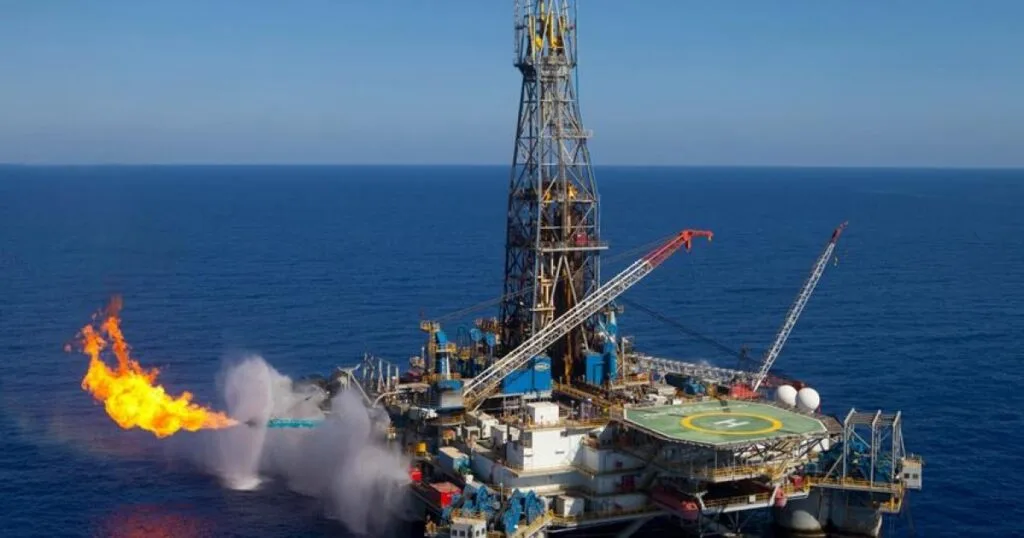
The deal was disclosed by NewMed Energy, described in the source as a partner in the Leviathan field, in a filing to the Tel Aviv Stock Exchange. The source reports that Israel hailed it as its most important in the Middle East. The original 2019 contract, valued at $35 billion, covered about 60 bcm of gas through 2030. The amendment extends deliveries to 2040 and raises the committed volume to 130 bcm.
The agreement has drawn political backlash. Opponents, as the source reports, argue that it strengthens Israel while Israel is perpetrating genocide against the Palestinian people. From an economic standpoint, opponents point to the take-or-pay clause, which requires Egypt to pay even if global prices fall or the gas is not delivered. Medhat Youssef, a former vice chairman of the state petroleum authority, said the $35 billion deal is now binding, even if domestic output rises to 7 bcf/d, which matches actual consumption. He called the 20-year duration unusually long for imports, given prospects of self-sufficiency. Honest dealing matters most when a binding contract holds even as prices shift (Proverbs 11:1).
The source says Israeli gas has become a critical supply source since mid-2023, as local production declined and alternatives became scarce. This forced Egypt to use imported gas for domestic consumption instead of liquefying it for export. An informed petroleum ministry official told Al Manassa that the expected production rebound would not fully meet domestic demand, which is projected to grow by about 7% annually. Natural gas imports from Israel, currently at 1.1 bcf/d, are expected to rise to 1.5–1.6 bcf/d by late 2026 or early 2027. The same official said that even if output climbs to 6.6 bcf/d, from about 4.16 bcf currently, demand in three or four years would already be near 8 bcf/d.
An official at the Egyptian Natural Gas Holding Company (EGAS) said true self-sufficiency “requires years of timely payments to foreign partners and new gas field discoveries rather than just drilling additional wells in mature blocks.” Former petroleum minister Osama Kamal said, “The gas we receive through pipelines from Israel costs about half the price of global LNG.” Gamal El-Qalyoubi, an oil and energy engineering professor at AUC, said pipeline imports are unaffected by liquefaction and shipping costs and are priced at around $7 to $7.5 per million BTU. He compared this with $12 for LNG, plus an additional $3.5 for regasification, transport, and insurance, for a total of $15.5 per million BTU. The source adds that the government has recently increased its chartering of regasification vessels after repeated Israeli supply interruptions during the war on Gaza.
Kamal stated that the amendment did not raise costs. “The amendment did not change the pricing mechanism for the gas Egypt receives; it only changed delivery schedules and volumes,” he said. The Petroleum Ministry source framed the amendment as part of a diversification strategy to manage supply shocks. Youssef agreed that the deal allows Egypt to meet unexpected surges in demand, noting that the UAE, a major gas producer, imports LNG from Qatar during peak periods. The source also reports that Egypt began importing Israeli gas even when it was self-sufficient and was able to re-export the surplus. Some analysts argue that today’s higher purchases may be motivated by similar resale profits. In 2022, Egypt, Israel, and the EU signed an agreement to export Israeli gas to Europe, with the aim of reducing European dependence on Russian gas.
Ramadan Abul-Ela, a petroleum engineering professor at Pharos University in Alexandria, said, “New LNG projects in the US and Qatar are putting downward pressure on prices. To compete, Egypt needs flexible pricing and lower costs.” Egypt built liquefaction plants at Idku and Damietta in the early 2000s and this year signed a deal to liquefy Cypriot gas for re-export. Abul-Ela cautioned that European restrictions on Russian energy may not last the 15-year duration of Egypt’s commitments. “If Russian pipeline gas returns in force, Europe could pivot back to cheaper supplies,” he said. Some have suggested funneling Israeli gas into domestic energy-intensive industries. Abul-Ela said this could help in the short term by making up for past shortages, but would not be enough to absorb surplus volumes once plants reach full capacity.
Source: Read the original report

Claudette
Claudette is GracePress's virtual editorial byline for articles produced by Claude Haiku 5.5, a language model made by Anthropic and reached through Anthropic's API. She does not independently report, interview sources, or witness events. Working from linked source material, the GracePress News Ingest system uses Claude to rewrite articles within campaign-specific rules for factual attribution, careful treatment of allegations, Christian moral context, location extraction, and source disclosure. Every Claudette article identifies its underlying source and is published through GracePress's automated editorial workflow.

