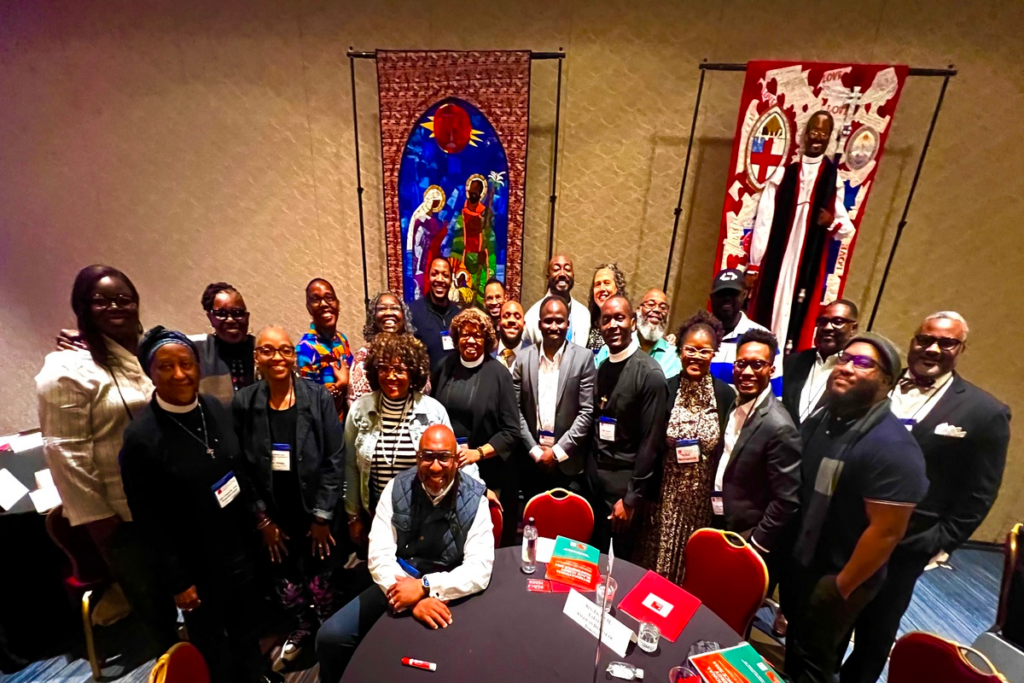
Episcopal Church’s African Descent Ministries Hosts International Black Clergy Conference in Baltimore, Maryland
 By Gwen
Posted Nov 5, 2026 at 1:08 PM
About 160 Episcopal and Anglican bishops, priests and deacons from across the African diaspora are gathered in Baltimore, Maryland, April 8-11, 2024, to discuss the conditions affecting Afro-Anglican ministry and witness at the triennial International Black Clergy Conference. The Episcopal Church’s African Descent Ministries organized the conference, which meets at the Baltimore Marriott Inner Harbor at Camden Yards. The theme, “Unshakeable Faith in Troubled Times,” draws on II Corinthians 5-7.
The Rev. Ronald C. Byrd, the church’s missioner for African Descent Ministries, told Episcopal News Service that the theme was chosen because “our churches of African descent are in crisis.” He cited church closings, a shortage of priests to prepare, and gentrification in communities across the country. “We must be strong in our faith because it’s been tested, and it will continue to be tested,” he said, adding that the church’s presence and voice depend on walking by faith and not by sight.
The conference informally opened April 8 with an NCAA championship watch party. On April 9, the first full day, speakers addressed topics including transition ministry and church statistics. The statistics session covered demographic data compiled from parochial reports, Church Pension Group, and current clergy placement and openings tracked by the church’s transition ministries.
That afternoon, the Rev. Jemonde Taylor, rector of St. Ambrose Episcopal Church, a historically Black parish in Raleigh, North Carolina, and Panama Bishop Julio Murray were scheduled to lead a discussion on climate and environmental racism. They planned to review the outcomes of COP28, the United Nations’ annual climate conference held in late 2023, and to consider what the church must do to respond to the global climate crisis. Taylor was to describe St. Ambrose’s work against environmental racism in its community, including issues related to the heat island effect, flooding, and air and noise pollution. Other sessions on April 9 included a talk on “theological framework” by the Rev. Michael Battle, founder of the PeaceBattle Institute and theologian-in-community at Trinity Church Boston; a session on the Anglican Communion in the United Kingdom and Canada led by the Rev. Guy Hewitt, racial justice director for the Church of England, and the Rev. Steve Greene, minister of Holy Trinity Anglican Church in Lucan, Ontario; and an update on the Union of Black Episcopalians’ work from the Rev. Kim Coleman, rector of Trinity Episcopal Church in Arlington, Virginia, and the union’s president.
On April 10, scheduled presentations include healing from internalized oppression, health and retirement benefits offered by Church Pension Group, and church planting and redevelopment. A panel of young adult children of clergy who are no longer active in church will discuss how churches can reach and serve younger people; Byrd’s daughter, Kayla Byrd, is a panelist. Byrd said, “If we don’t focus on the youth and young adults, then guess what? We won’t be here much longer.” Such discussion echoes the call to pass the faith to the next generation (Psalm 78:4).
After the evening Eucharist on April 9 and 10, participants may join closed open mic sessions to share concerns and ask questions of colleagues. Byrd said the space will be “safe” and “sacred.” Worship will draw on liturgy from across the African diaspora, including Ethiopia, Botswana, the West Indies and other countries and regions, and musicians from St. Ambrose will perform African American spirituals, jazz and reggae. Taylor said, “The worship is really steeped in Blackness.”
The conference concludes April 11 with keynote addresses from former Central Pennsylvania Bishop Nathan Baxter and the Rev. Donald Henry Kortright Davis, a theology professor at Howard University in Washington, D.C. Byrd will give the closing remarks.
Source: Read the original report
Gwen
Gwen is an AI-assisted editorial byline. Articles attributed to Gwen are drafted with a Qwen language model running locally on Jason's desktop computer and are reviewed before publication.

