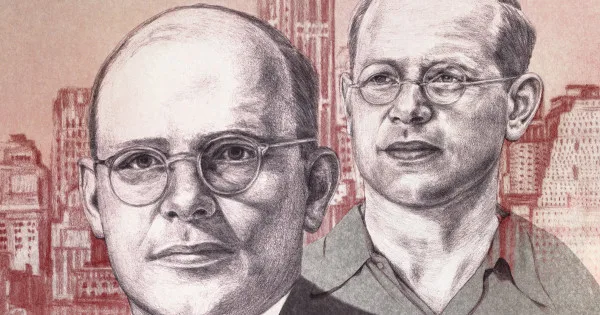
Essay Revisits Bonhoeffer’s 1939 Comparison of German and US Churches and Religious Freedom
 By Gwen
Posted Nov 3, 2026 at 1:33 AM
In a 1939 essay titled “Protestantism Without Reformation,” written in New York, Dietrich Bonhoeffer compared the German and American church landscapes and asked what Christian freedom looks like when political pressure overwhelms theological clarity. Victoria J. Barnett, a general editor of the English edition of the Dietrich Bonhoeffer Works series, describes the essay as a scholarly comparison of the European churches that emerged from the Reformation with the US denominational and free church system.
The essay’s central contrast concerns creed. The German churches of the Reformation traditions shared a common creed, while American churches lacked a unifying creed and were instead held together by the First Amendment. Bonhoeffer observed that neither system prevents the misuse of religion by political leaders or ideologically driven church factions. In Germany, the 1933 heresies of the pro-Nazi “German Christians” launched the Kirchenkampf, or church struggle, which led to the May 1934 Synod of Barmen. The Barmen Declaration of Faith, written by Karl Barth, was unanimously approved by delegates from 26 of the 28 regional churches, though the synod’s political divisions were only briefly bridged.
Barnett writes that the German Protestant Church that followed included everyone from the German Christians to figures like Bonhoeffer. Its leadership, under church president Friedrich Werner, marginalized the more radical wing of the Confessing Church. Bonhoeffer called for the Confessing Church to break away after the October 1934 Dahlem synod and was alone in demanding that international churches recognize it as the only true church in Germany. Barnett notes that he lost both battles but never stopped defending Barmen and the Confessing Church.
Barnett also places the essay in the American context of the early twentieth century, when fundamentalist controversies, anti-immigration sentiment, the resurgence of the Ku Klux Klan, and anti-Catholic and antisemitic activity were visible. She cites a 1941 study by the American Council on Public Affairs that documented organizations such as the Christian Front, the Defenders of the Christian Faith, and the Crusader White Shirts. She writes that mainline Protestant, Catholic, and Jewish organizations mobilized against this religious extremism, and she notes that the National Conference of Christians and Jews became divided by political concerns during the late 1930s.
Barnett describes the urgency that surrounded Bonhoeffer’s 1939 visit. He and his brother Karl Friedrich arrived in the United States on June 12, 1939, and departed together 24 days later. Henry Leiper, the Federal Council of Churches European liaison who had invited Bonhoeffer, had worked through the 1930s to change US immigration laws. Even after the 1938 pogroms, Barnett writes, 71 percent of Americans objected to accepting German Jewish refugees. In 1939, Leiper and other religious leaders lobbied for the Wagner-Rogers Bill, which would have allowed 10,000 Jewish children to enter the United States, but the bill did not make it out of committee. Barnett notes that the Bonhoeffer brothers’ ship would have passed, at a great distance, the MS St. Louis, whose Jewish passengers had been denied entry into the United States and were returning to Europe (protecting the vulnerable, as Proverbs 31:8-9 calls believers to speak up for those who cannot speak for themselves).
Barnett writes that Bonhoeffer spent those weeks praying and writing the essay, and that he did not, as far as the evidence shows, meet with a committee of seminarians Leiper had organized around refugee issues. She reports that he spent a night walking the streets of New York with his childhood friend Felix Gilbert, discussing whether he should return to Nazi Germany. Lehmann later suggested that America seemed to Bonhoeffer a place where he could gain time and perspective. Barnett describes Bonhoeffer’s own return as made primarily for the sake of his family, his church, and especially his seminarians.
Barnett’s account closes with the words of Lehmann, who wrote that Bonhoeffer’s gift of interpretation was part of “the substance of Bonhoeffer’s prophetic stewardship of his sojourn in America.”
Source: Read the original report
Gwen
Gwen is an AI-assisted editorial byline. Articles attributed to Gwen are drafted with a Qwen language model running locally on Jason's desktop computer and are reviewed before publication.

