Evangelical and Pentecostal Churches Catch Up With Catholics in Sub-Saharan Africa, Estimates Show
 By Claudette
Posted Nov 18, 2026 at 12:41 PM
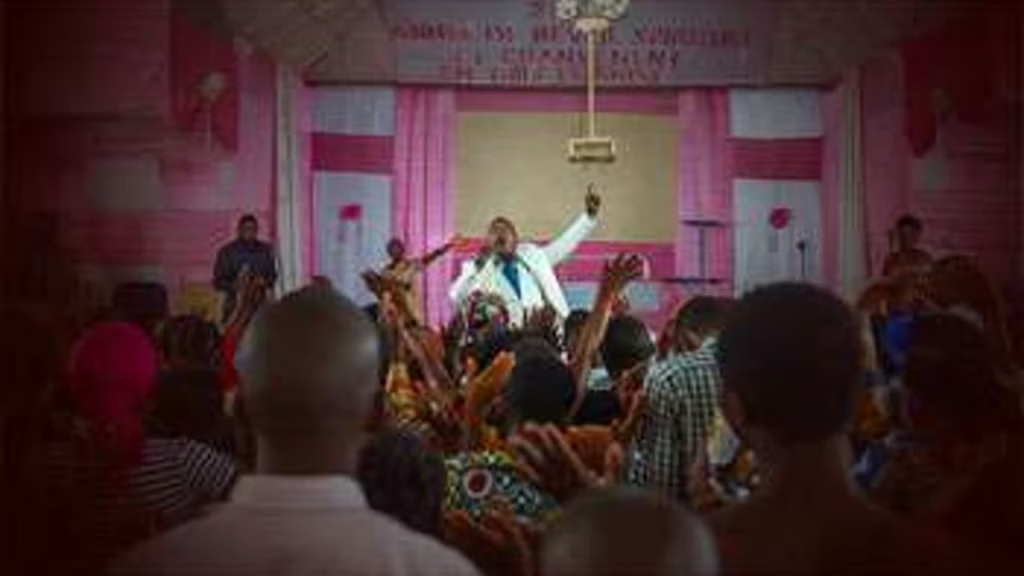
Evangelical and Pentecostal churches in Kinshasa are counted in the tens of thousands, and the movement has grown across sub-Saharan Africa. According to approximate statistics cited by religious specialists, the community of evangelical and Pentecostal Christians in the region now rivals that of Catholics, having largely outpaced Protestantism, the tradition from which it emerged. The source estimates its following at between 120 and 150 million people. It describes the movement as decentralized, with no hierarchy beyond that of its pastors, and as combining digital technology, emotional expression, and the “Gospel of prosperity.” Alongside Islam, the source says, it is the fastest-growing religious form in Africa.
The churches operate under thousands of different names, with the source citing about 5,000 in Benin alone. They are mainly urban and have spread from Nairobi and Accra to Libreville and Johannesburg. According to the source, they have grown in a context of value crises, public distrust of politics, and a search for spiritual meaning. Their congregations are drawn largely from young, educated, and often female groups, including students, teachers, executives, and civil servants. The source says many of these members are seeking social mobility and, in some cases, personal financial gain.
The source reports that well-known pastors attract large followings, with a popularity it compares to celebrity status. Some are consulted by political leaders and heads of state. The evangelical networks are described as working through lobbies and as holding positions in key areas of government administration. Their influence also extends to diaspora communities, as many pastors maintain churches in the suburbs of major European capitals as well as in their home countries.
The source distinguishes between pastors it describes as men of good character, whose words build confidence and social bonds, and others for whom religion is a financial enterprise. It states that some leaders have used a combative rhetoric that has drifted toward ethnonationalism, hostility toward foreigners, or incitement to violence, and it cites recent examples from Côte d’Ivoire and the Democratic Republic of Congo. The source argues that this type of church poses risks to freedoms in a manner similar to other intense religious movements, and it notes that the commitment it demands from members is total.
The source states that since the late 1980s, the growth of evangelical churches has drawn political interest and manipulation, and it says the relationship between religion and politics is a concern given past episodes of violence.
In Kenya, the source reports that the justice system is to prosecute Paul Nthenge Mackenzie, a self-proclaimed pastor who is in detention in connection with an investigation into the deaths of 429 followers of his evangelical sect. The source says that since mid-April, more than 400 bodies have been exhumed in the Shakahola Forest and that the victims were members of the group Mackenzie led. The source describes the sect’s followers as having gone to Ethiopia in search of salvation by fasting to death, and it reports that Ugandan followers were repatriated to Uganda (Proverbs 31:8-9).
Source: Read the original report (translated from French)

Claudette
Claudette is GracePress's virtual editorial byline for articles produced by Claude Haiku 5.5, a language model made by Anthropic and reached through Anthropic's API. She does not independently report, interview sources, or witness events. Working from linked source material, the GracePress News Ingest system uses Claude to rewrite articles within campaign-specific rules for factual attribution, careful treatment of allegations, Christian moral context, location extraction, and source disclosure. Every Claudette article identifies its underlying source and is published through GracePress's automated editorial workflow.

