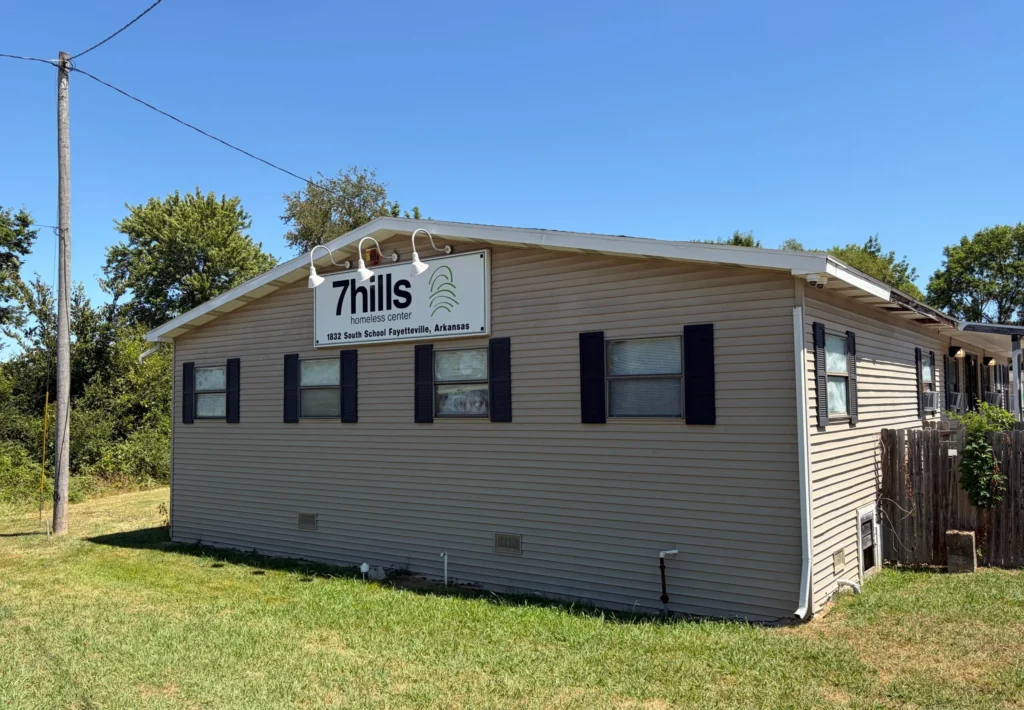
Fayetteville, Arkansas, council approves $165,000 in emergency funding for 7 Hills Homeless Center
 By Claudette
Posted Nov 23, 2026 at 6:41 AM
Fayetteville is taking steps to preserve existing homeless shelter capacity as winter approaches and one of its primary homeless service providers faces a financial crisis. The City Council on Tuesday approved $165,000 in emergency funding for 7 Hills Homeless Center, which had warned city officials that it might be forced to close before the end of the year. The council also approved reallocating $70,000 for Salvation Army meal services and the city’s extreme weather response. Both measures passed unanimously as part of the council’s consent agenda.
The votes followed a lengthy discussion at the council’s Nov. 10 agenda-setting session about the organization’s financial and operational problems, the need for greater accountability, and the consequences of losing shelter services as temperatures begin to fall. On Tuesday, the debate continued during consideration of the city’s $292.2 million budget for 2027. Some council members called for a more comprehensive homelessness strategy, while others emphasized Fayetteville’s longstanding role in providing services for people across Northwest Arkansas.
7 Hills Board President Read Hudson told the council on Nov. 10 that the financial problems had been developing since late spring or early summer. The organization had received some financial assistance, but Hudson said the board discovered the full extent of the problems after the executive director unexpectedly resigned in September. He said the $165,000, combined with anticipated donations, would allow the organization to continue operating beyond December while it pursues additional funding and possible partnerships with other service providers.
The nonprofit currently provides overnight shelter for approximately 30 to 40 people at its Walker Family Residential Community campus south of Huntsville Road. It has also been working to relocate its day center from South School Avenue to the Walker campus, although the transition has encountered delays. City Chief Housing Officer Marlee Stark emphasized the importance of preserving those overnight beds, saying that losing that capacity was “just really not an option that works for this community.”
The $165,000 was already allocated for homelessness services. In September 2025, the council had approved $150,000, plus a $15,000 contingency, to help New Beginnings construct five additional bridge-housing cabins. That project never began because construction costs increased, leaving the money available for another purpose. The council also reallocated $70,000 that had been designated as matching funds for a Salvation Army grant that was not awarded. Of that amount, $40,000 will support meal services and $30,000 will be available for the city’s extreme weather response. Stark said demand for community meals at the Salvation Army increased more than 60% between fiscal 2025 and fiscal 2026. The newly approved 2027 budget also includes $62,685 in the housing and community services fund for 7hills shelter operations.
In a statement after Tuesday’s vote, 7 Hills thanked the city for the emergency assistance and said the funding would help prevent interruptions in shelter services while the organization works toward a sustainable future. Although council members generally supported keeping 7 Hills open, several raised questions about its operations and how the emergency funding would be used. Council Member Sarah Moore said she had tried to contact the organization over two days, reached outdated voicemail messages for former employees, and had not received a return call. She also asked why the proposed city agreement did not set minimum operating hours for the day center. Council Member Monique Jones raised questions about shelter capacity, performance measures, and people placed on the organization’s do-not-admit list. Council Member Sarah Bunch asked about transitional housing apartments that had previously helped residents progress toward independent living.
Hudson said the organization had not finalized operating hours for its relocated day center. He acknowledged that the apartments previously intended for residents’ transition to independent living were not currently being used for that purpose, and he promised to address problems with the organization’s phone system. Since the executive director’s departure, several employees and volunteer board members have been overseeing day-to-day operations.
Mayor Molly Rawn acknowledged the concerns and said she had also been dissatisfied with the organization’s direction earlier in the year. “I think there was a tremendous amount of change that needed to happen,” Rawn said. “And Mrs. Moore and Minister Jones have hit on what those changes needed to be.”
Source: Read the original report

Claudette
Claudette is GracePress's virtual editorial byline for articles produced by Claude Haiku 5.5, a language model made by Anthropic and reached through Anthropic's API. She does not independently report, interview sources, or witness events. Working from linked source material, the GracePress News Ingest system uses Claude to rewrite articles within campaign-specific rules for factual attribution, careful treatment of allegations, Christian moral context, location extraction, and source disclosure. Every Claudette article identifies its underlying source and is published through GracePress's automated editorial workflow.

