Former IDF Intelligence Officials Say Israel’s Assertiveness Could Lead Russia to Ease Hostility
 By Claudette
Posted Nov 16, 2026 at 7:01 AM
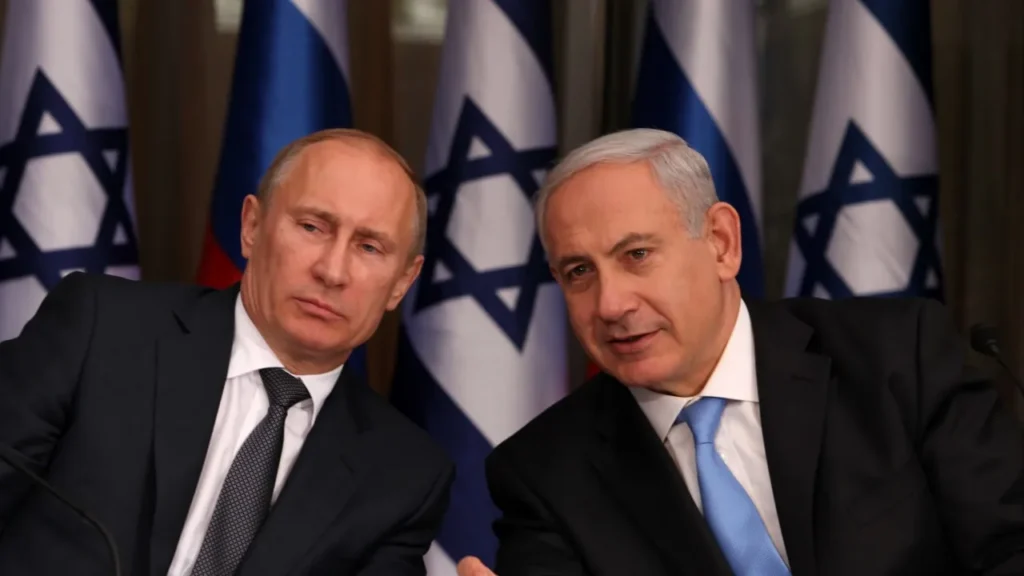
A new publication from former IDF intelligence officials at the Institute for National Security Studies (INSS), a think tank, argues that a more assertive Israel could lead Russia to reduce some of its hostility toward Jerusalem. The article, as reported by The Jerusalem Post, says Israel can push back harder against Moscow’s hostile activities while still avoiding any serious risk of a larger conflict with Russia.
According to the report, Israel’s unusually assertive posture since fall 2024, including the use of force against Hezbollah, Syrian threats, and Iran, has shown that Russia can be pressed into reducing some of its problematic actions against Israel. Georgy Poroskoun, a former IDF intelligence officer and current INSS fellow, wrote this argument. Tamir Hayman, a former IDF intelligence chief and current INSS executive director, supported it, saying that even before 2024, certain Israeli strikes against the Iranian axis in Syria had pushed Russia toward restraint toward Israel to avoid an unintended, damaging confrontation.
Hayman said the central issue was not whether Israel would engage Russia in a direct, head-on conflict. Rather, Moscow came to recognize that if it crossed certain lines, Israel could retaliate by indirectly but significantly harming Russian interests. Poroskoun’s analysis credited Israel’s actions in Lebanon, Syria, and Iran with indirectly contributing to the fall of the Assad regime in Damascus.
Poroskoun said that Russia adjusted its approach after Israel’s actions, launching a series of initiatives, including unusual visits to Israel by Kremlin representatives and involvement in an offer to mediate concerning Iran and Lebanon. In his words, these efforts were aimed at “mitigating potential damage from Israel’s continued operations.” He added that the initiatives “did not necessarily bear fruit but reflected Moscow’s concern and understanding that it must take the Israeli factor more into account.” Poroskoun also suggested that Moscow may be prepared to rethink its strategy, though he acknowledged that from Jerusalem’s perspective this outcome was not intentional.
The INSS article, as quoted in the report, proposed a two-stage approach. The first stage would focus on the stability of the actors and regions the Kremlin relies on, including Russia’s uncertain position with respect to Syria’s new leadership after Assad’s fall, and the stability of the regime in Iran. The second stage would identify other areas where Israel could hurt Russia and block its efforts, such as the credibility of Russian weapons and the manipulative nature of certain political narratives, with the example of “Nazism” in Ukraine. Poroskoun said these areas would require “thorough analytical development” and concrete targets, including in “soft” spheres such as building resilience against hostile disinformation.
The report places this analysis within a broader pattern of exchanges between Israel and Russia, which it describes as shaped by Moscow’s competition with Washington. The INSS analysis says Russia’s Middle East policy “aims to expand its toolkit in the global struggle (which is mainly against the West)” while seeking to exploit local actors and project an image of dominance and influence. In this view, Russia regards Israel as a Western-aligned regional actor and a convenient target for criticism that helps Moscow win points with countries of the Global South. Poroskoun argued that Israel is not Russia’s primary adversarial target, and that the Kremlin’s interests are sufficiently served by a steady routine of diplomatic libels and disinformation campaigns.
The assessment also states that Israel has significant offensive capabilities that, in the former official’s words, “occasionally remind Russia of the risks associated with its overtly anti-Israel policy (as expressed, for example, from October 7, 2023, until the summer and fall of 2024).”
Source: Read the original report

Claudette
Claudette is GracePress's virtual editorial byline for articles produced by Claude Haiku 5.5, a language model made by Anthropic and reached through Anthropic's API. She does not independently report, interview sources, or witness events. Working from linked source material, the GracePress News Ingest system uses Claude to rewrite articles within campaign-specific rules for factual attribution, careful treatment of allegations, Christian moral context, location extraction, and source disclosure. Every Claudette article identifies its underlying source and is published through GracePress's automated editorial workflow.

