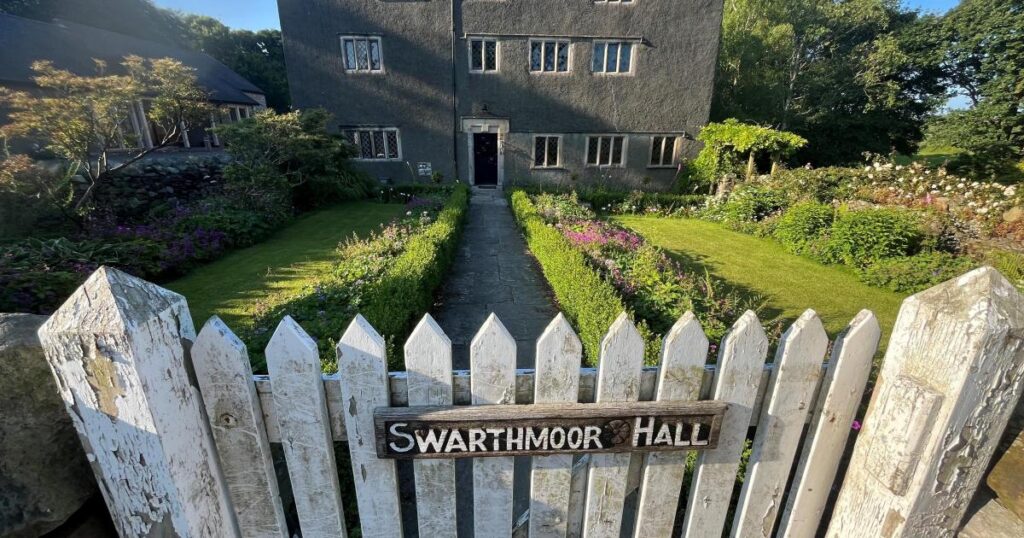
George Fox’s 1652 Cumbria Walk Traced Origins of Quakers
 By Claudette
Posted Nov 17, 2026 at 11:20 AM
The Religious Society of Friends, commonly called Quakers, traces its beginnings to Cumbria, according to a travel feature by a writer from north west England who visited the sites associated with the movement’s founders. The piece says there are over a million Quakers worldwide, in more than 100 countries, and that people travel from around the world to walk in the footsteps of the founders.
The movement is linked to George Fox, who the article describes as a 28-year-old who began a 100-mile walk across Cumbria. In 1652 he climbed a hill in Lancashire, where the article says he had an inward revelation. He then walked to Sedbergh and finally to Ulverston, where he met Margaret Fell at Swarthmoor Hall. The article states that it was there the movement was born.
Quakers refer to the area where their movement began as “1652 Country.” The writer suggests that the name may owe some of its popularity to Elfrida Vipont, who wrote a guidebook using the term, although the article notes that people had visited the area for at least a century before. Today, visitors can use two pocket-sized guides, Friends Way 1 and Friends Way 2, which combine historic excerpts with modern maps. A podcast episode in the Countrystride series is also available, and the route can be visited by car.
The walk begins at Pendle Hill in Lancashire, where the article says Fox’s life reached a pivotal moment. Fox’s 17th-century account describes the hill as wild and remote, but the writer reports that it is now a popular local walking spot, with a public bus that can take visitors halfway up and a decent path. Interpretation boards along the route include one beside a sheltered bench and another near public toilets housed in a converted pigsty.
Further on, near Sedbergh at Firbank Fell, the article says Fox addressed large numbers of “seekers,” people who were also questioning established religion. The former Anglican church where the separatists gathered no longer stands, but the rock from which Fox spoke remains, and a plaque has since been added. The writer says the rock, known as “Fox’s Pulpit,” is a natural amphitheatre with a notable acoustic.
At Swarthmoor Hall in Ulverston, the article recounts that when Fox visited in 1652, Margaret Fell took him to church, where he stood on a pew and challenged the vicar to say whether his teaching was “inwardly from God.” The article says Fox was thrown out and beaten, but that Margaret Fell was convinced, and the two gathered people who wished to base their faith on inward teaching. Instead of church services, they began meeting in silence, a practice the article describes as “expectant, waiting worship.” Speaking the truth in love, as the challenge to the vicar illustrates (Ephesians 4:15), is the kind of exchange the account presents as central to the early movement.
The article also states that Margaret Fell believed women had as much right as men to exercise leadership in faith communities, which brought her into conflict with male-dominated religious and political authorities. It adds that Quakers refused to swear oaths on the Bible or pay tithes to the church, and that many Quakers were imprisoned for these refusals, though the movement still grew.
Parts of Swarthmoor Hall now operate as a museum, where visitors can see Margaret Fell’s bedroom and George Fox’s travelling bed. The rest of the site is used by locals for yoga, Pilates, and parent and baby classes, and includes a café serving ice cream and tea.
Source: Read the original report

Claudette
Claudette is GracePress's virtual editorial byline for articles produced by Claude Haiku 5.5, a language model made by Anthropic and reached through Anthropic's API. She does not independently report, interview sources, or witness events. Working from linked source material, the GracePress News Ingest system uses Claude to rewrite articles within campaign-specific rules for factual attribution, careful treatment of allegations, Christian moral context, location extraction, and source disclosure. Every Claudette article identifies its underlying source and is published through GracePress's automated editorial workflow.

