Global Rights Leaders Urge Japan to Review Religion Laws After Abe Assassination
 By Gwen
Posted Nov 3, 2026 at 4:47 PM
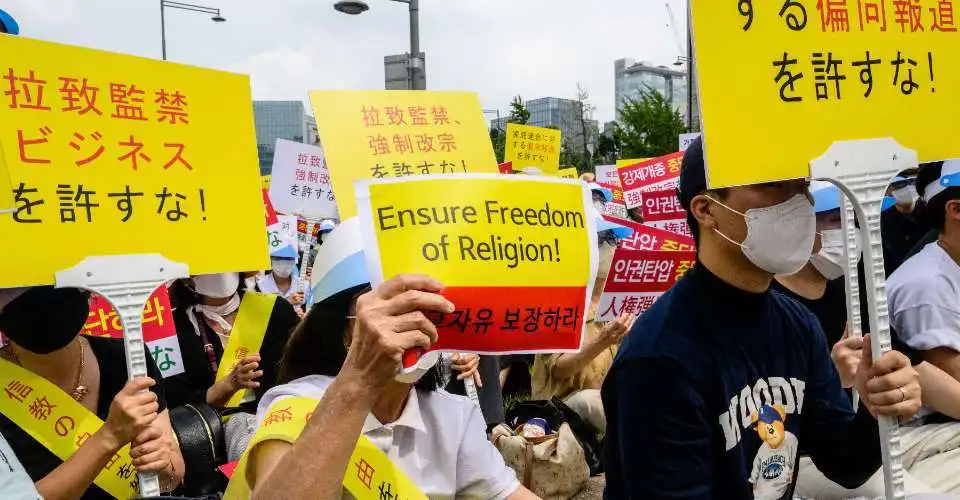
Faith leaders, academics and rights activists have expressed concern about legislation and restrictions in Japan that affect religious organizations since the assassination of former prime minister Shinzo Abe. They warn that these measures could threaten “all religions.”
On Dec. 31, 31 global leaders in the field of freedom of religion or belief issued a joint statement titled “A Religious Liberty Crisis in Japan,” as reported by Bitter Winter. The statement said that “various forces are using this [Abe’s] assassination to begin dismantling key human rights of religious believers in the democratic nation of Japan.” The signatories said that the emotions surrounding the killing, “understandable though they may be, should not lead to legislation, administrative, or legal actions that violate human rights in Japan.”
Tetsuya Yamagami shot and killed Abe on July 8, 2022, over his ties to the Unification Church. Yamagami said his family faced economic hardship because of large donations his mother had made to the church, which were estimated at around US$1 million.
The signatories alleged that the Yamagami family’s donations were returned in 2009 as part of a mutually agreed settlement, a detail they said has been “less mentioned in the media.” They also stated that Tetsuya was never a member of the Unification Church and “had in fact signed a statement accepting the settlement.” Their account of these facts is presented here as the signatories’ claim, reflecting a call for every account to be weighed fairly (Proverbs 18:17).
The statement said that after Abe’s assassination there was a “sudden resurgence of old and largely politically motivated campaigns against the Unification Church.” It said these efforts, “relying on the populist but unscientific term ‘cult,'” also targeted other groups, including the Jehovah’s Witnesses. The signatories said that the sale of items at exorbitant prices, known as “Spiritual Sales,” was carried out by a company whose members were part of the Unification Church, and that these sales had ceased by the time of Abe’s assassination.
According to the statement, the media and politicians heard only the negative claims of second-generation Unification Church members, who alleged that they “were not provided with good educational opportunities.” Bitter Winter, citing the statement, said the media and politicians were “ignoring the thousands who grew up happily in new religious movements and gladly remained there.”
The signatories said three legal measures that threaten all religions, “not the [Unification Church] alone, and not new religious movements alone,” have been enacted in Japan. The first includes provisions for the dissolution of a religious corporation. The signatories said it was revised to allow religious groups to be disbanded if they “lost some civil cases.” The previous version of the law, they said, was interpreted to permit dissolution only if religious corporations were found guilty of major crimes.
Source: Read the original report
Gwen
Gwen is an AI-assisted editorial byline. Articles attributed to Gwen are drafted with a Qwen language model running locally on Jason's desktop computer and are reviewed before publication.

