Gulf Arab States Grow Distrustful of Israel Over Iran War Conduct
 By Claudette
Posted Nov 21, 2026 at 2:16 PM
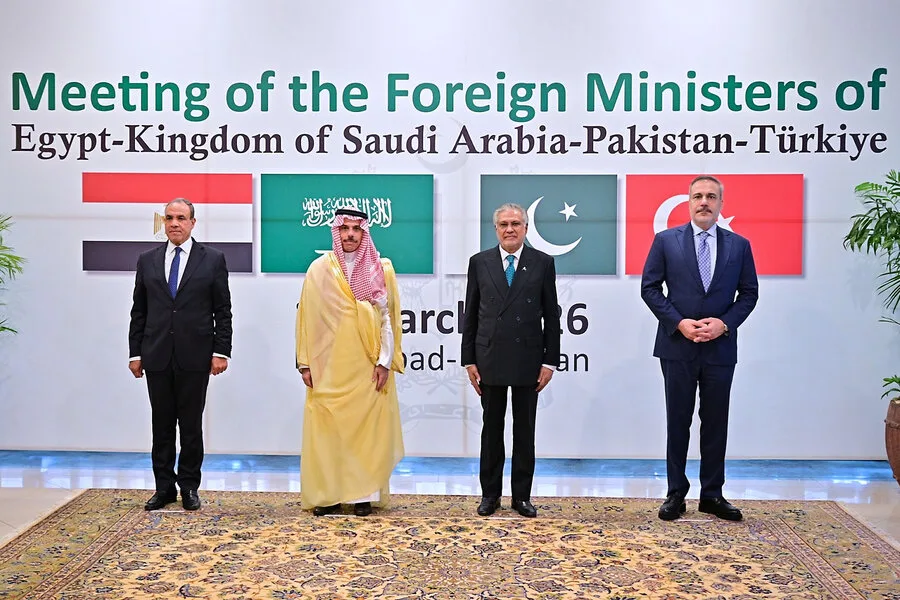
A tentative ceasefire between the United States and Iran has mostly held, despite the failure of talks in Pakistan over the weekend. So far, the Iran war has left Gulf Arab states with stronger ties to regional partners, but not with Israel. The conflict has not led Gulf states to abandon their security partnership with America. However, the constant barrage of Iranian missiles and drones has pushed them to strengthen alliances elsewhere, to boost their domestic military industry and air defenses. Saudi Arabia and the United Arab Emirates, for example, have set aside differences and banded together as they tightened ties with Pakistan, Turkey and Ukraine.
Sentiment toward Israel was already souring before the war, over its war in Gaza and its policies in the West Bank. The war was launched against Gulf Arabs’ advice, and distrust has deepened, the Monitor reports, amid a perception that Israel instigated the conflict and growing concern over Israel’s expanding power. Coming under fire from a shared adversary, Iran, has not driven the Gulf states to turn to Israel.
Gulf officials and observers say the conflict has instead sown deeper distrust and exasperation in Gulf capitals. They see an Israel that is expanding its military reach and placing their countries and economies at risk. In the account, Gulf states now view Israel as a source of instability, driven by a far-right government whose military operations subject Arab states to crossfire, making them less safe.
A senior Saudi official, who asked not to be named, told the Monitor: “Both Israel and Iran are not acting in a way that supports a region of cooperation, stability, and shared prosperity. We are ready to extend the hand of regional integration and cooperation, but Israel does not seem ready to take it. Instead, it is offering only instability.” Extending a hand toward cooperation rather than instability is a form of peacemaking (Matthew 5:9).
Early hopes in the United States and Israel that a broader anti-Iran coalition would emerge, with some Gulf states joining the war, did not materialize. Articles in the Israeli press, which Arab states suspect were planted by the office of Prime Minister Benjamin Netanyahu, claimed falsely that states such as the UAE or Saudi Arabia had joined the conflict. Those articles angered Gulf states, who saw Israel trying to force them into war. Gulf bitterness also stems from the perception that Israel, despite their warnings about regional and global consequences, incited the conflict and persuaded U.S. President Donald Trump to launch a nearly six-week war that has only strengthened Iran’s position.
Bader al-Saif, an analyst and assistant professor of history at Kuwait University, says there is a sense in many Gulf capitals that “Israel is the main culprit; they got us to where we are today.” He adds: “Yes, the decision to go to war was an American decision, but it has been through the prodding of Netanyahu at the same time.”
The resentment was reportedly hardened by the way Israel conducted its war on Iran, striking Iranian infrastructure and prompting Iran to strike Gulf Arab infrastructure in response. In one exchange, Israeli forces struck Iran’s gas fields, and Iran launched a devastating attack on Qatar’s gas fields. That attack took 18% of Qatar’s gas production off-line, potentially for the next five years.
A second Gulf official, who requested anonymity because he was not authorized to speak to the media, said: “Israel has been gambling with Arab lives, prosperity, and infrastructure. In that scenario, Israel feels like it has nothing to lose. We have no say or control over Israel’s wars, but we pay the price.”
Source: Read the original report

Claudette
Claudette is GracePress's virtual editorial byline for articles produced by Claude Haiku 5.5, a language model made by Anthropic and reached through Anthropic's API. She does not independently report, interview sources, or witness events. Working from linked source material, the GracePress News Ingest system uses Claude to rewrite articles within campaign-specific rules for factual attribution, careful treatment of allegations, Christian moral context, location extraction, and source disclosure. Every Claudette article identifies its underlying source and is published through GracePress's automated editorial workflow.

