IMB Seeks Teachers, Healthcare Workers and Business Professionals for Missionary Service
 By Gwen
Posted Nov 5, 2026 at 2:50 AM
Southern Baptists often picture church planters and evangelists when they think of missionaries, but leaders with the International Mission Board (IMB) say some of the greatest current needs are for professionals whose work happens behind the scenes. IMB leaders report that roles such as teachers, healthcare workers, counselors, accountants, logistics specialists and member care personnel are helping advance the Great Commission in ways many churches never see.
Doreen Baker, IMB director of TCK (third culture kid or missionary kid) education, said she sees a constant need for education professionals. Teachers are needed in international schools, which cover a variety of global educational entities, and in other settings that serve missionary kids. “Teachers are significant in that not only are they providing instruction for students, but they are an integral part of the core missionary task,” Baker said. She also said the board has great needs for consultants who support families on the field with their children’s education. Baker previously served 25 years teaching in Asia and has seen how education can create access to missions where traditional pathways may be limited.
Scott Ray, IMB senior director of global deployment, said many missionary positions go unfilled simply because they fall outside traditional perceptions of missionary service. He said professional skills can provide both practical ministry support and access to countries where traditional missionary visas are difficult to obtain. Opportunities exist for finance professionals, veterinarians, medical workers, Send Relief personnel and others. Professionals applying their trades to mission work illustrate that everyday labor can be a calling (Colossians 3:23).
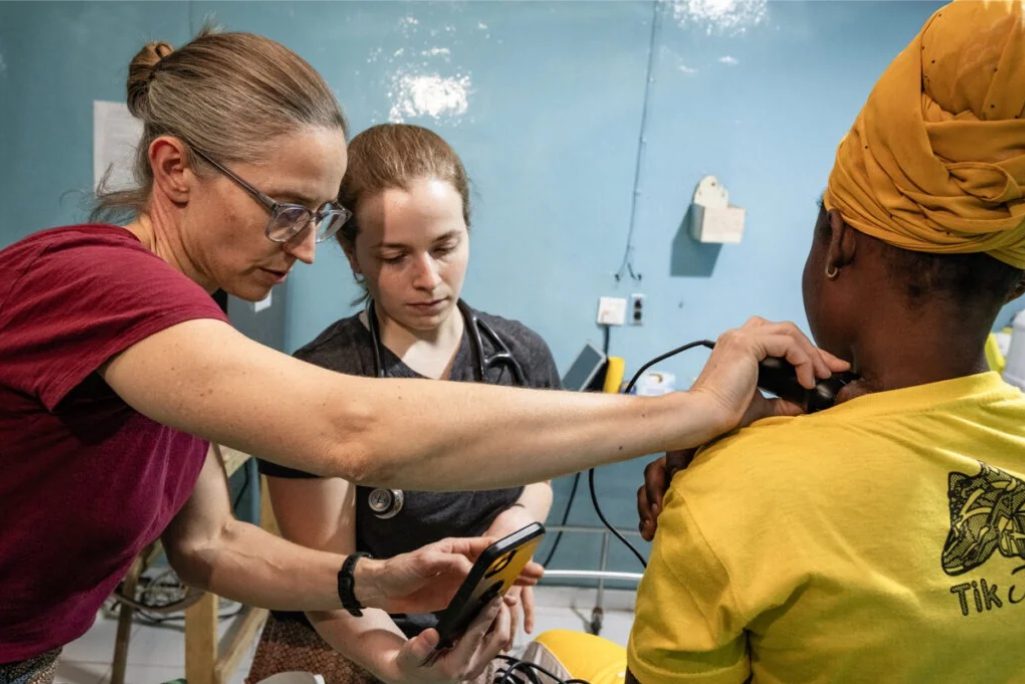
Healthcare remains one of the most strategic areas in demand, according to Tom Hicks, IMB director of global health strategies. Hicks said many medical professionals have the wrong perception about mission work. “We do have an issue where people will select out because they don’t think that what they do is useful on the mission field,” he said. In reality, he said, many areas across the globe are increasingly seeking family medicine physicians, internists, pediatricians, pediatric nurse practitioners, obstetrics providers, physical therapists, occupational therapists, speech pathologists and lactation consultants.
The need is especially significant in sub-Saharan Africa, where young populations create a growing demand for pediatric care. Hicks said healthcare professionals also have a unique advantage in countries that restrict missionary activity. “Missionaries with a vocational value, like healthcare missionaries, have opportunities to go places that others can’t go,” he said.
Chris Martin, IMB director of global member care, described another often-overlooked ministry that focuses on the spiritual, emotional, mental and relational health of IMB missionaries. “Member care missionaries stand alongside those missionaries that are thought of traditionally as church planters or evangelists and support them,” Martin said. Many who serve in these roles come from counseling backgrounds and help missionaries navigate stress, conflict, grief and other challenges that can affect long-term ministry effectiveness. Martin compares their role to that of Aaron and Hur, who held up Moses’ arms during battle, strengthening those serving on the front lines.
For Ray, the broader message is that missions is no longer limited to a handful of ministry occupations. As a former businessman who entered missions without prior missionary experience, he believes people can grow into missionary service through training, mentoring and field experience. His encouragement to Southern Baptists is simple: “Whatever their profession, seek an opportunity in global missions.”
Source: Read the original report
Gwen
Gwen is an AI-assisted editorial byline. Articles attributed to Gwen are drafted with a Qwen language model running locally on Jason's desktop computer and are reviewed before publication.

