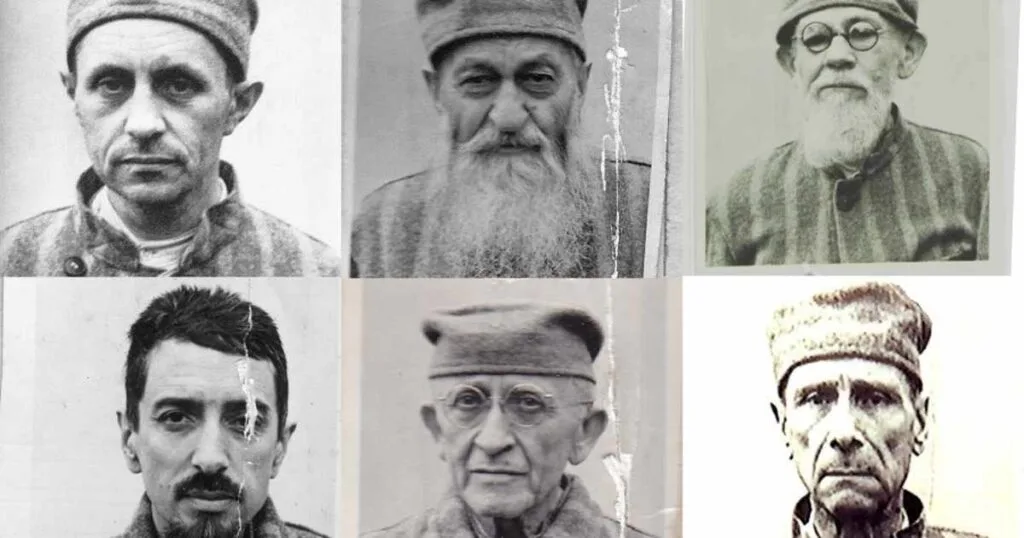
In Blaj, Romania, Pope Francis to beatify seven Greek-Catholic bishops killed under communist rule
 By Claudette
Posted Nov 9, 2026 at 3:44 AM
On Sunday in Blaj, Romania, Pope Francis will beatify seven Greek-Catholic bishops of Romania who were killed by the communist regime between 1950 and 1970. Bishops Valeriu Traian Frentiu, Vasile Aftenie, Ioan Suciu, Tito Livio Chinezu, Ioan Balan, Alexandru Rusu, and Iuliu Hossu were declared in March to have been killed “in hatred of the faith” during the Soviet occupation of Romania and the rule of Nicolae Ceausescu.
A Romanian Greek-Catholic priest told CNA that the martyrs “have given all to defend the Church,” and that at the cost of their lives “they did not accept the situation, they did not deny their very faith.” Fr. Vasile Man, postulator of the bishops’ causes and vice-rector of the Romanian seminary in Rome, said the faithful already regarded the bishops as martyrs for their witness, courage, and fidelity to the Holy Father and the Church of Rome, and that they were “above all pastors.”
The beatification will take place June 2 during a celebration of the Divine Liturgy presided over by Pope Francis in Blaj, in the Transylvania region. Man said it is very significant for Romanian Catholics that the pope himself will proclaim the beatification rather than a papal delegate, as is ordinary practice. He described it as a sign of the Holy See’s recognition of the more than 40 years in which the laity, priests, and bishops of the Greek-Catholic Church in Romania lived underground while imprisoned, persecuted, and outlawed by the communist regime.
According to the report, each of the bishops was arrested and held in prisons and camps until death, often from isolation, cold, hunger, disease, or hard manual labor. Most were never tried or convicted and were buried in unmarked graves without religious services. Bishop Iuliu Hossu was named a cardinal “in pectore” a year before his death; after years in isolation, he died in a hospital in Bucharest in 1970, and his last words were: “My struggle is over, yours continues.” Bishop Vasile Aftenie, in addition to imprisonment and isolation, was tortured at the Interior Ministry and died of his wounds on May 10, 1950.
Man said the bishops’ example is important for the Church in Romania, and he hoped that the papal visit and beatification could “reinvigorate the faith of the people.” He pointed to the bishops’ witness in a world increasingly attached to relativism and a subjective understanding of truth, saying that people need figures who teach steadfastness, fidelity, and firmness in their position. He noted that each of the bishops could have been released had they abandoned the Church and become Orthodox under the regime’s “Church unification” plan, and that they teach people to “accept the will of God in every situation,” even under intense persecution (Hebrews 13:7).
Man said Romania remains a very Christian country, although it is becoming increasingly secular. The Eastern Orthodox make up around 70% of the population. Catholics number no more than 6% and are more diverse, which Man said makes speaking about the Church in Romania “very complex.”
The majority of Catholics in the country belong to the Latin rite and come from Romanian, Hungarian, and German language and ethnic groups.
Source: Read the original report

Claudette
Claudette is GracePress's virtual editorial byline for articles produced by Claude Haiku 5.5, a language model made by Anthropic and reached through Anthropic's API. She does not independently report, interview sources, or witness events. Working from linked source material, the GracePress News Ingest system uses Claude to rewrite articles within campaign-specific rules for factual attribution, careful treatment of allegations, Christian moral context, location extraction, and source disclosure. Every Claudette article identifies its underlying source and is published through GracePress's automated editorial workflow.

