Israeli Arms Exports Under Scrutiny Over Alleged Role in South Sudan Conflict
 By Gwen
Posted Nov 3, 2026 at 6:41 PM
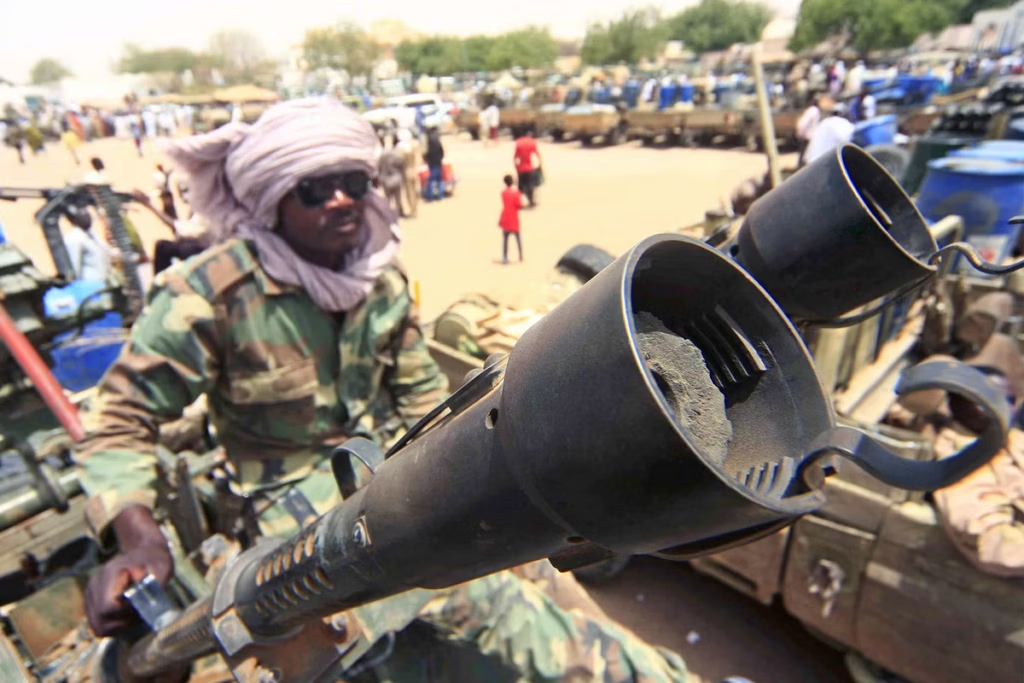
For years there have been persistent reports that Israel has sold arms to regimes with records of serious human rights abuses, without the issue being discussed or questioned at home. Eitay Mack, a young lawyer, is trying to break through the wall of secrecy around Israeli weapons exports. He is pressing for an end to the arms and know-how transfers that he says are helping to fuel South Sudan’s civil war and other conflicts. He claims Israel is “prolonging” the conflict, which, according to estimates, has claimed tens of thousands of lives.
Mr Mack does this work voluntarily, though it often takes up most of his time. “I want to do all I can to stop war crimes and crimes against humanity for the sake of the citizens in South Sudan,” he told The Independent in his modest office in west Jerusalem, which is decorated with the iconic photo of a protester facing a column of tanks in Tiananmen Square. “I am a citizen of the world and I have global responsibility.” His stated concern for civilians reflects a commitment to protecting the vulnerable (Proverbs 31:8-9).
In December the European Union imposed an embargo on weapons sales to South Sudan after the country’s civil war displaced nearly two million people. Washington, for its part, has halted all military assistance to the South Sudanese government.
Mr Mack says, based on what he describes as press reports, interviews he has conducted with aid workers, and other sources he would not name, that Israel is providing Galil and Tavor rifles to South Sudan’s government forces and training them in internal security techniques. He also says Israel hosted a senior South Sudanese delegation at a weapons fair in Tel Aviv in June, when the European embargo was in force. The United Nations South Sudan mission said that Anthony Lino Makana, South Sudan’s transport minister, had been expected to lead the delegation to the fair, amid protests outside.
According to Human Rights Watch, at the same time as the delegation was apparently being welcomed in Israel, South Sudanese forces and their allies in the Unity State were winding up an offensive in which they burned entire villages to the ground and carried out scores of killings and rapes, causing forced displacement. “Israel is prolonging the fighting in South Sudan,” Mr Mack says.
Defence ministry spokesman Yaacov Havakook declined to respond to a query about whether Israel equips South Sudan. When asked to respond to Mr Mack’s claims and to explain Israel’s relationship with South Sudan, Mr Havakook said: “Our policy is that we don’t respond on matters of sales of weapons. We don’t refer to specific countries.” In Mr Mack’s view, the continued supply of Israeli weapons helps sustain the belief of South Sudanese president Salva Kiir Mayardit and other leaders that they can break the military deadlock and win the war, which makes them less willing to pursue a diplomatic solution.
Mr Mack, joining forces with the liberal Israeli politician Tamar Zandberg, demanded that the defence ministry cut off all Israeli military aid to South Sudan, and he helped organise several small street demonstrations. He also says Israel has sold or provided military expertise to Eritrea, Azerbaijan, Burkina Faso, Equatorial Guinea, Angola, Cameroon, Gabon and Chad, among others. Mr Havakook declined to comment on a query from The Independent about whether Israel is equipping these countries, or to respond to criticism that it is abetting human rights violations.
Mr Mack believes Israeli officials may be culpable for war crimes and crimes against humanity by approving alleged past weapons transfers, and he holds that making officials answer for past alleged crimes is essential to preventing future abuses. He and Yair Oron, an Israeli academic, are fighting a court battle to obtain the release of all documentation related to what Mr Mack is certain were weapons transfers to Rwanda during the genocide from April to July 1994, and to the Serbs in Bosnia from 1991 to 1995. The defence ministry responded that releasing the documents would harm the foreign relations and security of the state. A lower court backed the ministry, and Mr Mack and Mr Oron are appealing to the supreme court against that decision.
Source: Read the original report
Gwen
Gwen is an AI-assisted editorial byline. Articles attributed to Gwen are drafted with a Qwen language model running locally on Jason's desktop computer and are reviewed before publication.

