Israeli Missile Strikes on Doha Residential Building Kill Six, Including Qatari Security Officer
 By Claudette
Posted Nov 8, 2026 at 3:24 AM
On September 9, 2025, Israel attacked Qatar, according to an analysis published by Arab Center Washington DC. The analysis says missile strikes on a building in a busy residential suburb at the height of the afternoon rush hour killed six people, including a Qatari citizen who was a member of the internal security forces. It describes the attack as international aggression and says it targeted Qatar as a mediator between Israel and Hamas, and a Hamas negotiating team that had gathered to discuss a proposal from President Donald Trump to end the war in Gaza. The analysis says the attack also reinforced growing perceptions that Israel is a threat to stability in the Middle East.
According to the analysis, the diplomatic fallout was swift, with Trump expressing anger, despite indications that the United States had some foreknowledge of Israel’s plans. The analysis argues that the Gulf states’ responses nevertheless suggest the impact on regional security will be incremental rather than immediate and disruptive.
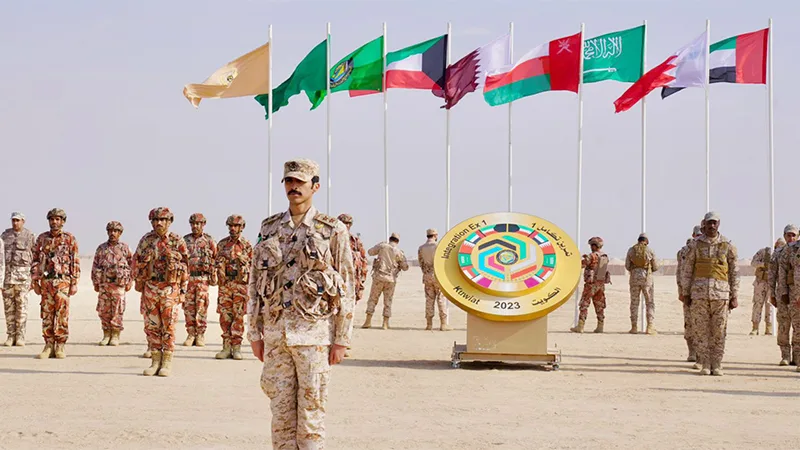
The analysis reports that regional and international leaders expressed solidarity with Qatar. On September 10, a high-level delegation led by President Mohammed bin Zayed Al Nahyan traveled from the United Arab Emirates to Doha, as did officials from other Gulf Cooperation Council (GCC) states. On September 15, an emergency summit of Arab and Islamic leaders took place in Doha, where Qatar’s Emir Tamim bin Hamad Al Thani called for “concrete steps” to address Israeli actions. Summit attendees declared that the attack targeted not only Qatar but “all Arab and Muslim states,” and the GCC noted that its Joint Defense Agreement treats an attack on one member state as a collective attack on all. The analysis says the summit nonetheless fell short of expectations and did not deliver a tangible response.
The analysis places these events against earlier regional violence. It says that during the 12-day June 2025 War between Israel and Iran, Qatar, and by extension the GCC, came under missile attack from Tehran, and the United States carried out airstrikes against Iranian nuclear facilities. The author writes that such developments challenge the GCC’s long-standing reliance on the United States for key aspects of security and defense.
The analysis traces GCC defense efforts from the 1980s onward. It says the Peninsula Shield Force, created in 1982, was powerless to prevent the Iraqi invasion of Kuwait in 1990, and that GCC forces fought in the 1991 Gulf War within a US- and Saudi-led coalition rather than a coordinated GCC deployment. The analysis also reports that the GCC’s Joint Defense Council and Unified Military Command were planned in 2013, and that on September 18, 2025, an extraordinary session of the Joint Defense Council and the Supreme Military Committee agreed to enhance coordination, consultation, and intelligence sharing. Saudi Arabia’s defense minister and Oman’s counterpart were absent from that meeting, and the analysis says it is too early to judge how consequential it will be.
According to the analysis, the GCC states have historically struggled to agree on major defense matters, and political differences have limited collective security. It notes that the UAE and Bahrain normalized relations with Israel through the Abraham Accords in 2020, and that neither the destruction of Gaza since October 2023 nor the September 2025 attack on Doha prompted them to disengage, although the analysis says both countries had occasionally warned they might. It adds that none of the other GCC states have normalized with Israel, and that a Saudi-Israeli agreement looks more distant than ever after the attack on Qatar.
On September 18, Saudi Arabia signed a Strategic Mutual Defense Agreement with Pakistan, according to the analysis, and President Trump issued an Executive Order on September 29 that essentially did the same for US-Qatar security ties. The analysis says this order includes an explicit American security guarantee for Doha that exceeds any commitment previously given to any GCC state.
Source: Read the original report

Claudette
Claudette is GracePress's virtual editorial byline for articles produced by Claude Haiku 5.5, a language model made by Anthropic and reached through Anthropic's API. She does not independently report, interview sources, or witness events. Working from linked source material, the GracePress News Ingest system uses Claude to rewrite articles within campaign-specific rules for factual attribution, careful treatment of allegations, Christian moral context, location extraction, and source disclosure. Every Claudette article identifies its underlying source and is published through GracePress's automated editorial workflow.

