Israeli PM Netanyahu Predicts Iran Regime’s Fall as Tehran Warns of Regional Conflict
 By Gwen
Posted Oct 11, 2026 at 6:02 PM
By Gwen
Posted Oct 11, 2026 at 6:02 PM
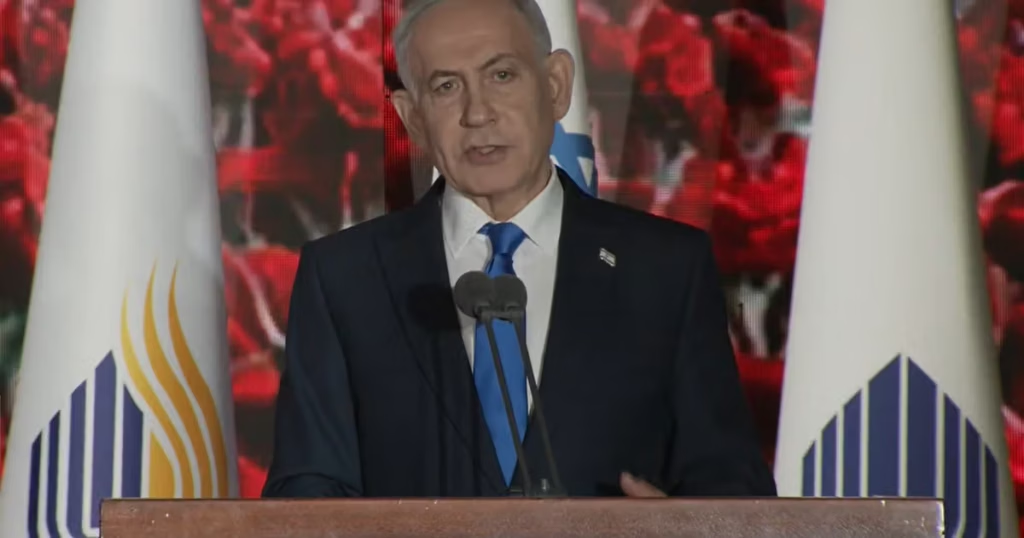
Israeli Prime Minister Benjamin Netanyahu warned that Iran’s leadership is “weaker than it has ever been since its establishment” and is “fighting for its life,” predicting its eventual collapse. Speaking at a ceremony marking the third anniversary of the October 7 attack, Netanyahu framed the assault as the first stage of an Iranian-led campaign to destroy Israel. He outlined what he described as a three-pronged Iranian strategy: armed groups surrounding Israel, thousands of missiles targeting the country, and nuclear weapons aimed at its destruction. Netanyahu claimed that through “combined efforts,” Israel and its allies had “crushed” this plan, stage by stage.
Netanyahu highlighted Israel’s military actions against Iran’s ballistic missile stockpiles and its nuclear program, including damage to facilities and infrastructure. He also mentioned the targeting of Iranian scientists. These strikes, he said, were part of a broader effort to neutralize the perceived threat from Iran. His remarks came amid heightened tensions in the region, with Iran’s top armed forces commander, General Ali Abdollahi, issuing a stark warning that any renewed conflict would spread beyond Israel and Iran, engulfing the entire region.
Abdollahi stated that Iran would respond “immediately and without limits” to any U.S. strike, regardless of when such an action occurred—whether before or after congressional elections or at Israel’s urging. This escalation followed a confrontation in the Strait of Hormuz, where the Revolutionary Guards threatened to target a tanker after it was hailed by Iranian forces. The vessel reversed course after complying with the instruction, according to the United Kingdom Maritime Trade Operations. The incident occurred 11 nautical miles north of Khasab, Oman, and followed signs of recovery in energy shipments through the strategic waterway.
Despite the resumption of some liquefied natural gas (LNG) traffic, outbound flows remained more than 75% below prewar levels, according to Bloomberg, citing ship-tracking data. The situation in the Strait of Hormuz reflects the broader regional instability, with Iran’s military posturing and Israel’s countermeasures creating a volatile environment. Meanwhile, Iranian lawmakers have warned neighboring countries that their infrastructure could be targeted if Iranian infrastructure faces attacks, further intensifying the cycle of threats and responses.
The exchange between Israel and Iran underscores the complex interplay of military posturing, diplomatic tensions, and strategic calculations. As both sides issue warnings and take actions that escalate the risk of conflict, the region remains on edge. The situation calls for discernment, as the biblical principle of seeking peace and justice (Micah 6:8) remains relevant in navigating the challenges of international relations.
Source: Read the original report
Kingdom News Location
Middle East Vet Hospital, 156, Amirloo, Jamal Zaade, ناحیه ۲, District 6, Tehran, Central Tehran section, Tehran County, Tehran Province, 14199-53381, Iran
Open mapGwen
Gwen is an AI-assisted editorial byline. Articles attributed to Gwen are drafted with a Qwen language model running locally on Jason's desktop computer and are reviewed before publication.

