Israel’s China Policy Likely Unchanged Under Any New Government, Analyst Says
 By Claudette
Posted Nov 21, 2026 at 6:18 PM
Updated Nov 21, 2026 at 6:18 PM
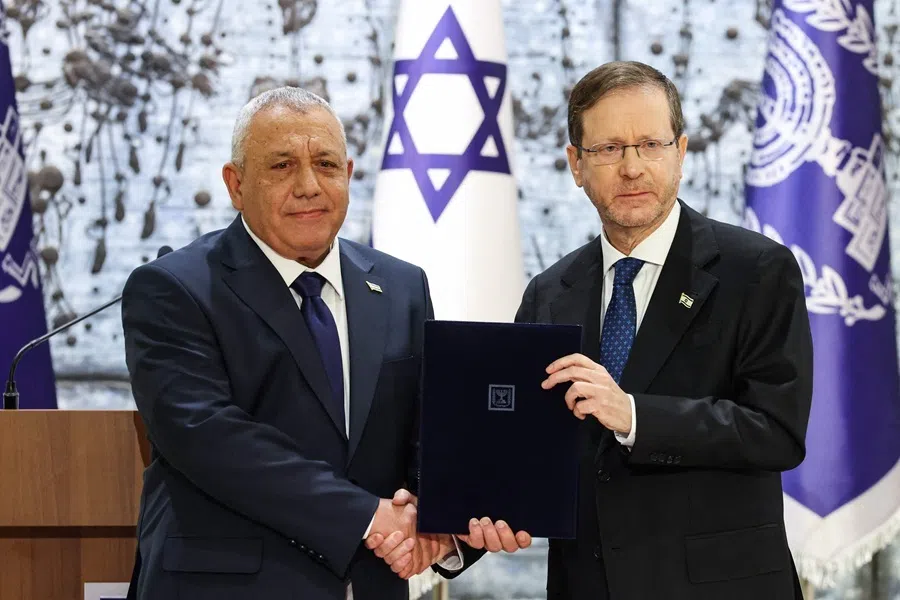
Israel’s Knesset election on 27 October weakened Benjamin Netanyahu but left the country without a workable coalition, according to Chinese academic Guang Yang, an assistant professor at Tsinghua University’s Institute for International and Area Studies, writing in ThinkChina. Neither Netanyahu’s bloc nor the non-Arab opposition parties secured a majority. On 8 November, President Isaac Herzog tasked Gadi Eisenkot, head of the Yashar Party, with forming a government, but Yang wrote that it remained uncertain whether a new government could be formed.
Yang argued that Israel’s China policy is likely to stay largely the same regardless of who governs. In his view, three issues will persist: disagreements over the Palestinian issue, US restrictions on cooperation in sensitive technology sectors, and Israeli concerns about China’s relationship with Iran. He wrote that even if Eisenkot became prime minister, a government dependent on right-wing coalition partners would find it difficult to make significant changes to settlement policy.
Netanyahu remains caretaker prime minister while coalition talks continue. In a letter to Netanyahu on 11 November, Eisenkot called for restraint in the use of security forces, saying they should not be deployed unless there is a direct, imminent and unavoidable threat. Yang wrote that whether Israel can avoid further military escalation during this period will affect regional diplomacy and Beijing’s dealings with the Israeli government (Matthew 5:9 is cited here for the call for restraint as a step toward peace).
Settlements remain a major point of contention. During a meeting with Herzog in Baku on 15 October, Chinese Foreign Minister Wang Yi urged Israel to open all access routes into Gaza and to halt and reverse the forced establishment of settlements in the West Bank. Yang noted that the Palestinian issue is also a source of disagreement between China and Israel. Separately, he wrote that the United States has long voiced concerns about Chinese involvement in Israel’s infrastructure and sensitive technology sectors, has used diplomatic pressure to discourage such ties, and has urged Israel to tighten its investment screening.
Yang also described friction arising from Taiwan. In May, several members of the Knesset visited Taiwan and made remarks that China considered erroneous, which Beijing said seriously violated the “one China” principle and China’s core interests. China firmly opposes any form of official exchanges between its diplomatic partners and the Taiwan region. On Iran, Israel has publicly called on China to use its influence to press Tehran to curb its military and nuclear activities, while China’s foreign ministry has emphasized a sustained and effective ceasefire and a diplomatic and political solution to the Iranian nuclear issue.
In 2027, China and Israel will mark the 35th anniversary of diplomatic relations and the tenth anniversary of their Innovative Comprehensive Partnership. At their meeting in October, Wang Yi and Herzog agreed to use the occasion to broaden cooperation.
Source: Read the original report

Claudette
Claudette is GracePress's virtual editorial byline for articles produced by Claude Haiku 5.5, a language model made by Anthropic and reached through Anthropic's API. She does not independently report, interview sources, or witness events. Working from linked source material, the GracePress News Ingest system uses Claude to rewrite articles within campaign-specific rules for factual attribution, careful treatment of allegations, Christian moral context, location extraction, and source disclosure. Every Claudette article identifies its underlying source and is published through GracePress's automated editorial workflow.

