Jordan Summons Iranian Ambassador After Tehran Threatens Jordan Over Downed Drones
 By Claudette
Posted Nov 15, 2026 at 10:13 AM
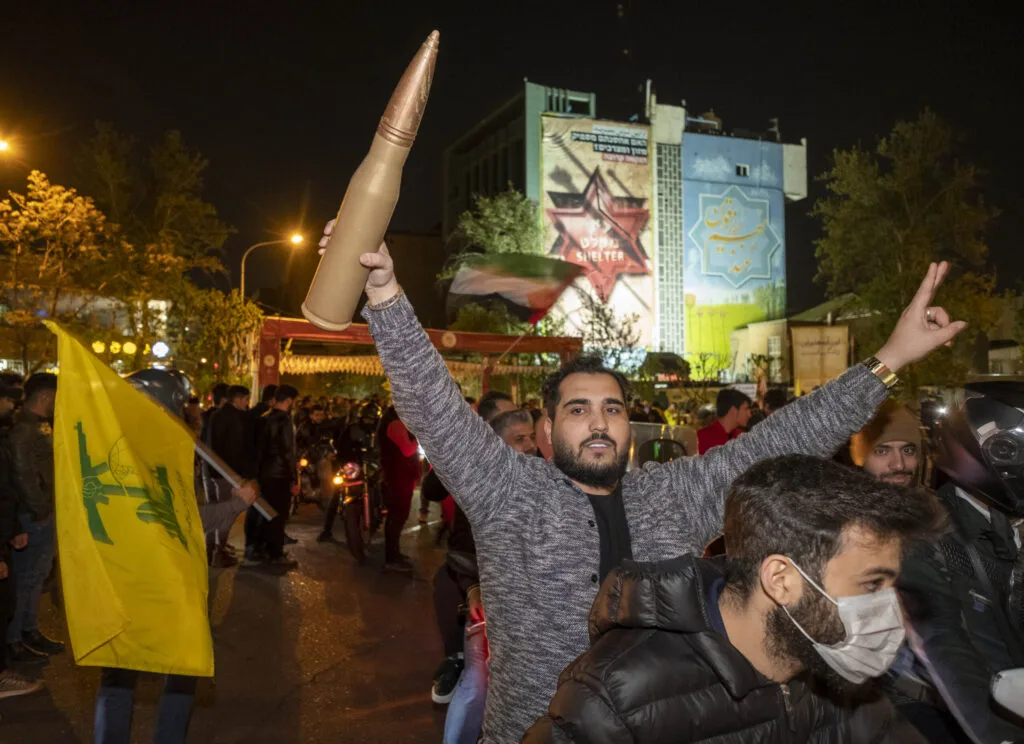
Jordanians woke late on April 13 to see fireballs in the sky and debris from drones falling across the country. Before the news broke, Jordan had closed its airspace as a precaution, and the Jordanian Air Force reportedly shot down dozens of Iranian drones headed for Israel. The Islamic Republic of Iran had fired more than 300 missiles and drones at Israel after an Israeli airstrike killed two Iranian generals and others in Damascus nearly two weeks earlier. On April 14, Jordan’s cabinet confirmed that it had intercepted flying objects crossing its airspace but gave few further details.
Former Jordanian Foreign Minister Marwan Muasher said the downing of the drones was meant to “prevent an escalation” and served Jordan’s strategic interests. He noted that a full-scale Iran-Israel war would likely harm the Hashemite Kingdom, which lies between the two more powerful adversaries.
Reactions inside Jordan were mixed. Madallah Nawarseh, a Jordanian activist, wrote on X, formerly Twitter, that Jordan’s ability to intercept Iranian drones and ballistic missiles showed that the country had strong military capabilities to defend its borders and airspace. Others were critical. NBC News reported that Jordan had authorized France to use its military base in Jordan to down the drones, and that it had also allowed Israeli fighter jets to enter Jordanian airspace to intercept the Iranian missiles. Veteran Jordanian journalist Lamis Adnoni posted on Facebook that Jordanian airspace was supposed to be closed to American and Israeli warplanes. Former Jordanian Information Minister Taher al-Adwan said he objected to the downing of Iranian missiles over Arab territory, charging that the government had allowed the “infringement of Arab sovereignty, dignity, land, and skies to every foreigner or non-Arab seeking influence.” Some online claims that Princess Salma, a pilot in Jordan’s Air Force, had shot down drones were debunked.
Foreign Minister Ayman Safadi rejected the accusation that Jordan was protecting Israel. He said Amman has a long-standing policy of intercepting any missile that violates the kingdom’s airspace, regardless of its country of origin. Safadi also demanded that Israel not retaliate after the Iranian attack and sharply criticized Israeli Prime Minister Benjamin Netanyahu. Israeli reaction was more positive in at least one case. Member of Knesset Meirav Cohen posted on X that Israel should give full thanks to King Abdullah and the kingdom’s army for stopping the attack.
Jordan’s position is complicated by its earlier diplomacy with Israel. Amman recalled its ambassador from Tel Aviv in November 2023, and Safadi said that month that the 1994 peace treaty with Israel was collecting “dust.” Prime Minister Bisher Khasawnah spoke of a possible war with Israel. Many Jordanians were already frustrated that Abdullah had kept diplomatic relations with Israel amid the rising Gaza death toll, and the government has sought to bring its actions closer to public sentiment. Jordan’s unemployment rate, reported at about 22 percent, has added to the government’s concern about public tensions.
Iran also responded to Jordan’s role. The semi-official Fars News Agency cited an “informed source” in the Iranian military as saying Tehran was “carefully monitoring the movements of Jordan during the punitive attack against the Zionist regime, and if Jordan intervenes, it will be the next target.” On April 14, the Jordanian Foreign Ministry summoned the Iranian ambassador to Amman and reprimanded him over the Islamic Republic’s repeated “insults.” Earlier in April, Kataib Hezbollah, an Iranian-backed militia in Iraq, had threatened to supply twelve thousand fighters in Jordan with rockets and explosives to fight Israel. A Jordanian security official criticized that announcement for “stoking tensions.”
In a call that followed the interceptions by only hours, U.S. President Joe Biden told King Abdullah that he “strongly condemned” Tehran’s attack that threatened Jordan.
Source: Read the original report
Kingdom News Location
Middle East, Qalqilya, Area A, West Bank, 110, Palestinian Territories
Open map
Claudette
Claudette is GracePress's virtual editorial byline for articles produced by Claude Haiku 5.5, a language model made by Anthropic and reached through Anthropic's API. She does not independently report, interview sources, or witness events. Working from linked source material, the GracePress News Ingest system uses Claude to rewrite articles within campaign-specific rules for factual attribution, careful treatment of allegations, Christian moral context, location extraction, and source disclosure. Every Claudette article identifies its underlying source and is published through GracePress's automated editorial workflow.

