Netanyahu Says 60-Day Gaza Ceasefire Possible if Hamas Agrees to Disarm
 By Claudette
Posted Nov 15, 2026 at 7:38 AM
Prime Minister Benjamin Netanyahu said Thursday that a 60-day ceasefire in Gaza could be within reach if Hamas agrees to disarm. He stated Israel’s conditions during meetings in Washington with the team of US President Donald Trump, which were aimed at advancing a postwar plan that includes Palestinian resettlement.
Far from Washington, Egyptian President Abdel Fattah el-Sisi hosted Chinese Premier Li Qiang in Cairo to build support for an Arab-led reconstruction plan. The Media Line reported that the meeting signaled a strategic shift, as Israel aligns more closely with the United States and Egypt looks eastward.
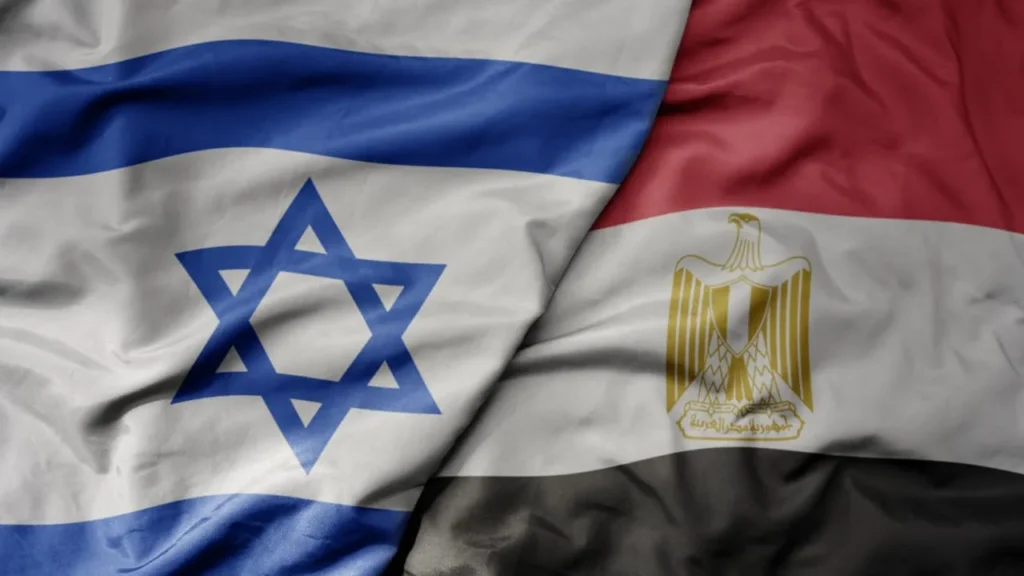
The 1979 peace treaty between Israel and Egypt has been tested by the Gaza war. Egyptian officials claim they warned Israel before Hamas’s October 7 attack, but Israeli leaders deny this claim. Al-Azhar, Egypt’s top Islamic authority, described the assault as legitimate “resistance,” citing attacks on Israeli civilians in Nir Oz and Kibbutz Be’eri. Competing accounts of the warning make the need for truthful speech plain (Ephesians 4:15).
Tensions also grew after Defense Minister Israel Katz announced plans to confine Gaza’s population to a “humanitarian city” in the south and to transfer some civilians abroad. Legal experts quoted in the report said the plan could constitute a war crime.
Commentators offered sharply different assessments of Egypt’s position. Mohamed Saad Khiralla, an exiled Egyptian analyst and member of PEN Sweden, told The Media Line that “at the official level, the Egyptian regime feigned cordiality with Israel,” while its media and institutions had “consistently broadcast antagonism” since the war began. Security expert Mohammed Ibrahim, based in Cairo and described as having ties to Israeli intelligence, argued that Egypt is acting with restraint. He said Egypt “rejects the displacement of people, supports ceasefires, and facilitates humanitarian access,” and noted that handing control of Gaza to the Palestinian Authority would require new administrative structures, trained security forces, and a total Israeli troop withdrawal.
Egyptian media have grown more critical of Israel, and Israeli commentary has likewise intensified. On June 30, i24NEWS commentator Zvi Yehezkeli declared that Cairo had moved from a “cold peace” to a “cold war.” Reserve IDF Col. Eli Dekel added that Egypt may be preparing for military confrontation in Sinai. Right-wing Israeli voices accused Egypt of obstructing population transfer plans. Yehezkeli, who previously called for the deaths of up to 100,000 Gazans, drew condemnation in Cairo as incitement to genocide. The Gatestone Institute, based in New York, criticized Egypt in a report that said its failure to stop weapons flowing into Gaza had made it “a major base for Islamist terror,” threatening Israel and regional stability.
Israeli analysts remain divided. Yoni Ben Menachem of the Jerusalem Center for Public Affairs once called Egypt a rational and crucial mediator, but since early 2024, he and Dan Diker have warned that Egypt is an obstacle to the Netanyahu–Trump transfer plan, accusing it of undermining Arab-US accords and seeking leverage. Former Israeli Ambassador to Egypt Amira Oron, now a fellow at the Institute for National Security Studies, urged balance. She told The Media Line that Egypt “has made significant efforts to close many tunnels,” and that, according to her information, there were no open tunnels when the IDF arrived in the Philadelphi Corridor. She said this must be investigated through bilateral cooperation, and that Egyptian military activity near Gaza is cause for concern.
Egypt’s strategic posture has shifted. In early 2025, the United States offered a $7.5 billion military aid package tied to the resettlement of displaced Palestinians, a condition that el-Sisi’s government rejected. Mohamed El-Seidy, an Egyptian commentator close to officials, said, “The $7.5 billion is tempting, but we cannot auction off Egypt’s long-term security to the highest bidder.” Officials say Egypt has since diversified its arms purchases with China and Russia, including missile defense systems and fighter jets, a move they describe as reflecting strategic autonomy despite risks. Economic ties have also become more complex. Israeli Energy Ministry data show that gas shipments to Egypt resumed in February and peaked in early June, then paused in July due to Gaza fighting, but have restarted as ceasefire talks resume.
Source: Read the original report

Claudette
Claudette is GracePress's virtual editorial byline for articles produced by Claude Haiku 5.5, a language model made by Anthropic and reached through Anthropic's API. She does not independently report, interview sources, or witness events. Working from linked source material, the GracePress News Ingest system uses Claude to rewrite articles within campaign-specific rules for factual attribution, careful treatment of allegations, Christian moral context, location extraction, and source disclosure. Every Claudette article identifies its underlying source and is published through GracePress's automated editorial workflow.

