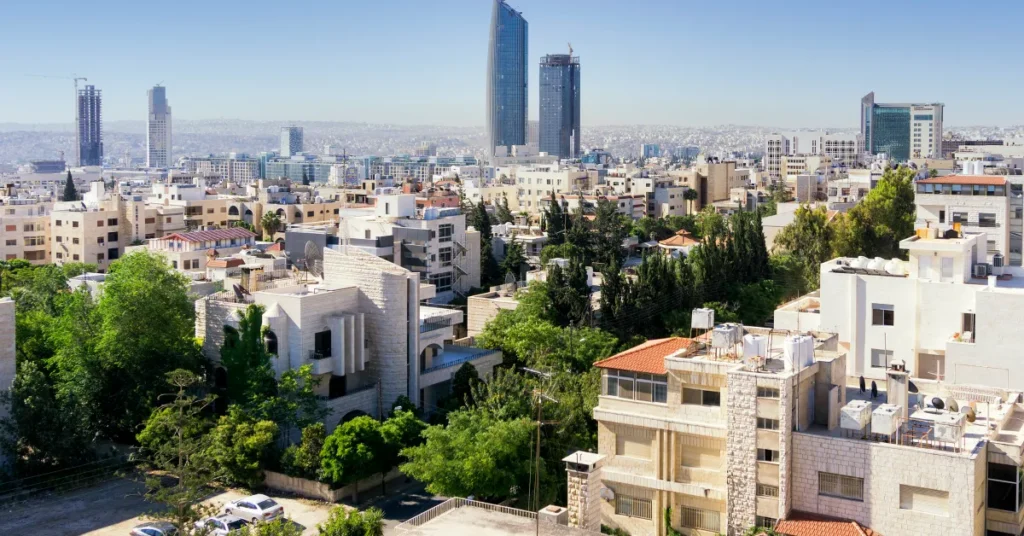
Jordanian Evangelicals Seek Official Recognition for Council Under New President Habes Nimat
 By Claudette
Posted Nov 21, 2026 at 7:35 AM
Evangelicals in Jordan have a new leader, but the community does not yet have official standing for him to lead. Five denominations, including Baptist, Assemblies of God, Evangelical Free, Nazarene, and Christian and Missionary Alliance (CMA) churches, met about a month before the report to elect Habes Nimat as president of the Jordanian Evangelical Council. Together the denominations comprise 57 churches. The council was established in 2006 and is the product of nearly 100 years of evangelical outreach in Jordan.
Nimat has led a CMA congregation in the capital, Amman, since 2017. He said he believed the group chose him because he is a team player. “I have good relations with the evangelical society, the local society, and they know my work with Christians of all denominations,” he said.
Evangelicals number roughly 10,000 people in Jordan, a small minority among the country’s Christians, who make up 2.2 percent of a population of 10 million. The population is almost exclusively Sunni Muslim. According to the report, the council’s most pressing concern is legal recognition as an official Christian denomination. Nimat said he would need to rely on his existing relationships to pursue it.
Jordan currently recognizes 11 Christian denominations, which are organized into the official Council of Church Leaders (CCL). The CCL functions as a government advisory body, and the prime minister consults it on whether to admit new representation. Nimat said the five denominations have pursued registration together for many years. “So far, we have not heard an answer from them, neither positive nor negative,” he said.
Representation on the CCL would entitle a denomination to seek a royal decree to form an ecclesiastical court for family affairs, including marriage, divorce, and inheritance. At present, evangelical churches work mainly through the Anglican Church to register such documents with the government or use the civil court system.
Relations with Jordan’s traditional churches have not always been friendly. The 2018 US State Department International Religious Freedom Report, as cited in the article, says some CCL leaders complain about “recruitment efforts” by evangelical churches among their members. Others say evangelicals disturb interfaith harmony with Muslims, which complicates relations with the government and security services. Nimat said the government regards the five churches as evangelicals but does not know whom to deal with. “Many pastors feel they are free to do what they want because there is no legal authority,” he said. He also said individual churches have built relationships with Western organizations without regard to denominational leadership or a national council. Foreign groups that cannot register independently sometimes bring money, programs, and ideas about evangelism under the umbrella of a local church. Nimat said that because it is a church, the government proceeds carefully, and that when problems arise, officials have no recognized body to turn to. Traditional churches have a patriarch, bishop, or other hierarchy, while evangelical churches tend to be fiercely independent.
Jordanian evangelicals, often called the “American churches,” have made progress in respecting the cultural red lines of the country. Philip Madanat, a political consultant and member of a Baptist church, described the arrangement. “Don’t cause trouble for the police, and they will leave you alone and expect you to take care of your own problems,” he said. He noted that the government treats many Muslim organizations the same way. “I evangelize wherever I go, amicably, and in personal contact with people I know. I’m 57-years-old and nothing has ever happened to me.”
Source: Read the original report
Kingdom News Location
Amman, Amman Sub-District, Amman Qasabah District, Amman, 11110, Jordan
Open map
Claudette
Claudette is GracePress's virtual editorial byline for articles produced by Claude Haiku 5.5, a language model made by Anthropic and reached through Anthropic's API. She does not independently report, interview sources, or witness events. Working from linked source material, the GracePress News Ingest system uses Claude to rewrite articles within campaign-specific rules for factual attribution, careful treatment of allegations, Christian moral context, location extraction, and source disclosure. Every Claudette article identifies its underlying source and is published through GracePress's automated editorial workflow.

