Lambeth Conference in Canterbury, England, Ends With Bishops Divided Over Same-Sex Marriage Statement
 By Claudette
Posted Nov 16, 2026 at 12:47 AM
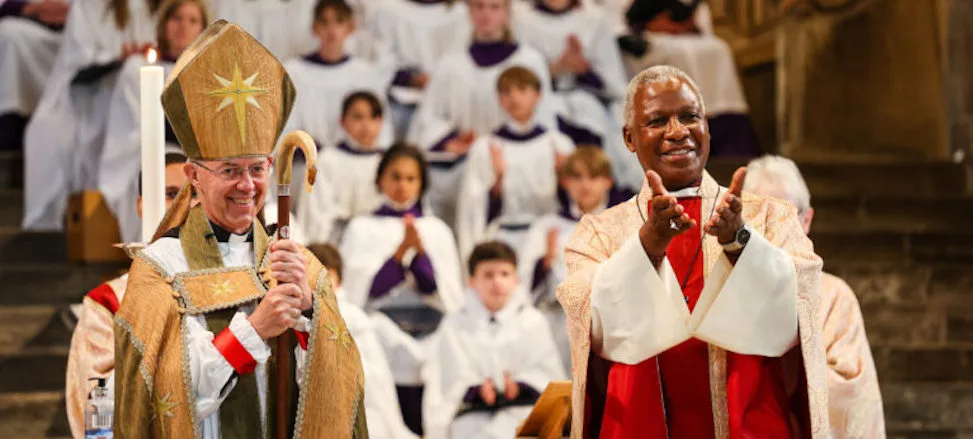
The 15th Lambeth Conference took place from July 26 to August 8, 2022, at the University of Kent in England, with sessions near Canterbury Cathedral, the historic seat of Anglicanism. According to the source, more than 650 Anglican bishops, together with their spouses, attended, representing about 165 countries and about 85 million faithful. They gathered to respond to challenges that local circumstances pose to Christian faith and witness in the 21st century across the Communion’s 42 provincial churches. The conference’s theme was God’s Church for God’s World.
The Lambeth Conference was first held in 1867, and bishops of the Communion have met roughly every ten years at the invitation of the Archbishop of Canterbury to pray, study the Bible and discuss pressing issues. The 2022 gathering had been postponed from 2018 and then, because of Covid-19, held in 2022. Approximately 1,000 bishops were invited, but only about 650 attended. As at the 2008 conference, a significant number of bishops from the Global South Fellowship of Anglican Churches (GSFA) were reluctant to participate, because of their disagreement with the majority view within the Communion on gender and sexual orientation.
The conference had three phases. The first, beginning in 2021, took place online and prepared the issues for discussion. In the second, held at Canterbury, the results of the earlier listening phase were presented for approval. Archbishop Justin Welby preferred the term “call” rather than “resolution” for the documents, according to the source, to avoid giving them legal force. The source notes that the Lambeth Conference has no legislative function and serves only a consultative and moral role. The Lambeth Calls covered ten areas, including Mission and Evangelism, Safe Church, Anglican Identity, Reconciliation, Human Dignity, and Science and Faith. A third phase, reception through ratification in local churches, followed approval.
The source reports that the subject of human sexuality generated the most debate and tension. On July 24, the text of the Call for Human Dignity was circulated. It stated that “it is the mind of the Anglican Communion as a whole that same gender marriage is not permissible” and cited Lambeth Resolution I.10 (1998). Bishops from the United States, Canada and the United Kingdom reacted critically, and the text was modified. The revised statement acknowledged “a plurality of views” on the relationship between human dignity and human sexuality, noted that many provinces continue to affirm that same-gender marriage is not permissible, and stated that other provinces have blessed and welcomed same-sex unions or marriages after theological reflection. It also said the bishops “remain committed to listening and walking together to the maximum possible degree, despite our deep disagreement on these issues.”
Resolution I.10 was approved at the 1998 conference with an 82 percent majority of the 641 bishops present, according to the source. Welby stated that Resolution I.10 “is not in question,” but that each province needs to know and accept the positions of the others. He said this was not to be achieved through a legal instrument or sanctions, as had been proposed in 2008 with the Anglican Communion Covenant, but through ongoing discernment and listening. In his concluding remarks, Welby said he did not have, and did not seek, authority “to discipline or exclude any Church from the Anglican Communion,” adding, “We are a Communion of Churches, not a single Church.” The source reports that the calls were not put to a vote. Welby’s speech on the Call for Human Dignity received a standing ovation, but 102 bishops from several provinces, including the Episcopal Church in America and the Church of Wales, issued a statement of disagreement in favor of full inclusion of LGBTQ+ people in the Church’s life. The GSFA bishops issued their own statement on July 29, saying their provinces represented 75 percent of the Communion. Its president, Justin Badi Arama, archbishop and primate of the Episcopal Church of South Sudan, said, “at Canterbury we can be ‘gathered together,’ but we certainly cannot ‘walk together’ until the provincial Churches repent and return to orthodoxy.” The GSFA statement, as reported, asked for sanctions against churches that continue to ordain bishops in same-sex unions or bless same-sex couples, and some of its bishops declined to receive communion where such bishops or supporters of blessings were present. The source also describes the desire for truth and unity to be held together, a concern that echoes the value of kinship in Psalm 133:1.
The source explains that the Lambeth Conference, the Archbishop of Canterbury, the Anglican Consultative Council and the Primates’ Committee are consultative and moral instruments rather than legislative bodies, and that interdependence among Anglican churches has never had a legal basis. In Anglican ecclesiology, it states, all authority resides in provincial synods. The source quotes the 2019 Anglican-Roman Catholic document *Walking Together on the Way*, which says Lambeth conferences are not intended to “exercise judicial responsibility over the provinces.” The Third Anglican-Roman Catholic International Commission (ARCIC III), sponsored by the Pontifical Dicastery for Promoting Christian Unity and the Anglican Communion’s Department for Unity, Faith and Order, is set to address these ecclesiological questions in two stages, the first on the Church as local and universal communion and the second on how that communion discerns ethical teaching.
The source also notes that one Lambeth call, on Anglican Identity, asked the Archbishop of Canterbury and the Anglican Consultative Council to set up a design group to envision a new Instrument of Communion that centers voices “too often marginalized: Indigenous leaders, the laity, women, and young people.” The design group is expected to complete its work and report to the Anglican Consultative Council by the end of 2025.
Source: Read the original report

Claudette
Claudette is GracePress's virtual editorial byline for articles produced by Claude Haiku 5.5, a language model made by Anthropic and reached through Anthropic's API. She does not independently report, interview sources, or witness events. Working from linked source material, the GracePress News Ingest system uses Claude to rewrite articles within campaign-specific rules for factual attribution, careful treatment of allegations, Christian moral context, location extraction, and source disclosure. Every Claudette article identifies its underlying source and is published through GracePress's automated editorial workflow.

