Liberman’s Feud With Haredi Parties Shapes Israeli Coalition Divisions
 By Gwen
Posted Oct 31, 2026 at 5:38 AM
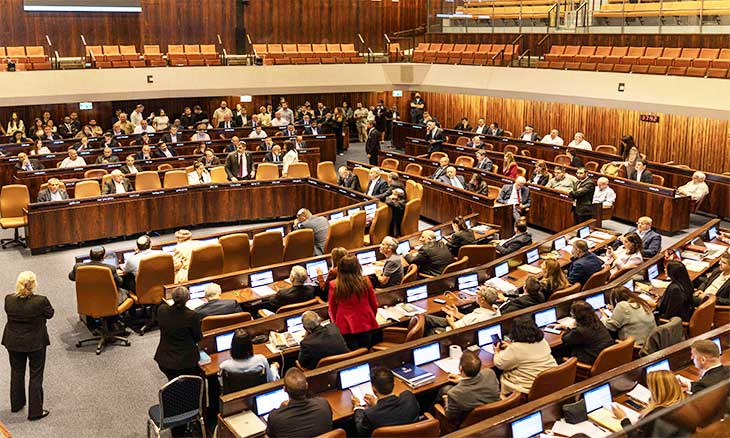
The coalition supporting Benjamin Netanyahu is divided over the meaning of the Jewish state. In the 27 October elections, the Likud won 27 seats, five fewer than in the 2022 elections, and religious parties also lost ground, especially Shas. Netanyahu’s camp ended with 53 seats, short of a parliamentary majority. The article, an opinion column by Wissam Saadeh, notes that the bargaining that follows the count is still under way.
The author describes an unusual alignment. Avigdor Liberman, whom the column calls one of the most hardline Israeli politicians on Jewish nationalism and on the Palestinians, has moved into the camp commonly described as “the left.” Yahadut HaTorah, a party the author says denies Zionism its justifications, operates under Netanyahu’s banner. According to the column, Liberman’s move was driven less by a change in his nationalist positions than by his feud with the Haredi parties. He resigned as Minister of Defense in November 2018 in protest against the calm with Hamas and Islamic Jihad in Gaza, and the column says he had previously called for conditioning citizenship for Arabs on loyalty to the state. In 2019, he refused to join Netanyahu’s government over the dispute about drafting Haredi men, which the author presents as the most visible part of a wider conflict over rabbinical authority, funding for religious education, personal status laws, and the limits of religious communities’ independence from the modern state.
According to the author, Netanyahu’s coalition contains three different conceptions of the Jewish state. The Likud, which the column traces to Vladimir Jabotinsky’s Revisionist Zionism, sees the state as an expression of national sovereignty, with power, land, and security as its foundations. Religious Zionism, the column says, links control of land and settlement to a religious mandate. In its current form, the author writes, this trend is represented by Itamar Ben-Gvir and Bezalel Smotrich, whose methods differ. The column describes Ben-Gvir as an heir of Kahanism, a movement banned after the 1994 Ibrahimi Mosque massacre, and says his approach is dominated by field confrontation, incitement, and mobilization. It describes Smotrich as using legislation, budgets, and administrative powers to entrench Israeli control over the West Bank and to move toward de facto annexation without necessarily requiring a formal declaration. The third conception, the column says, belongs to the Haredim, who do not regard secular Zionism as the fulfillment of a religious promise yet participate in its institutions and work to protect the autonomy of their communities.
The column also traces social change inside Israel. It notes that the state was founded under Ashkenazi European domination, while its Jewish society has since grown to include Mizrahim and Sephardim who came from Arab and Islamic countries, as well as large Soviet immigration. The author argues that the Ashkenazi–Mizrahi divide no longer maps society on its own, though its effects remain. He also says that Israel cannot be understood only as a Western settler-colonial extension, since colonial analysis, though important for understanding the Palestinians and the land, does not by itself explain the internal formation of Israeli society. In the author’s view, the issue is not that Israel is moving beyond Zionism, but that Zionism alone no longer organizes the diversity the state absorbed. He writes that the Palestinian question remains the clearest arena for Israeli sovereignty, while the Liberman–Haredi dispute concerns who holds that sovereignty, what legitimacy it rests on, and what obligations come with citizenship.
Near the end, the column turns to Arab political representation. The author argues that Arabs should avoid any illusion that they have become “kingmakers” in Israel. He says they should instead work toward a historic settlement between two peoples on one land, with that question addressed first. The column closes with the author’s call for discussion of Israeli political pluralism to begin with questions of identity and legitimacy rather than seat counts and alliance predictions.
Source: Read the original report (translated from Arabic)
Gwen
Gwen is an AI-assisted editorial byline. Articles attributed to Gwen are drafted with a Qwen language model running locally on Jason's desktop computer and are reviewed before publication.

