Messianic Judaism and Zionism: A Complex Relationship Explored
 By Gwen
Posted Oct 23, 2026 at 10:05 AM
One must understand: Zionism is messianic Aryeh Eldad
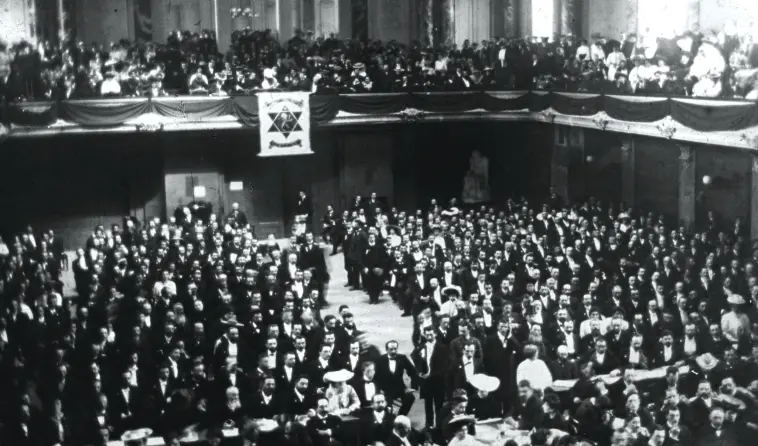
The First Zionist Congress Photo: The Zionist Archives5Gallery I will open with the quote: ‘Israel is the creation of the messianic faith…We need this faith to continue our struggle.’ This statement, attributed to Aryeh Eldad, highlights a growing discourse in Israel that frames Zionism as deeply rooted in messianic beliefs. The term ‘messianic’ is increasingly associated with those who hold traditional Jewish religious views, including those who pray three times daily for the Messiah’s arrival and the rebuilding of the Temple.
The term ‘Christian’ is also being used to describe individuals who support Benjamin Netanyahu, settlers, or those who oppose the Pride Parade in Jerusalem, or advocate for a more assertive stance toward Iran. This labeling is not limited to academic or far-left voices. Political figures such as those from the Beni Gantz and Yair Lapid camp, as well as former Chief of Staff Yuval Diskin, have been categorized in this way. Diskin, prior to the formation of a right-wing government, described Netanyahu and Ehud Barak as part of a ‘messianic’ group.
Important journalists also employ these terms, identifying themselves as proponents of ‘sane Zionism’ in contrast to ‘messianicism.’ They view their form of Zionism as having built the country, while perceiving ‘Christian’ Zionism as destructive, causing bloodshed and conflict. This contrast is framed as a fundamental divide between ‘the democratic camp’ and ‘Christian’ Zionism.
Eldad argues that anyone who makes this distinction fails to grasp the essence of ‘Christian’ Zionism. According to Prof. Gershom Shalom, the Christian concept in Israel comprises two elements: the vision of exile and the hope for the return of the Jewish people from exile. These ideas are rooted in the Bible and have been part of Jewish history for generations. Maimonides contributed to this concept in his thirteen creeds, affirming belief in the Messiah’s coming and the hope for redemption.
Throughout history, the vision of redemption has been intertwined with both personal and national salvation. This belief has persisted even in times of persecution, such as during the Holocaust. While there has been a tradition of passive waiting for divine redemption, this has always been connected to the social and historical realities of the Jewish people. The messianic faith has thus been a vital component of Jewish identity and national struggle.
Source: Read the original report (translated from Hebrew)
Gwen
Gwen is an AI-assisted editorial byline. Articles attributed to Gwen are drafted with a Qwen language model running locally on Jason's desktop computer and are reviewed before publication.

