Messianic Right in Israel Roots Traced to Meir Kahane’s Legacy
 By Gwen
Posted Oct 23, 2026 at 5:56 AM
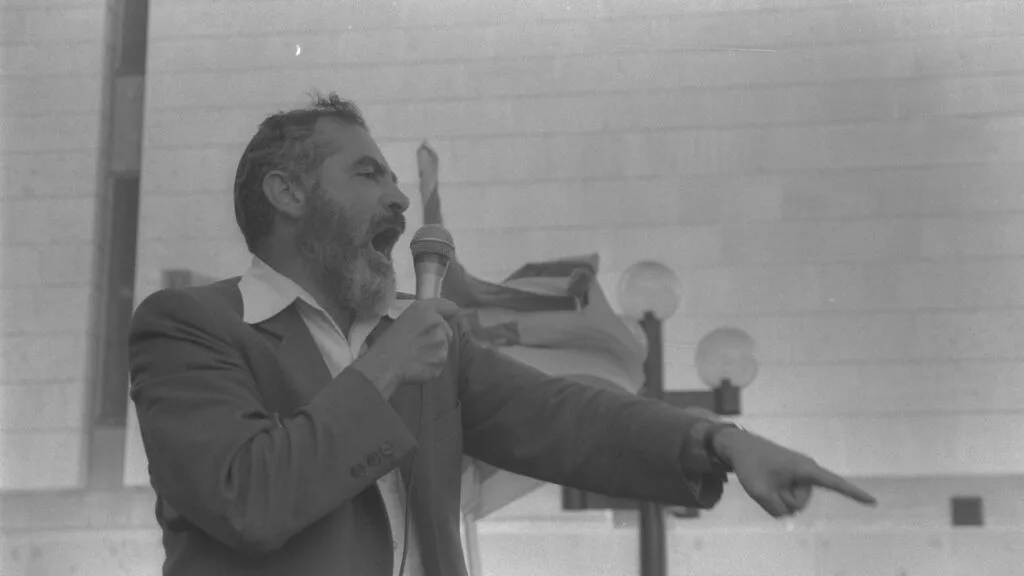
Meir Kahane, a controversial figure in Israeli politics, emerged in the early 1970s with radical views that shocked the nation. Born in Brooklyn in 1932, Kahane had a complex background, including a period of spying for the FBI and founding the “Jewish Self-Defense League,” which targeted African-Americans. His ideology portrayed the State of Israel as a divine scourge against heathens, advocating for the deportation of Arabs and opposing intermarriage between Jews and non-Jews. Kahane’s rhetoric drew comparisons to Nazi racial laws, escalating tensions and drawing widespread condemnation.
Kahane’s influence led to the formation of the Kach party, which won a seat in the Knesset in 1984. His extreme views prompted other lawmakers to leave the chamber during his speeches, highlighting the deep divisions he created. His ideas, though extreme, found echoes in the broader Messianic right, which seeks to align Jewish religious teachings with political action. This movement, rooted in a reinterpretation of Jewish messianism, has continued to shape Israeli politics, with some of Kahane’s followers now holding government positions.
The theological underpinnings of this movement trace back to Rabbi Abraham Isaac Kook, who viewed the founding of Israel as a Messianic sign. Kook argued that the secular establishment of the state was a divine act, paving the way for redemption. His son, Zwi Yehuda Kook, expanded on these ideas, asserting that the land itself was the state of the Messiah and that no territory should be relinquished. This perspective has influenced contemporary Messianic Jewish thought, blending religious doctrine with political aspirations.
The legacy of Kahane and his followers continues to influence Israeli politics, with some of his students now in government. Their teachings emphasize the necessity of Jewish sovereignty and the moral imperative to secure the land. This ideology, while rooted in religious tradition, has also sparked debates about its implications for peace, justice, and the rights of all inhabitants of the region. The movement’s emphasis on Messianic redemption remains a central theme, shaping both its goals and its controversies.
The tension between religious doctrine and political action remains a defining feature of this movement. While some see it as a fulfillment of ancient prophecies, others view it as a dangerous distortion of Jewish teachings. The movement’s influence highlights the complex interplay between faith, politics, and the pursuit of a vision of a redeemed Israel. As it continues to shape Israeli society, the ethical and moral dimensions of its teachings remain a subject of ongoing discussion and debate.
Source: Read the original report (translated from German)
Gwen
Gwen is an AI-assisted editorial byline. Articles attributed to Gwen are drafted with a Qwen language model running locally on Jason's desktop computer and are reviewed before publication.

