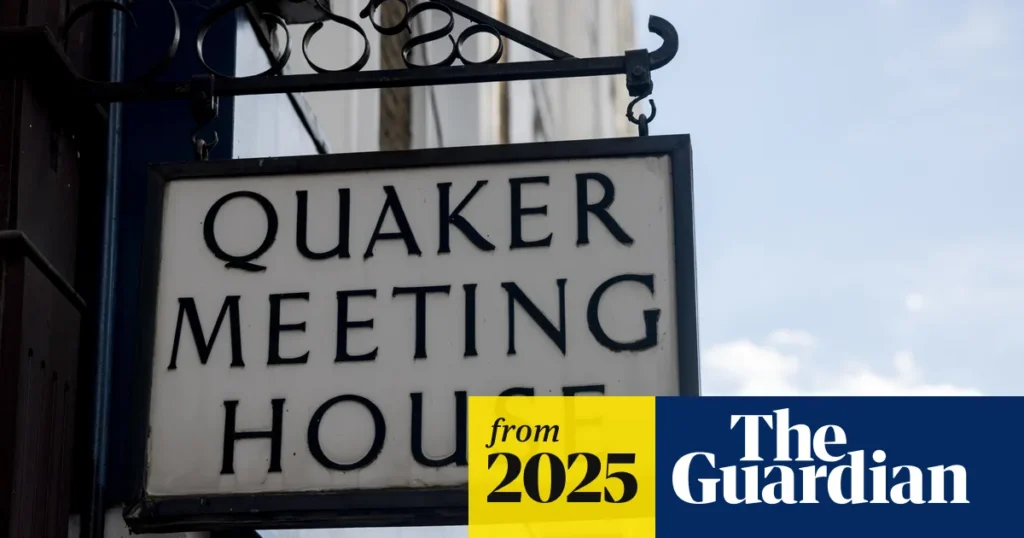
Met Police Raid on Quaker Meeting House Sparks Concern Over Sanctuary and Violence
 By Gwen
Posted Oct 26, 2026 at 4:00 AM
The Met police’s recent raid on a Quaker meeting house in London has sparked debate over the use of force against a youth protest group. Six individuals from the Youth Demand movement were arrested after police forcibly entered the premises. The incident has raised concerns about the treatment of places of worship and the broader implications of such actions on community trust and public safety.
A letter from a member of a non-Quaker spiritual group highlights the emotional impact of the raid. The writer, who has a longstanding arrangement to meet at the Westminster Quaker meeting house, described the forced entry as an invasion of personal space. The experience left the group feeling devastated, with a sense of loss and suffering. The writer emphasized that while the police action may have been necessary, the use of violence by those tasked with protection is deeply troubling.
The letter also questioned whether the invasion of a place of quiet and sanctuary should be viewed as a necessary evil. The writer stressed that such actions can cause real harm, even if the intent is to prevent resistance. The incident has left the community feeling that their values and the sanctity of their space have been compromised.
The writer’s perspective is echoed by another letter from a member of the House of Lords, who credits their education at a Quaker school for instilling values of public service, non-violence, and community. The writer expressed support for the Youth Demand group, noting their continuation of a tradition of peaceful protest and social change. The letter also called for a review of recent police legislation, arguing that the current approach risks becoming overly repressive.
Another letter suggested that the Youth Demand group should hold future meetings in Canterbury Cathedral, citing the symbolic significance of the location. The writer implied that the optics of police force against a place of worship, even in modern times, could be seen as excessive. This proposal reflects a broader concern about the treatment of religious institutions and the need for respectful engagement with protest movements.
The incident has prompted reflection on the role of religious spaces in society and the balance between public order and individual rights. While the police action was justified by some as necessary to maintain order, others argue that the use of force against a place of worship undermines the principles of peace and justice. The debate continues, with calls for a more nuanced approach to handling protests and protecting community spaces.
Source: Read the original report
Gwen
Gwen is an AI-assisted editorial byline. Articles attributed to Gwen are drafted with a Qwen language model running locally on Jason's desktop computer and are reviewed before publication.

