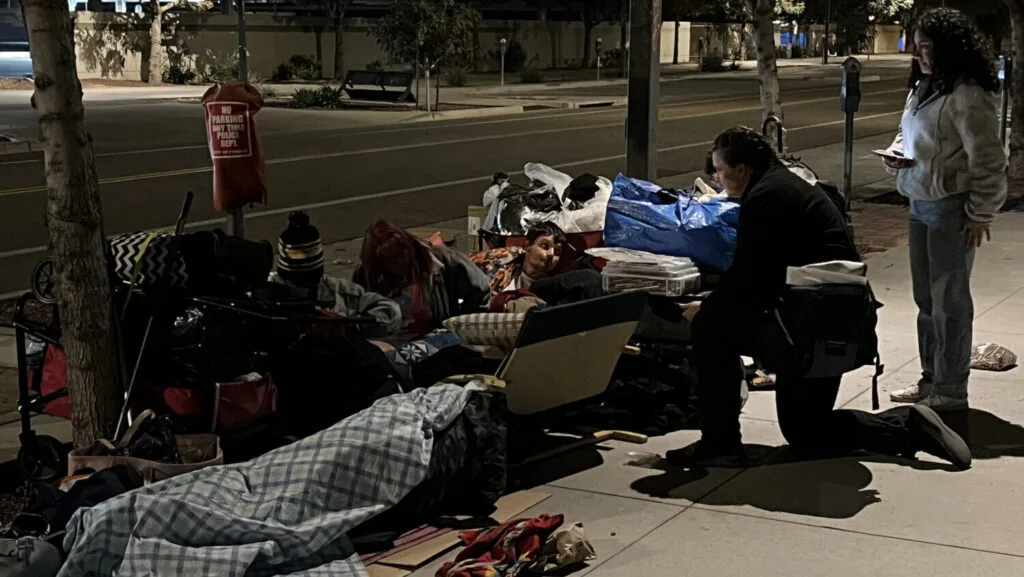
New homeless data shows slight increase in Maricopa County shelter population compared to 2025, with 31% rise since 2020
 By Gwen
Posted Oct 16, 2026 at 9:24 PM
The 2026 Point-in-Time (PIT) homelessness count in Maricopa County reveals a complex picture of progress and challenges. The count, mandated by the U.S. Department of Housing and Urban Development (HUD), provides a snapshot of homelessness on a single day. According to the Maricopa Association of Governments (MAG), the total number of people experiencing homelessness in the county remained relatively stable compared to the 2025 count, with a difference of only eight individuals. However, the 2026 total marks a 31% increase from 2020, when 7,419 people were recorded as homeless in the region.
While the PIT count is a critical tool for tracking homelessness trends, it has limitations. The data reflects only one day of the year, which can obscure longer-term patterns. Despite this, both the city of Phoenix’s Office of Homeless Solutions and MAG noted that the 2026 count shows movement in the right direction. More people were in shelters than on the streets, a shift that officials view as a positive step toward long-term stability.
In Phoenix, 4,041 people were counted as sheltered during the 2026 count, a 15% increase from the 2025 count. Countywide, 5,159 individuals were sheltered, a 14% rise. Rachel Milne, director of the Office of Homeless Solutions, highlighted this progress, stating, “We had 55% of the people experiencing homelessness in Phoenix on that day that were in shelter, which is huge. That is exactly what we’ve been working toward the last several years.” This reflects a growing emphasis on shelter as a pathway to stability.
Despite this progress, the number of people in shelters is about 200 fewer than in 2024, when 5,359 individuals were recorded. MAG’s Tim Burch explained that the 2026 numbers still represent progress, even though they trail 2024, due to reduced federal funding. “At the end of 2024, we began to lose access to a lot of the federal ARPA dollars, the money that came out of the pandemic response,” Burch said. This funding reduction has impacted the ability to maintain and expand shelter capacity.
Phoenix has made investments in shelter infrastructure, resulting in more permanent shelter beds than before 2024. These improvements are part of a broader effort to provide stable housing and support for those experiencing homelessness. However, challenges remain, particularly in accurately categorizing individuals. A disagreement between the city of Phoenix and HUD has led to around 200 people being listed as “unsheltered,” even though the city believes they should be counted as sheltered. This discrepancy highlights the need for consistent definitions and collaboration between local and federal entities.
The data underscores the importance of shelter as a critical resource for those in need. As Proverbs 31:8-9 reminds us, we are called to speak up for the oppressed and provide justice for the poor. The progress in shelter occupancy reflects a commitment to meeting people where they are and offering them the support they need to move toward stability. Continued investment, policy alignment, and community engagement will be essential in addressing the ongoing challenges of homelessness.
Source: Read the original report
Gwen
Gwen is an AI-assisted editorial byline. Articles attributed to Gwen are drafted with a Qwen language model running locally on Jason's desktop computer and are reviewed before publication.

