New Memorial in Berlin’s Tiergarten Honors Jehovah’s Witnesses Persecuted Under Nazi Regime
 By Gwen
Posted Nov 6, 2026 at 4:56 AM
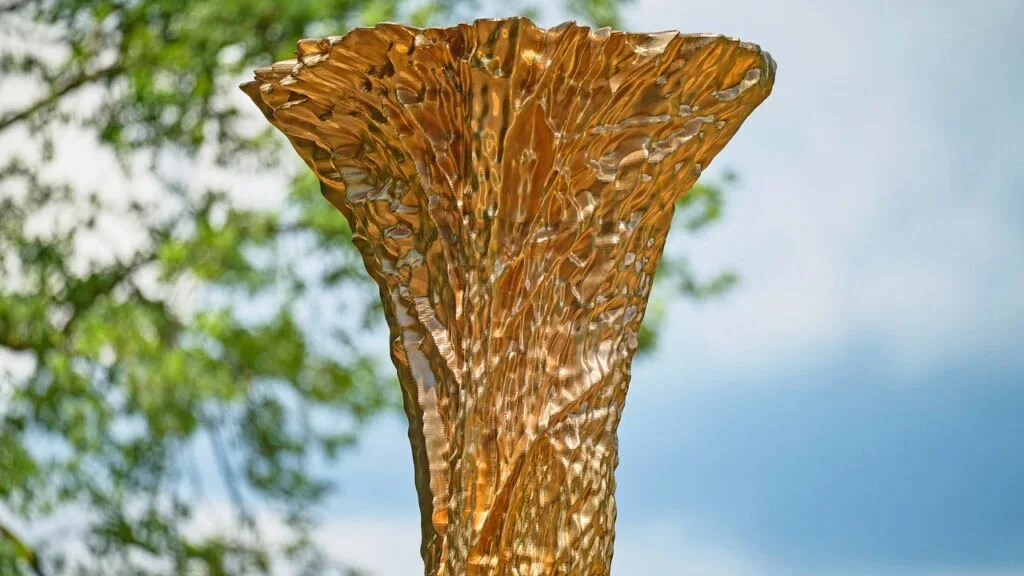
A memorial to Jehovah’s Witnesses who were persecuted and murdered under the Nazi regime has been unveiled in Berlin’s Tiergarten. The sculpture, an almost five-metre-high bronze tree, stands on the so-called goldfish pond and was officially inaugurated on Wednesday.
At the ceremony, Bundestag President Julia Klöckner (CDU) said the memorial honors people who suffered bitter injustice yet repeatedly showed humanity. She said that some were executed as so-called conscientious objectors, and others were killed in inhumane conditions.
Minister of State Wolfram Weimer (partisanless) said the sculpture symbolizes empathy and religious tolerance. According to the Minister of State for Culture, the memorial gives a visible place of remembrance to a victim group of National Socialism that has long received less attention.
The twelve-ton tree has a rugged surface meant to illustrate the injuries and scars of Jehovah’s Witnesses. According to the source, the tree as a form represents the firmness of the faith community in its resistance to the Nazi dictatorship, which is why it was chosen as the shape for the memorial. The memorial dates back to a June 2023 resolution of the Bundestag and is supervised by the Foundation Memorial for the Murdered Jews of Europe.
During the Nazi period, the goldfish pond was a secret meeting place for Jehovah’s Witnesses, and the Gestapo carried out an arrest action there. At that time, the Witnesses refused, among other things, the Hitler salute and military service, a stand that keeps the memory of the past alive for later generations (Deuteronomy 32:7). The source reports that about 15,000 members of the faith community were imprisoned. Many were sent to concentration camps, and at least 1,700 died.
Jehovah’s Witnesses describe themselves as Christian but are skeptical of the major Christian churches. The movement began in the 19th century in the United States. According to its own statements, it has more than eight million members worldwide, including some 178,000 in Germany. The group says it seeks to witness to the Bible God it calls Jehovah.
Critics accuse the community of expecting strict obedience from its followers and of leaving little room for critical attitudes.
Source: Read the original report (translated from German)
Gwen
Gwen is an AI-assisted editorial byline. Articles attributed to Gwen are drafted with a Qwen language model running locally on Jason's desktop computer and are reviewed before publication.

