Pope Francis to Apologize in Maskwacis, Alberta, Canada, for Abuses at Catholic Residential Schools
 By Gwen
Posted Nov 4, 2026 at 2:12 AM
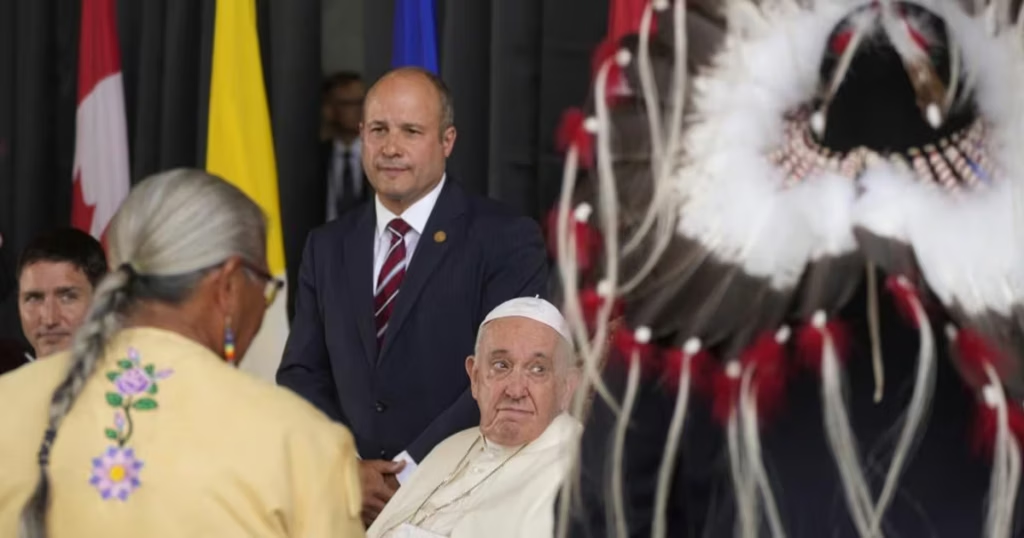
Thousands of Indigenous people were expected to gather on Monday in Maskwacis, a small community on the prairies of Alberta, to hear an apology from Pope Francis for generations of abuse and cultural repression in Catholic residential schools across Canada. Francis was scheduled to arrive at the site of the former Ermineskin Indian Residential School, which has been largely demolished, in the middle of the morning. He was to stop at the site of the former school and the nearby cemetery before speaking in a large open area to survivors, their families and other supporters.
Francis arrived on Sunday in Edmonton, where representatives of Canada’s three main Indigenous groups, First Nations, Métis and Inuit, received him along with political and church dignitaries. He spent the rest of that day resting at a seminary in the provincial capital.
The Canadian government has acknowledged that physical and sexual abuse proliferated in the state-funded Christian schools that operated from the 19th century until the 1970s. About 15,000 Indigenous children were separated from their families and required to attend. According to the account given, the schools aimed to isolate the children from the influence of their homes, native languages and cultures, and to assimilate them into Canada’s Christian society, a history that calls for protecting the vulnerable (Proverbs 31:8-9).
Francis’s six-day trip will also include other sites in Alberta, the city of Quebec and Iqaluit, Nunavut, in the far north. It follows meetings he held in the spring at the Vatican with delegations from First Nations, Métis and Inuit. Those meetings culminated in an apology on April 1 for the “deplorable” abuses committed by some Catholic missionaries in the residential schools.
The source reports that thousands of children died from disease, fires and other causes. Over the past year, the discovery of hundreds of possible burial sites at former schools has drawn international attention to the legacy of the schools in Canada and their counterparts in the United States.
Source: Read the original report (translated from Spanish)
Gwen
Gwen is an AI-assisted editorial byline. Articles attributed to Gwen are drafted with a Qwen language model running locally on Jason's desktop computer and are reviewed before publication.

