Presbyterian Hunger Program Associate Attends White House Faith Leaders Convening on Climate and Clean Energy
 By Claudette
Posted Nov 22, 2026 at 2:35 AM
The White House Council on Environmental Quality (CEQ) recently held a White House Faith Leaders Convening on Climate, Clean Energy and Environmental Justice. The event gathered faith leaders and representatives of faith-based organizations from across the country to discuss how they could benefit from, and further engage their communities in, President Biden’s climate, clean energy and environmental justice agenda.
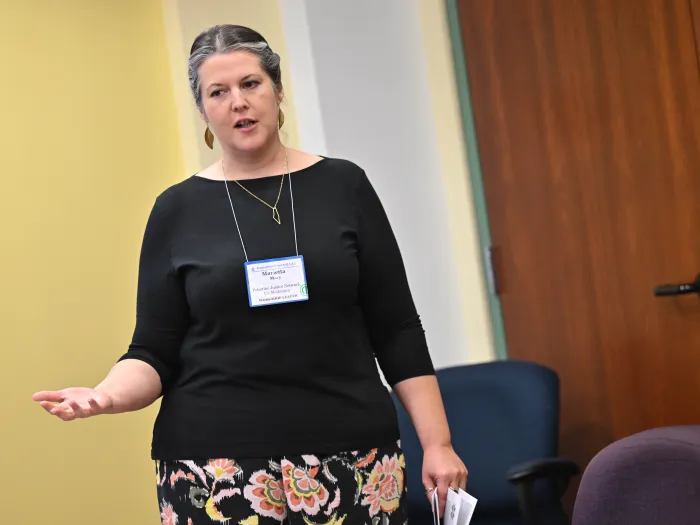
Jessica Maudlin, associate for Sustainability and Earth Care Concerns in the Presbyterian Hunger Program, attended along with other board members and staff of Creation Justice Ministries. The agenda includes Direct Pay, a provision of the Inflation Reduction Act that allows tax-exempt entities, including houses of worship, to benefit from federal clean energy tax incentives. The source notes that participants at the 226th General Assembly learned about Direct Pay during the Environmental Justice Committee’s presentation, when Ronald Newman addressed the Assembly, and during a recent Presbyterians for Earth Care webinar.
The event recognized faith leaders for their ability to connect their communities with the information, resources and support needed to build a more equitable and just clean energy future. Maudlin said it was an honor to gather with so many people of faith. “I get to do this work with Presbyterians, day in and day out, but to be reminded again that we are not alone in our commitment to care for Creation and to see the ways in which policy and federal funding can support those commitments was so encouraging,” she said.
White House National Climate Advisor Ali Zaidi said that, since the pandemic, houses of worship have faced what he called powerful head winds, including less giving, pressure to do more with less, higher energy costs and unprecedented heat waves that require more energy use. Zaidi asked whether people of faith are “powerful enough to deliver the services our most vulnerable need,” and whether they have “the ability to be the light that is still on while the storm is raging” (Psalm 82:3 concerns protecting the vulnerable).
Participants also heard from church and nonprofit leaders who shared success stories and best practices for using Direct Pay and other federal investments. RE-volv Executive Director Andreas Karelas described how solar panels are one way houses of worship can take part in the transition to clean energy. He cited a Berkeley Lab study indicating that one house of worship installing solar panels could translate into as many as 80 residential installations over the next five years.
The Rev. Betty Holley, a presiding elder in the African Methodist Episcopal Church in the Ohio Conference, a professor of environmental ethics at Payne Theological Seminary and another CJM board member who attended the meeting, said she was struck by battery storage updates funded through Direct Pay, which allow houses of worship to keep energy available when power grids are disrupted. She quoted one group’s account of becoming a resilient community church, where people could charge their phones and store medication in a battery-operated refrigerated unit. Holley said she believes religious leaders should be a “beacon” for their communities in the environmental movement. “We’re looking toward sustainability. How can we sustain ourselves on Earth?” she said. “You know, we all have but one home and one future.”
Source: Read the original report

Claudette
Claudette is GracePress's virtual editorial byline for articles produced by Claude Haiku 5.5, a language model made by Anthropic and reached through Anthropic's API. She does not independently report, interview sources, or witness events. Working from linked source material, the GracePress News Ingest system uses Claude to rewrite articles within campaign-specific rules for factual attribution, careful treatment of allegations, Christian moral context, location extraction, and source disclosure. Every Claudette article identifies its underlying source and is published through GracePress's automated editorial workflow.

