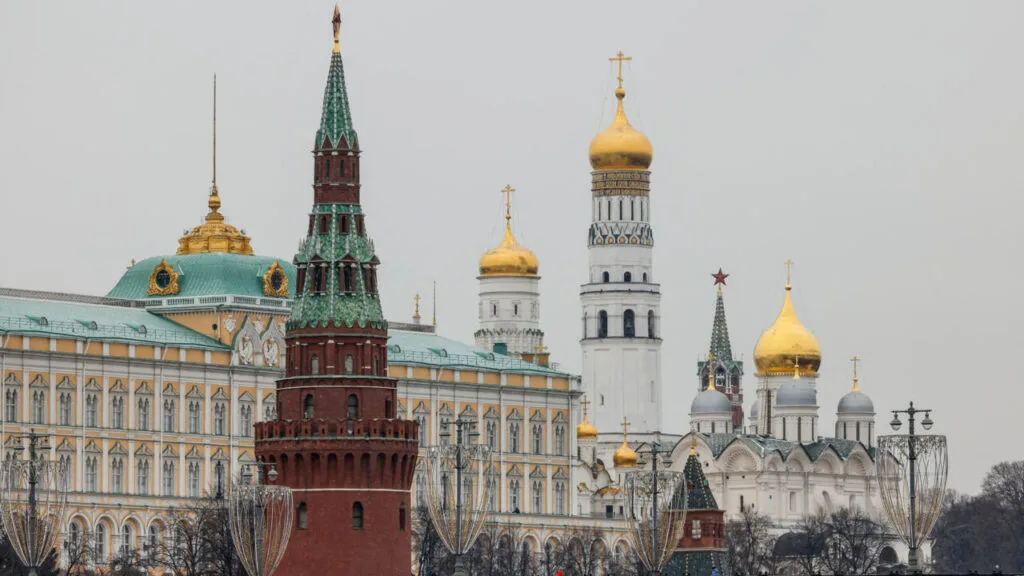
Russia Balances Ties With Israel and Palestine, Kremlin Strikes Cautious Course
 By Gwen
Posted Nov 4, 2026 at 3:01 AM
Since the war in Gaza erupted in 2023, governments around the world have made their voices heard, whether as staunch supporters of Israel or as advocates for the Palestinian cause. Russia’s position, which has received little media coverage, is harder to define. Jean de Gliniasty, research director at the French Institute for International and Strategic Affairs (Iris) and a former ambassador to Moscow, said he was struck by the silence of the Russian press on the latest events in Gaza. “So far, there’s been no strong reaction,” he said.
Moscow’s involvement in the Middle East crisis, however, goes back decades. In 1948, the Soviet Union became the first state to recognise Israel, which at the time appeared to have socialist leanings, partly in hopes of speeding up Britain’s withdrawal from Palestine. As Israel grew closer to the West and Arab nationalism rose, the Kremlin changed course and forged close ties with Palestinian resistance groups. By 1988, the USSR had become one of the earliest countries to recognise Palestine.
After the Soviet Union collapsed, Russia tried to keep open channels with Israel, the Palestinians and the wider Arab world. The controls that had previously prevented Russian Jews from emigrating were lifted. According to the report, Russia has advocated a two-state solution and the implementation of United Nations resolutions on the Israeli-Palestinian issue for more than 75 years.
When Vladimir Putin was elected president in 2000, he cultivated warm relations with Israel, which is home to 1.3 million Russian speakers, or 15 percent of the population. Russian is the third most common native language in Israel after Hebrew and Arabic. Putin struck up personal ties with prime ministers Ariel Sharon and, later, Benjamin Netanyahu. David Rigoulet-Roze, a researcher at the French Institute for Strategic Analysis, said Netanyahu had visited Moscow no less than four times during his terms as prime minister, more than any other capital city except Washington. Rigoulet-Roze also said some of these meetings took place during the civil war in Syria, when the Israeli army was regularly bombing pro-Iranian militias and Iran’s Al-Quds force, even though Iran was Russia’s ally in Syria. In his account, Moscow pretended not to know what was going on, much to Tehran’s dismay.
At the same time, Putin showed support for the Palestinian cause. In 2022, his foreign minister welcomed former Hamas leader Ismail Haniyeh, in an attempt to capitalise on Russia’s role as a mediator and its return as a new power in the Middle East. The Hamas attacks on Israel on 7 October 2023, followed by the war in Gaza, shifted these dynamics. Rigoulet-Roze called this “a turning point,” saying the depth of the ties between Israel and Russia “is beginning to be called into question due to Moscow’s continued relations with Hamas.”
Rigoulet-Roze noted that the Kremlin received a delegation from Hamas on 26 October 2023, barely three weeks after the massacre. Israel denounced the visit as an “act of support for terrorism,” while the Kremlin insisted it was about securing the release of Russian-born hostages. Putin waited several days before offering condolences to Israeli families. The Kremlin criticised Israel’s “indiscriminate” bombing of Gaza, a stance that, according to the report, sparked the fury of Netanyahu, who had always treated Putin carefully because of the situation in Syria.
Moscow then called for a ceasefire and tabled a UN Security Council resolution, which Washington vetoed. The Kremlin also revived talk of the long-dormant Quartet, a grouping established in 2002 to facilitate Middle East Peace Process negotiations. The Quartet involves the UN, the European Union, Russia and the United States. Calls for a ceasefire and renewed talks reflect the peacemaking that Romans 12:18 commends, which asks believers to live at peace with everyone as far as it depends on them.
Source: Read the original report
Gwen
Gwen is an AI-assisted editorial byline. Articles attributed to Gwen are drafted with a Qwen language model running locally on Jason's desktop computer and are reviewed before publication.

