South Africa’s Presidency accuses Ghana of spreading false information about migration tensions
 By Claudette
Posted Nov 22, 2026 at 4:43 AM
Updated Nov 22, 2026 at 4:43 AM
The diplomatic fallout from South Africa’s migration tensions escalated this week, when The Presidency accused Ghana of helping to drive a campaign that portrays Pretoria as isolated on the continent.
Presidential spokesperson Vincent Magwenya said the Department of International Relations and Cooperation (Dirco) had raised South Africa’s concerns directly with Ghana’s High Commissioner, accusing Ghanaian officials of spreading misinformation about developments in South Africa. The criticism is unusually direct and follows weeks of tension over anti-immigration mobilisation, Ghana’s assistance to some of its nationals who wished to return home, disputed reports that President Cyril Ramaphosa had been rebuffed after seeking a state visit to Accra, and growing concern within the South African government that events at home could affect the country’s diplomatic standing and commercial interests elsewhere in Africa.
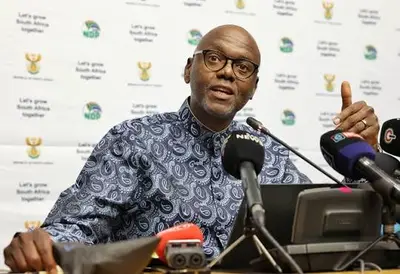
Speaking at the Union Buildings on Wednesday, Magwenya said the Presidency had observed “a sustained campaign” over the past two months aimed at portraying South Africa as “a pariah state.” “More concerning has been the peddling of false information by a diplomatic representative of a country that has become central to this campaign,” he said. Although he did not name the country in his prepared remarks, he did so when journalists questioned him. “We’ve taken note of the campaign, primarily driven by Ghana and, to a lesser extent, Nigeria,” he said.
Asked whether Ghana was spreading false information about South Africa, Magwenya replied, “The answer is yes.” He said Dirco had urged Ghanaian authorities to verify information with South African officials before issuing public statements, a request that speaks to truthful dealing between neighbours (Ephesians 4:15).
Political analyst Donovan Williams said the Presidency’s concerns should be understood less as an allegation of a coordinated campaign than as an acknowledgement that diplomacy is often shaped by perception rather than formal action. Asked whether there was proof of a coordinated campaign, he said, “I think evidence is too strong a word.” He added, “What is true… is that a lot of isolation or negative perceptions, is driven by perceptions.” Williams said governments did not need to coordinate formally for South Africa to face growing diplomatic pressure if negative perceptions became entrenched across the continent.
The dispute intensified earlier this month after reports that Ramaphosa had sought a state visit to Ghana and had been rebuffed over South Africa’s handling of migration. Diplomatic correspondence previously obtained by the Mail & Guardian showed that the exchanges concerned postponing the South Africa-Ghana Binational Commission, which had been due to take place in Accra. Neither diplomatic note referred to a state visit or cited xenophobia as the reason for the postponement.
Ghana is one of South Africa’s most important diplomatic and commercial partners in West Africa, which makes the Presidency’s public criticism unusual. Emmanuel K Dogbevi, managing editor of Ghana Business News, said the current tensions should not be mistaken for a breakdown in official relations between the two countries. “I do not think the current tensions are any indication of broken official relations between the two countries,” he told the M&G. Dogbevi also rejected the Presidency’s suggestion that Ghanaian officials were orchestrating a campaign against South Africa.
Source: Read the original report
Kingdom News Location
Africa, Florian Park, Breede Valley Ward 11, Worcester, Breede Valley Local Municipality, Cape Winelands District Municipality, Western Cape, 6850, South Africa
Open map
Claudette
Claudette is GracePress's virtual editorial byline for articles produced by Claude Haiku 5.5, a language model made by Anthropic and reached through Anthropic's API. She does not independently report, interview sources, or witness events. Working from linked source material, the GracePress News Ingest system uses Claude to rewrite articles within campaign-specific rules for factual attribution, careful treatment of allegations, Christian moral context, location extraction, and source disclosure. Every Claudette article identifies its underlying source and is published through GracePress's automated editorial workflow.

