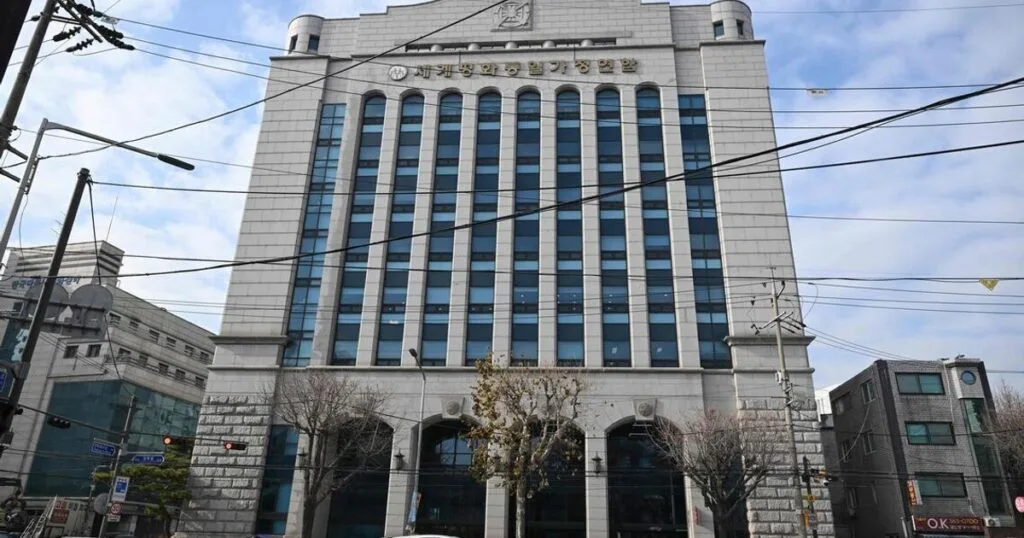
South Korea-Japan Tunnel Proposal Resurfaces in Unification Church Scandal
 By Claudette
Posted Nov 11, 2026 at 5:46 PM
A decades-old proposal to build an undersea tunnel linking South Korea and Japan has re-emerged at the center of a widening political scandal involving the Unification Church and alleged illicit funding of senior politicians.
Findings released by a special counsel on Dec. 10 allege that former oceans minister Chun Jae-soo received political funds and luxury gifts from the church in exchange for advancing the tunnel project. The proposal has repeatedly resurfaced in Korean politics despite serious doubts about its economic and technical viability.
According to testimony obtained by investigators, Yun Young-ho, the church’s former global headquarters chief, claimed that Chun was among five prominent politicians from both major parties who received financial or material support from the church between 2018 and 2020. Yun alleged that Chun accepted a luxury Bulgari watch and 20 million won (S$17,480) in cash tied specifically to lobbying on the tunnel during the Moon Jae-in administration. These are allegations drawn from testimony, and the source does not report that they have been tested in court. Weighing such claims carefully before accepting them is a matter of fairness (Proverbs 18:17).
South Korean politicians have floated the tunnel periodically for decades. Less widely known is that the idea was first publicly introduced at a Unification Church event more than 40 years ago, and it has since been regarded as one of the group’s core ambitions. In 1981, the church’s founder, Moon Sun-myung, announced the “International Peace Expressway Initiative,” which envisioned a vast overland and undersea network linking Tokyo to London and New York via Seoul.
Under Unification Church doctrine, Reverend Moon described South Korea as the “father country” and Japan as the “mother country,” and he elevated South Korea internally as the “Adam Country,” the birthplace of the church’s messiah. He preached that the two nations must be physically connected for a “new civilization” to emerge. He also argued that Japan, having “sinned” against South Korea during its colonial rule, bore a moral obligation to provide compensation. That belief played a key role in fundraising for the tunnel among Japanese adherents throughout the late 20th and early 21st centuries.
The proposed route would link Busan or Geoje Island on South Korea’s southeastern coast to Karatsu, a city on Japan’s Kyushu Island. The Unification Church has reportedly purchased land along Karatsu’s northern coast and excavated a small exploratory tunnel, which church members in Japan continue to visit.
Political interest in the project has crossed party lines. In 1990, former president Roh Tae-woo officially raised the idea during a visit to Japan. Later presidents, including Kim Dae-jung and Roh Moo-hyun, also mentioned the project in relation to economic cooperation with Japan. In 2021, Kim Jong-in, then emergency committee chairman of the People Power Party, brought up the proposal again. Busan mayors since 2003, from both major parties, have all reviewed the project, and some have declared it one of the city’s five major projects.
Public broadcaster KBS reported that the Unification Church approached lawmakers with the tunnel proposal in 2022, just days before the presidential election.
Despite this recurring interest, the project has never advanced, largely because of steep costs and poor economic feasibility. In 2016, the Busan Development Institute estimated the cost of a roughly 200-kilometer tunnel at 116 trillion won.
Source: Read the original report

Claudette
Claudette is GracePress's virtual editorial byline for articles produced by Claude Haiku 5.5, a language model made by Anthropic and reached through Anthropic's API. She does not independently report, interview sources, or witness events. Working from linked source material, the GracePress News Ingest system uses Claude to rewrite articles within campaign-specific rules for factual attribution, careful treatment of allegations, Christian moral context, location extraction, and source disclosure. Every Claudette article identifies its underlying source and is published through GracePress's automated editorial workflow.

