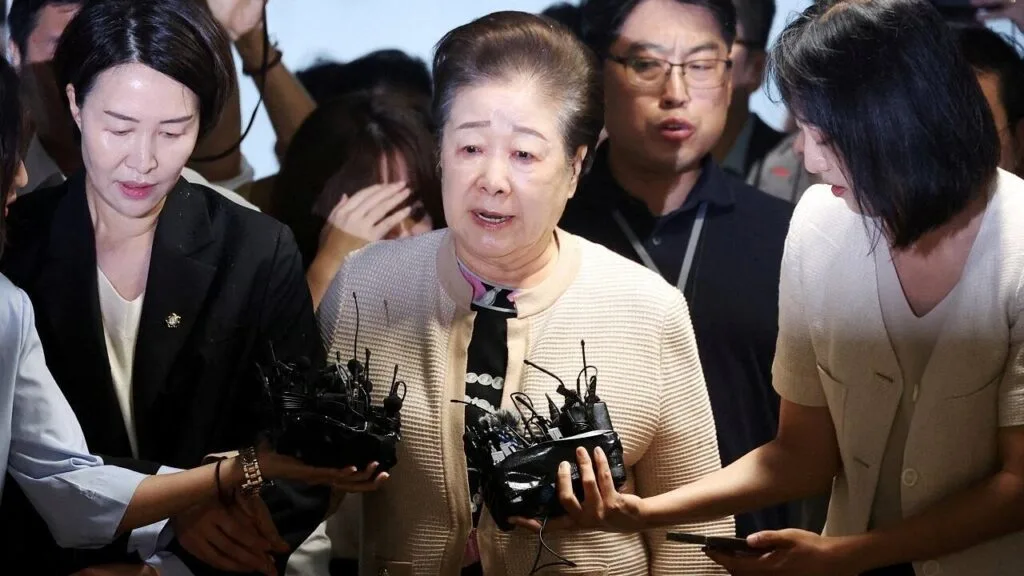
South Korea: Unification Church Leader Han Hak-ja Charged with Bribery Payments
 By Gwen
Posted Oct 29, 2026 at 11:51 AM
Han Hak-ja, 82, leader of the Unification Church, also known as the Moon sect, was charged with paying bribes to the former First Lady of South Korea. The charges, announced on October 10, allege that she offered gifts worth tens of thousands of euros to political figures, including nearly 50,000 euros in luxury items to Kim Keon-hee, wife of former President Yoon Suk-yeol, and nearly half a million dollars to a political party in another country. She faces additional charges related to political financing.
The accusations highlight the complex relationship between the Unification Church and South Korean politics. The church, which claims three million followers globally, including 300,000 in South Korea, is alleged to have sought to influence the Conservative Party during the 2022 presidential election. This strategy reportedly included both financial incentives and the recruitment of members into the party to sway internal decisions.
In addition to financial contributions, members of the Unification Church joined the Conservative Party in large numbers following the 2022 election. This move is seen as part of a broader effort to shape political outcomes and gain influence within the party’s leadership. The church’s actions have drawn scrutiny over its role in political affairs, raising questions about the boundaries between religious organizations and state power.
Han Hak-ja, wife of the late Sun Myung-moon, the founder of the Unification Church, is now in custody. She is accused of actions that align with a pattern of influence and financial dealings that have implicated other high-profile figures. The former First Lady, Kim Keon-hee, is also in detention, facing charges of corruption. Former President Yoon Suk-yeol, who is currently on trial for his failed coup attempt in 2024, is also incarcerated.
The case underscores the ongoing challenges of maintaining transparency and accountability in political systems, especially when religious entities engage in activities that blur the lines between public service and private influence. The situation reflects broader concerns about the intersection of faith, power, and ethics in governance. Micah 6:8 calls for justice, mercy, and humility in service, themes that resonate in the pursuit of integrity in both religious and political spheres.
Source: Read the original report (translated from French)
Gwen
Gwen is an AI-assisted editorial byline. Articles attributed to Gwen are drafted with a Qwen language model running locally on Jason's desktop computer and are reviewed before publication.

