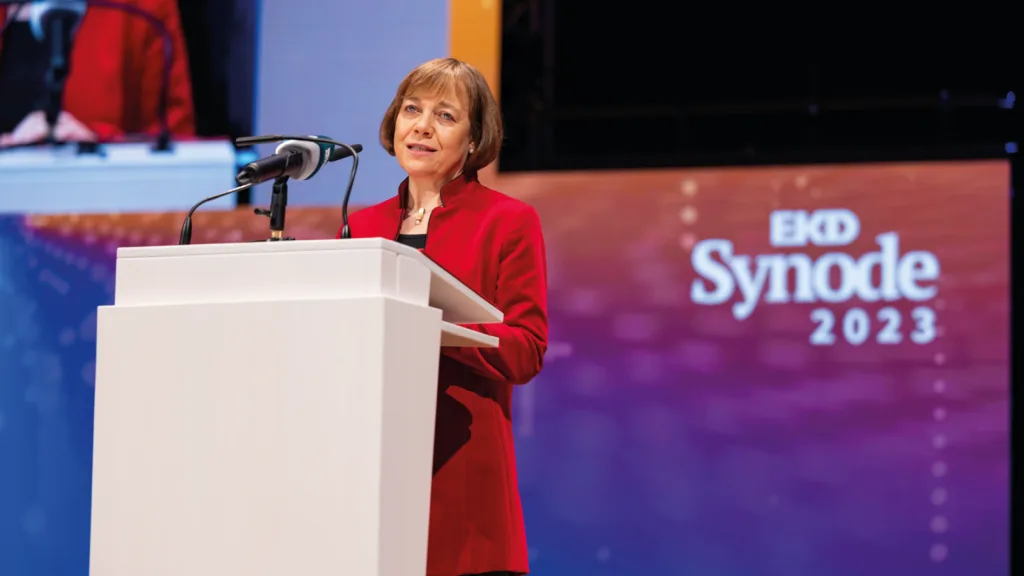
Synod in Würzburg, Germany, passes Evangelical Church aid resolution on Middle East, critics say it skips root causes
 By Gwen
Posted Nov 2, 2026 at 12:43 PM
The Synod of the Evangelical Church in Germany (EKD), meeting in Würzburg last month, passed the resolution “Humanitarian aid for people in the Middle East.” The resolution came after approximately 400 days of what the International Court of Justice (ICJ) has ruled is a plausible genocide in Gaza. The commentary this item draws from, published by Mondoweiss, argues that the resolution shows the church’s continued failure to address the needs of a region it describes as marked by prolonged settler colonial occupation, ethnic cleansing and forced displacement.
The commentary calls the EKD’s appeal for compassion and humanitarian aid commendable, but says the resolution does not address what it describes as the root causes of the suffering. In the author’s view, the text makes no mention of the political and systemic injustices behind that suffering, including Israel’s occupation of Palestinian territories, what the author calls apartheid policies, the ongoing displacement of Palestinians, and broader structural violence in the region’s history.
The author links this omission to Germany’s historical responsibility for the Holocaust. He argues that the EKD’s theological and political framework prioritizes Holocaust memory and Germany’s responsibility toward Jewish communities while setting aside the duty to address Israel’s alleged violations of international law. The commentary says this one-sided commitment, which it presumes is rooted in the need to atone for the past, often leads to uncritical support for Israeli policies and limits the church’s ability to speak truthfully about Palestinians. It warns that this produces a form of selective justice in which one group’s suffering is acknowledged while another’s rights are ignored.
The author argues that humanitarian aid, though vital, cannot replace a prophetic call for justice, the dismantling of oppressive structures and a just and lasting peace. Without that call, he writes, the EKD risks becoming a passive bystander offering charity without addressing the structures that sustain suffering, and risks complicity in Israel’s genocidal program. The commentary says the church’s witness depends on speaking truthfully about the plight of Palestinians, a lesson in honest speech (Ephesians 4:15).
The commentary states that a growing number of genocide scholars and experts in international law use the word “genocide” to describe Israel’s actions. It says Amnesty International, described as the first globally recognized NGO to do so, issued a report naming Israel’s genocide, and that the Pope has called for an investigation. It also notes that leaders of two Western church denominations, the Christian Church (Disciples of Christ) and the United Church of Christ, have issued statements naming Israel’s genocide. The commentary adds that the German government is positioned to the left of the EKD. Chancellor Olaf Scholz, it reports, joined British and French leaders in calling for an immediate ceasefire and a renewal of talks, saying, “We agree that there can be no further delay.”
The author argues that the EKD should express this urgency and widen its focus. He says the church should confront the complicity of Western governments, including Germany’s, in sustaining these injustices through diplomatic support, political coverage, arms sales or economic partnerships. In his view, only engagement with these structural issues would move the EKD’s work beyond charity toward peace and justice.
In a separate report cited alongside the commentary, Al Jazeera describes accusations against Deutsche Welle, Germany’s international broadcaster, during the Gaza war. Thirteen staff members and freelancers currently working for the network, along with a former long-term correspondent, told Al Jazeera that senior newsroom figures were cultivating a culture of fear among journalists reporting on Israel’s war on Gaza. They accused the outlet of pro-Israel and anti-Palestinian bias and alleged that colleagues had made Islamophobic and dehumanizing remarks about Palestinians and protesters in the Berlin office with impunity. Al Jazeera reports that it was shown internal documents, one of which lists “possible comebacks” for anchors to use with “pro-Palestinian voices” who make “controversial statements,” such as accusing Israel of war crimes. Al Jazeera also reports that, while the outlet’s style guide states that “we do not tolerate the use of racist language towards Palestinians,” several sources said staff openly used Islamophobic and anti-Arab slurs in the newsroom.
Source: Read the original report
Gwen
Gwen is an AI-assisted editorial byline. Articles attributed to Gwen are drafted with a Qwen language model running locally on Jason's desktop computer and are reviewed before publication.

