The Salvation Army Foundation Manages the Women’s Palace, Originally Founded by Blanche Peyron in 1926
 By Gwen
Posted Oct 15, 2026 at 5:18 PM
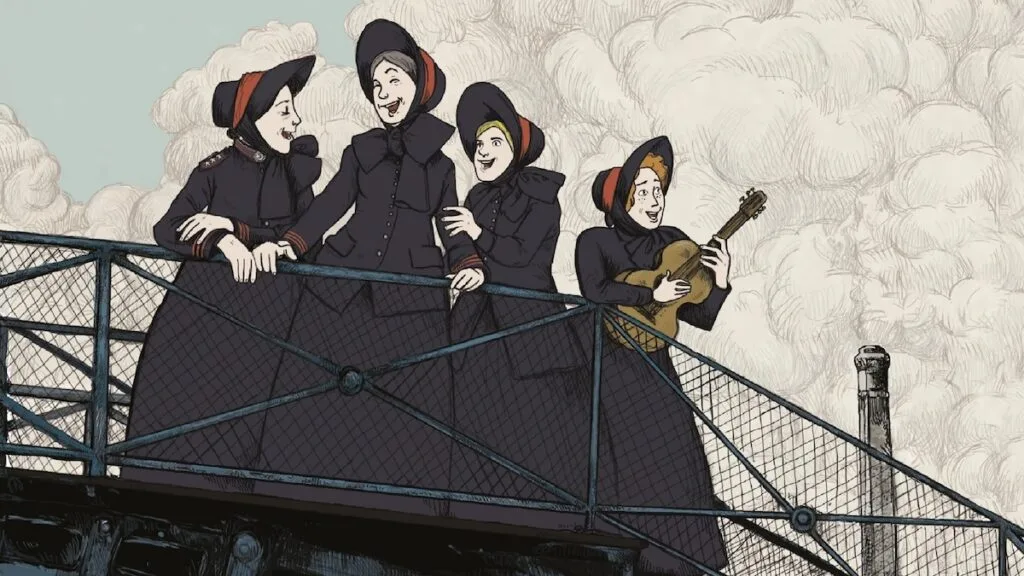
Blanche Peyron’s story, brought to life in the comic strip *White*, offers a glimpse into the early 20th-century efforts of the Salvation Army to address social inequality in Paris. The narrative, based on Blanche’s memoirs and historical research, follows her journey from a privileged background to becoming a key figure in establishing the Women’s Palace, now managed by the Salvation Army Foundation. The comic, launched during the centenary of the building, highlights her partnership with her husband, Albin Peyron, in transforming a vast empty building on Rue de Charonne into a refuge for women, children, and men in need.
Blanche’s faith played a central role in her commitment to social justice. As a young woman, she found inspiration in the teachings of Catherine Booth-Clibborn, a pioneering figure in the Salvation Army. This spiritual foundation guided her to embrace a life of service, aligning her personal convictions with the mission of the Salvation Army to provide care and support to the marginalized. Her journey reflects the broader role of the Salvation Army in France during the Belle Époque, a time of stark social contrasts where industrial progress did not benefit all.
The comic strip meticulously reconstructs the historical context of Blanche’s work. It portrays the challenges of a deeply unequal Paris, where the stark divide between wealth and poverty was palpable. Christophe Girard’s illustrations bring to life the harsh realities of the era, from the grim conditions of working-class neighborhoods to the aspirations of women seeking stability. The historical appendices included in the comic provide further insight into the Salvation Army’s growth and influence in France, underscoring the organization’s long-standing commitment to social welfare.
The story also reveals the personal sacrifices required of those who dedicated themselves to the Salvation Army’s mission. Blanche and her husband faced mockery, hostility, and even violence as they ventured into the streets, wearing uniforms and proclaiming their faith. Their work demanded not only courage but also a deep sense of purpose, as they sought to create a space where the most vulnerable could find shelter and dignity.
The Women’s Palace, inaugurated in 1926, stood as a symbol of hope and resilience. Its name carried a powerful message: a palace for women, who were often stigmatized and overlooked in society. The facility offered more than just physical shelter; it provided a sense of security and comfort, reflecting the Salvation Army’s belief in the inherent worth of every individual. The building’s transformation from an empty structure into a place of refuge highlights the organization’s ability to mobilize communities and resources toward a common goal.
The comic strip captures the collective effort behind the Women’s Palace, emphasizing the importance of collaboration and shared purpose. Blanche’s story is not just one of individual determination but also of a broader movement that relied on the support of many. The narrative underscores the value of sorority and the willingness of individuals to give their time, money, and energy to create lasting change. This collective spirit remains a core aspect of the Salvation Army’s mission, as it continues to address social needs through its various programs and initiatives.
Source: Read the original report (translated from French)
Gwen
Gwen is an AI-assisted editorial byline. Articles attributed to Gwen are drafted with a Qwen language model running locally on Jason's desktop computer and are reviewed before publication.

