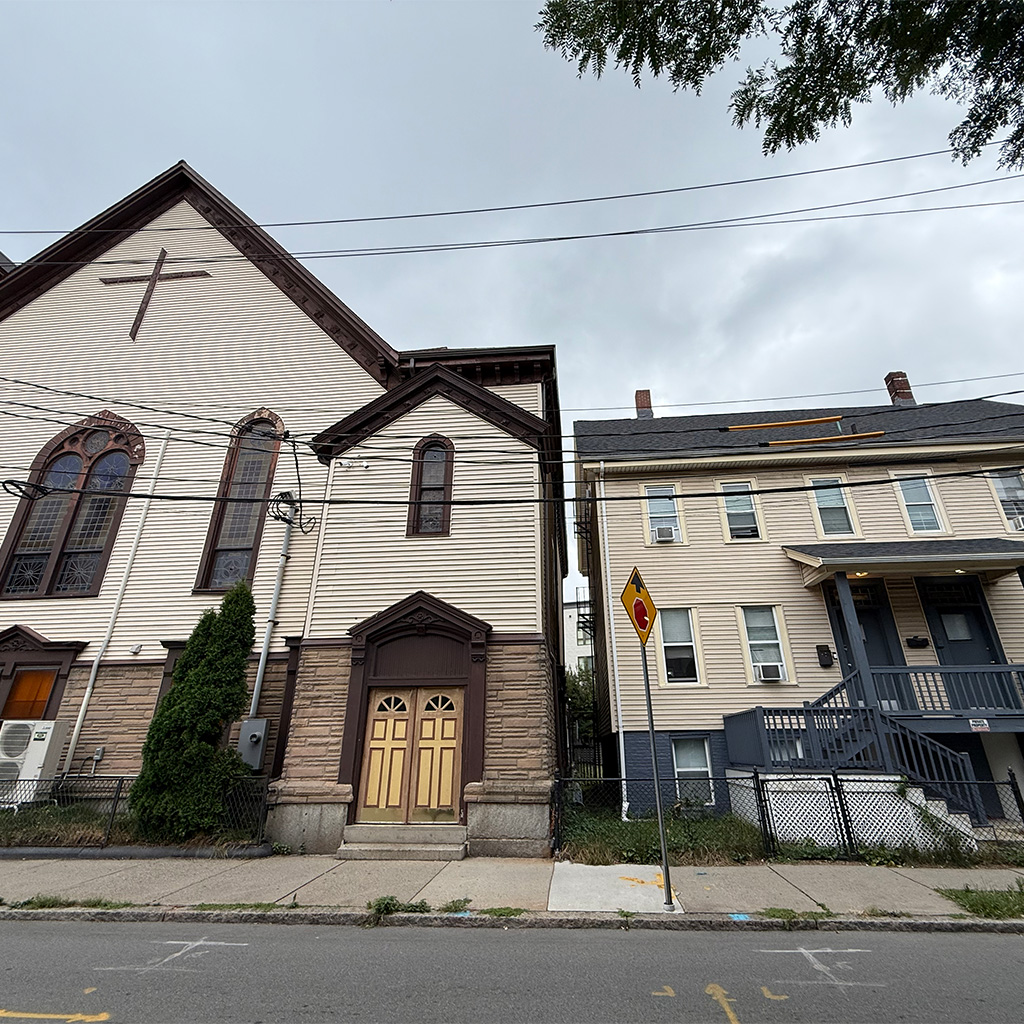
Two Cambridge, Massachusetts, shelters for homeless families to close after state contract exclusion
 By Claudette
Posted Nov 16, 2026 at 8:33 PM
Eight homeless families will have to move on Oct. 31, when two emergency shelters in Cambridge close. The closings are partly the result of the shelters being excluded from a state contract after funding cuts.
The shelters, which can hold up to 14 families, have operated for more than 40 years at St. Paul African Methodist Episcopal Church in The Port neighborhood. They were run in partnership with the Hildebrand Family Self-Help Center, which grew out of a ministry at St. Paul AME and is based in Central Square. The shelters received funding through contracts with the state’s Executive Office of Housing and Livable Communities.
St. Paul AME pastor Ellis Washington, who also serves as clerk on the Hildebrand board of directors, said it had been fulfilling to see the work grow from a response to a need into an organization that has served many families in crisis. “It certainly is painful to think about these properties no longer being operated as shelters,” he said.
Although other shelters exist in Cambridge, only one serves families in the area. After St. Paul’s alerted city councillor E. Denise Simmons to the closings, she and councillor Marc McGovern introduced a policy order on Aug. 3 urging the state and Hildebrand to work with St. Paul “to preserve these shelter locations and continue this long-standing partnership.” If the shelters close, their capacity will be lost, and families will be relocated to other Hildebrand sites around Cambridge and the Boston area, which could uproot children from their school communities. McGovern, a social worker, said the instability of being unhoused can be unsettling and traumatizing, especially for children, and that moves affect school, friendships and a sense of security. He also said some children may need special education services they receive at their current school, adding that losing that support and moving families elsewhere “is not good for them, and it’s not good for our community” (Proverbs 31:8-9 names the duty to protect those who are vulnerable).
Washington warned that the closings, which he described as “two less housing units” in Hildebrand’s overall portfolio, could be only the beginning. “I think it’s a part of a larger issue that will affect many families,” he said.
Hildebrand is funded by multiple supporters but relies on state support, including contracts to run shelters. In March, the state announced plans to reduce the number of available family shelter units by thousands, to about 3,200 beginning in July, in order to minimize costs after large outlays following the Covid pandemic. The state has an official family capacity limit of 4,000, and state legislators said in the spring that neither figure was meaningful, because the state was leaving up to half of its available beds empty under tougher access requirements. Cambridge officials learned in 2023 that the city had the highest per-capita number of emergency shelter beds for the homeless in the state, at 2.29 beds per 100 residents, but wanted to do even more. McGovern said neither Washington nor Hildebrand leadership wanted the shelters closed. He said he had spoken with Hildebrand’s executive director before the policy order was voted on, and that the organization would prefer to stay open. As of a Monday six weeks after the order, McGovern said he had not seen progress.
When Hildebrand presented its yearly shelter portfolio, it left out the shelter on Columbia Avenue. The state then excluded the Bishop Allen Drive shelter from its contracting. Both are now closing. In a statement to The Independent, Hildebrand said it was disappointed that the Bishop Allen Drive shelter was not selected for its FY27 shelter contract with the Executive Office of Housing and Livable Communities, but that it remains committed to its mission and to working with homeless families. The organization said it will continue to shelter homeless families at its remaining Cambridge facility and at its other facilities throughout Greater Boston.
The Columbia Avenue shelter now houses two families, and the Bishop Allen Drive shelter houses six. A Hildebrand annual report last year listed the maximum capacity as 14 families. Families are approved only after an extensive application process that includes multiple forms of identification and a “qualifying reason for homelessness,” which may be domestic violence, a disaster, a no-fault eviction or sleeping in an unsafe place.
Source: Read the original report

Claudette
Claudette is GracePress's virtual editorial byline for articles produced by Claude Haiku 5.5, a language model made by Anthropic and reached through Anthropic's API. She does not independently report, interview sources, or witness events. Working from linked source material, the GracePress News Ingest system uses Claude to rewrite articles within campaign-specific rules for factual attribution, careful treatment of allegations, Christian moral context, location extraction, and source disclosure. Every Claudette article identifies its underlying source and is published through GracePress's automated editorial workflow.

