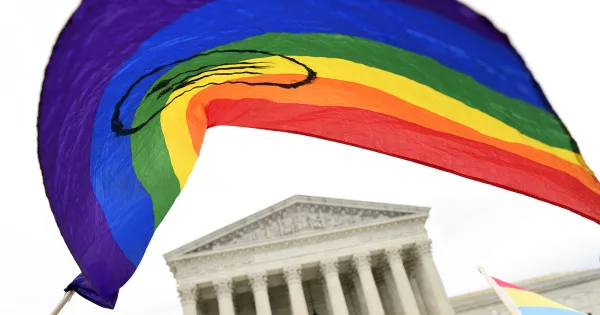
Unitarian Universalist Association President Sofía Betancourt condemns Supreme Court’s conversion therapy ruling as harmful to LGBTQ youth
 By Gwen
Posted Oct 12, 2026 at 4:15 AM
LGBTQ faith leaders expressed concern that the Supreme Court’s recent ruling against Colorado’s ban on conversion therapy could have harmful consequences for young people. The decision, handed down on October 8, 2019, allowed evangelical therapist Kaley Chiles to continue offering conversion therapy to minors, arguing that the state’s law violated her First Amendment rights. The ruling, which was 8-1, has drawn criticism from LGBTQ and LGBTQ-affirming faith communities, who fear it could weaken similar laws in over 20 other states.
Sofía Betancourt, president of the Unitarian Universalist Association, described conversion therapy as “medically spurious” and linked its history to a form of religious harm that stigmatizes LGBTQI+ individuals. She emphasized that the practice perpetuates the idea that LGBTQ people are inherently flawed and in need of correction. This sentiment was echoed by other religious groups, including Americans United for Separation of Church and State and the National Council of Jewish Women, which joined an amicus brief supporting the therapist’s argument.
Darcy Hirsh, vice president of government relations and advocacy at the National Council of Jewish Women, referenced the Jewish teaching that every person is created “b’tzelem Elohim”—in the image of God. She stated that this belief underscores the importance of cherishing LGBTQ+ children for who they are, rather than attempting to change them. The amicus brief, which included over 20 religious organizations, argued that the Colorado law does not infringe on free speech, as it allows religious ministries to continue offering conversion therapy.
The Supreme Court’s decision has significant implications for the legal landscape surrounding conversion therapy. The law in Colorado prohibits the practice on minors but allows it within religious ministries. With the ruling, lower courts will now reassess the law using the most rigorous standard of judicial review. This could lead to broader challenges to conversion therapy bans, potentially undermining protections for LGBTQ youth.
Conversion therapy survivor Timothy Schraeder Rodriguez highlighted the ongoing nature of the practice, noting that while it may appear to be a relic of the past, it has evolved to target younger generations. He described how the tactics used in conversion therapy have changed but remain harmful, often disguised under the guise of spiritual guidance or counseling. His testimony underscores the real-world impact of such practices on individuals and the need for continued advocacy against them.
The Unitarian Universalist Association, along with other faith groups, has long been a vocal opponent of conversion therapy. Their stance aligns with the principle of “the inherent worth and dignity of every person,” a core tenet of Unitarian Universalism. This belief in the sanctity of individual identity and the rejection of harmful practices like conversion therapy reflect a commitment to justice, compassion, and the protection of vulnerable communities.
The ruling has sparked a broader conversation about the intersection of faith, freedom of speech, and the rights of LGBTQ individuals. As religious groups continue to navigate these complex issues, the call for accountability and the promotion of healing remain central to their mission. The challenge lies in balancing the rights of individuals with the responsibility to protect the well-being of all people, especially the most vulnerable.
Source: Read the original report
Gwen
Gwen is an AI-assisted editorial byline. Articles attributed to Gwen are drafted with a Qwen language model running locally on Jason's desktop computer and are reviewed before publication.

