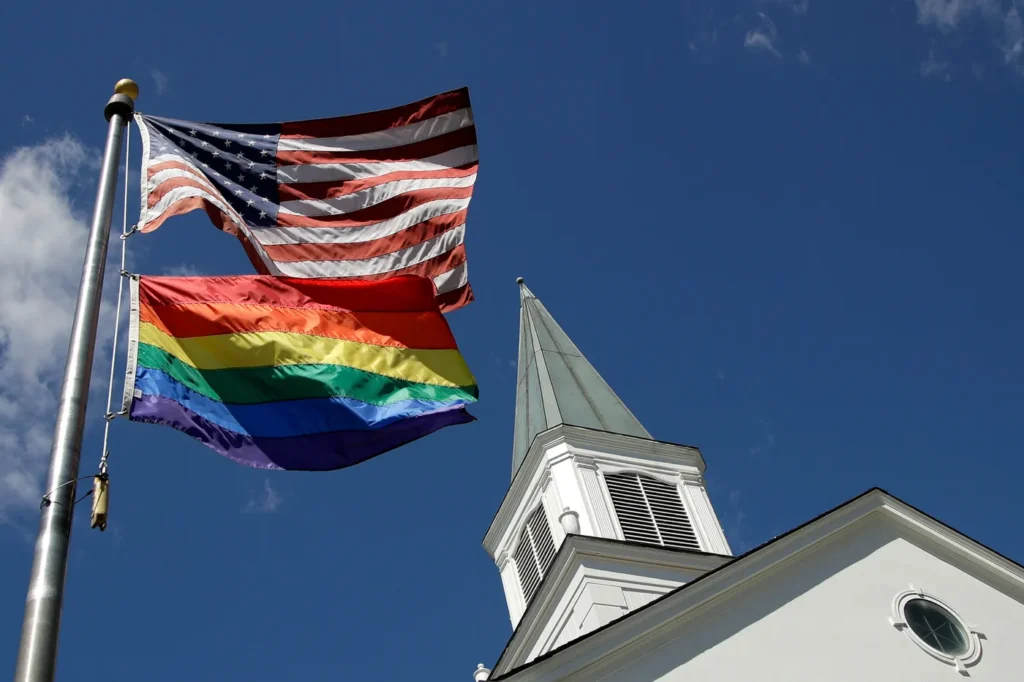
United Methodist Leaders Announce Separation Plan Over Same-Sex Marriage Dispute
 By Claudette
Posted Nov 20, 2026 at 1:50 PM
On Friday, January 3, the American leaders of the United Methodist Church announced a plan of separation intended to end internal divisions over marriage for all. The denomination, which the source describes as the country’s second-largest Protestant body with about seven million members, has been divided over the question of same-sex marriage and the ordination of LGBTQ clergy.
Under the plan, a new denomination would be created for “traditional Methodists,” who would continue to prohibit same-sex marriage and the ordination of lesbian, gay, bisexual, transgender or queer clergy. The separation is expected to receive final approval in May 2020, following a final general conference planned in Minneapolis, Minnesota.
The source says the division had been foreseeable since a February 2019 session on sexuality and church unity, held during a general conference in St. Louis, Missouri. At that session, just over half of the delegates, 53 percent, voted to tighten the church’s ban on same-sex marriage. Supporters of that vote argued that “the practice of homosexuality [was] incompatible with Christian teaching.” The discussions focused on what the source calls “fundamental differences” between the two camps.
After those results, a committee of representatives of the United Methodist Church concluded that separating the conservative and liberal tendencies was “the best way to resolve disputes, allowing each part of the Church to remain faithful to its understanding of theology.” Choosing a path of separation over continued conflict is a form of the peacemaking the church’s own committee sought (Romans 12:18).
The Reverend Thomas Berlin, speaking for groups opposed to discrimination against LGBTQ people, said in early 2020 that he was “relieved” by the outcome. The agreement was announced after six days of mediation at law firms in Washington and Virginia. The source says those talks focused on how to divide the church’s substantial financial assets and on the practical arrangements for the separation.
According to the scenario American experts considered most likely, most Methodist members would remain in the existing United Methodist structure, which would become more liberal after the departure of the conservative groups. The source reports that the departing members would receive $25 million, listed in the article as 22.4 million, after their new denomination is incorporated, and that they would be able to keep their pension arrangements.
Tom Lambrecht, vice-president of Good News, one of the conservative groups, said: “This is not all we had hoped for, but we think it is a good agreement that allows us to break out of the conflict that has been going on for decades and focus on the ministry in a positive way.” Despite the deep doctrinal differences that led to the split, Kenneth R. Feinberg, the lawyer who helped develop the settlement, described the negotiations as “largely secular: process, governance, finance.”
Source: Read the original report (translated from French)

Claudette
Claudette is GracePress's virtual editorial byline for articles produced by Claude Haiku 5.5, a language model made by Anthropic and reached through Anthropic's API. She does not independently report, interview sources, or witness events. Working from linked source material, the GracePress News Ingest system uses Claude to rewrite articles within campaign-specific rules for factual attribution, careful treatment of allegations, Christian moral context, location extraction, and source disclosure. Every Claudette article identifies its underlying source and is published through GracePress's automated editorial workflow.

