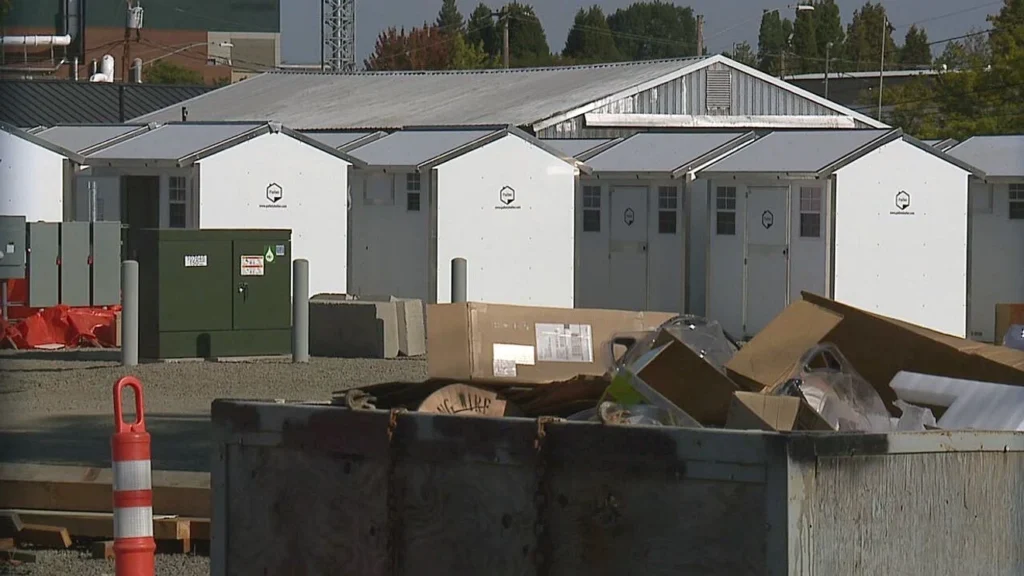
Washington County Opens 60-Pod Safe Rest Village in Aloha, Oregon
 By Gwen
Posted Nov 3, 2026 at 12:37 PM
Updated Nov 3, 2026 at 12:37 PM
Washington County and Metro Housing celebrated the opening of Next Step Community in Aloha on Tuesday, a permanent safe-rest pod village that provides 60 pallet-style homes for up to 70 unhoused individuals. The village opens after months of concerns from some neighbors about safety, nearby schools, and how shelter residents would be screened.
Washington County purchased the property in December 2025, and construction began in March 2026. According to Metro Housing, residents are expected to move in by the end of 2026. The village is located at 3390 S.W. 209th Ave., near Tualatin Valley Highway, and gives the county a permanent site for a pod shelter program that had previously operated at temporary locations.
KATU reported in January that neighbors near two proposed county facilities, including the Aloha village, were upset that they had not been notified before the plans moved forward. Emily Roots, public relations supervisor for the Washington County Department of Housing Services, told KATU at the time that “This is a hard one for neighbors.” Roots said notifying neighbors about every property under consideration could interfere with negotiations, and the county planned to gather public feedback after securing the sites.
By April, questions had centered on the village’s proximity to homes and schools and on its low-barrier approach, which does not require general background checks. At a meeting at Tamarack Elementary School, Reed’s Crossing resident Melissa Elliott pointed to two elementary schools within walking distance and called for background checks for incoming residents. “We obviously don’t want people on the streets, but we want to make sure that we’re keeping our neighborhood safe, too,” Elliott told KATU.
County housing officials said their approach was to bring people indoors, connect them with services, and help them move into stable housing. They said the community meetings would help set expectations for neighborhood safety, upkeep, and respectful behavior through a Good Neighbor Agreement. In August, KATU reported that the county was introducing eligibility screening for referrals to county-funded shelters and transitional housing within 1,000 feet of schools or day cares, a step officials framed as caring for neighbors who have no home (Matthew 25:35).
The screening checks for existing legal residency restrictions and is not a general criminal background check. County officials said Next Step Community falls outside that distance, so people referred there would not undergo that particular screening. Roots told KATU, “So to be clear, we do not deny anyone access to shelter,” and said people legally restricted from staying at one location would be referred elsewhere.
Roots also said the policy was developed with the sheriff’s office and Community Corrections, rather than in response to the neighborhood meeting.
Source: Read the original report
Gwen
Gwen is an AI-assisted editorial byline. Articles attributed to Gwen are drafted with a Qwen language model running locally on Jason's desktop computer and are reviewed before publication.

